
1. Warm Introduction
Some meals instantly bring comfort — not because they’re heavy, but because they feel familiar. The first time I made this High-Protein Low-Carb Teriyaki Chicken & Veggies, it was on a night when takeout sounded tempting, yet I knew my body needed something better. I wanted the glossy sauce, the sizzling pan, and that savory-sweet aroma filling the kitchen — just without the sugar crash afterward.
As the chicken cooked and the vegetables softened, the smell alone felt like a reward. Sticky, garlicky, and rich, yet surprisingly light. That’s when I realized this dish wasn’t just a healthier alternative — it was genuinely better than takeout.
For fitness enthusiasts, muscle builders, and anyone focused on clean eating, this recipe delivers the best of both worlds. It’s comforting and indulgent on the surface, but underneath, it’s a high-protein dinner designed to fuel recovery, stabilize energy, and keep cravings in check.
2. What Makes This Recipe Stand Out
What sets this recipe apart is intention. Traditional teriyaki dishes rely heavily on sugar and refined starches, which can quickly overwhelm an otherwise balanced meal. This version flips the script by putting protein first and keeping carbohydrates controlled without sacrificing flavor.
Lean chicken breast provides a dense, high-quality protein source that supports muscle repair and long-lasting satiety. The vegetables add volume, fiber, and micronutrients, creating a plate that feels abundant without being heavy. Meanwhile, a carefully balanced low-carb teriyaki sauce delivers that familiar umami flavor without the excessive sugar load.
Another reason this dish shines is its meal-prep potential. It reheats beautifully, maintains texture, and keeps its flavor intact for days. That makes it ideal for fitness meal prep, busy weeknights, or structured eating plans where consistency matters.
Most importantly, it tastes indulgent. Glossy, savory, slightly sweet, and deeply satisfying — proof that clean eating doesn’t have to feel restrictive.
3. Personal Blogger Note
I first made this dish during a week when my training volume was high and my appetite was unpredictable. Some days I wanted big meals; other days I needed something lighter but still nourishing. This recipe quickly became my go-to.
What I love most is how reliable it feels. One bowl leaves me full without feeling sluggish, and the protein keeps my energy steady long after dinner. Over time, it became one of those meals I look forward to — not just because it fits my macros, but because it genuinely tastes good.
Meals like this make healthy eating feel sustainable. They remove the feeling of “missing out” and replace it with confidence and consistency.
4. Equipment Needed
A large skillet or wok is essential for this recipe. The wide cooking surface allows the chicken to sear properly instead of steaming, which keeps it juicy while developing flavor.
A sharp knife makes prep faster and ensures evenly sized chicken pieces, which cook uniformly and prevent dryness.
A small mixing bowl is helpful for whisking the low-carb teriyaki sauce, ensuring smooth texture and even flavor distribution.
A spatula or tongs allow gentle tossing without breaking the vegetables down too much, preserving texture and visual appeal.
A clean cutting board helps keep prep organized and efficient, especially when cooking for meal prep.
5. Ingredients with Substitutions
Chicken breast (1½ lbs / 680 g, sliced)
This is the primary protein source and the backbone of the recipe. Chicken breast is lean, easy to digest, and rich in essential amino acids.
Substitution: Chicken thighs can be used for a juicier result, though fat content will increase slightly.
Broccoli florets (2 cups)
Low-carb, fiber-rich, and sturdy enough to hold texture during cooking.
Substitution: Green beans or asparagus for similar carb impact.
Bell peppers (1–2 cups, sliced)
Add color, mild sweetness, and crunch without spiking carbs.
Garlic (3–4 cloves, minced)
Builds the savory base of the sauce.
Fresh ginger (1 tablespoon, grated)
Adds warmth and depth while supporting digestion.
Low-sodium soy sauce or coconut aminos (¼ cup)
Provides umami without excessive sugar. Coconut aminos are slightly sweeter but still lower-carb than traditional teriyaki.
Rice vinegar or apple cider vinegar (1 tablespoon)
Balances sweetness and sharpens flavor.
Low-carb sweetener (to taste)
Creates that classic teriyaki sweetness without sugar.
Substitution: Omit for ultra-low-carb versions.
Avocado oil or olive oil (1–2 tablespoons)
Stable cooking fats that support nutrient absorption.
Cornstarch alternative or xanthan gum (optional)
Used sparingly to thicken the sauce while keeping carbs minimal.
6. Step-by-Step Cooking Process
Preparing the Chicken
Begin by slicing the chicken breast into thin, even strips. Uniform sizing helps the chicken cook quickly and evenly, reducing the risk of dryness. Pat the chicken dry to encourage proper browning.

Making the Teriyaki Sauce
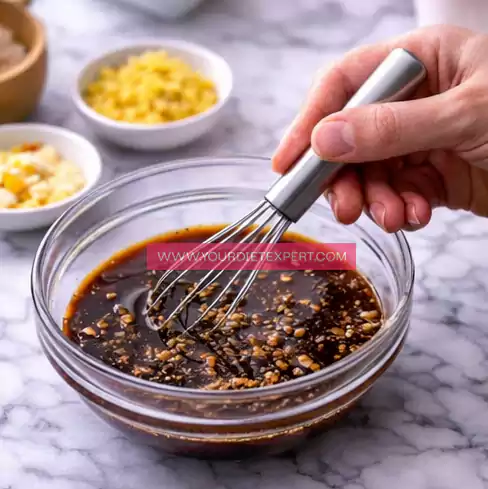
In a small bowl, whisk together soy sauce or coconut aminos, vinegar, grated ginger, minced garlic, and low-carb sweetener. Mix until smooth and balanced, tasting and adjusting sweetness if needed.
Cooking the Protein
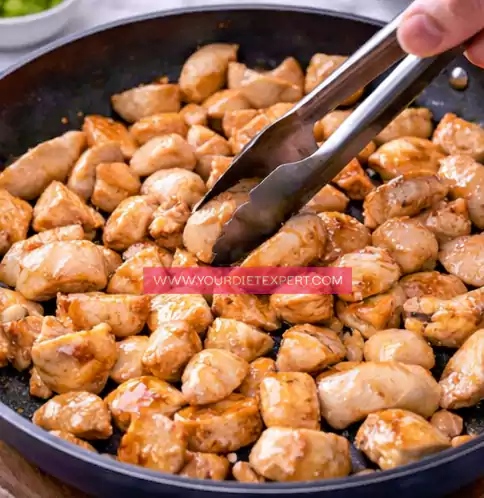
Heat a large skillet over medium-high heat and add the oil. Once hot, add the chicken in a single layer. Let it cook undisturbed for a few minutes until lightly golden, then stir and cook just until done. Remove the chicken and set aside.
Cooking the Vegetables
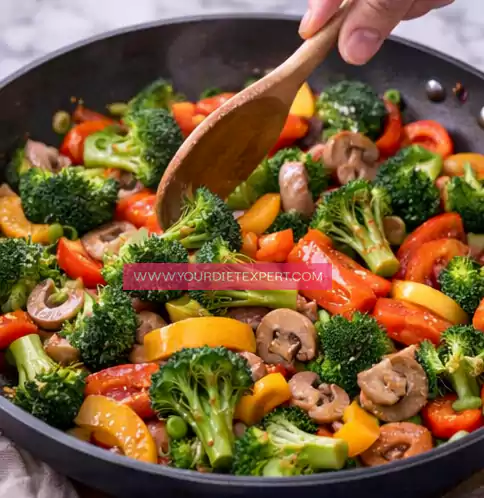
In the same skillet, add the vegetables and cook until crisp-tender. Stir frequently to prevent burning while preserving texture.
Bringing Everything Together
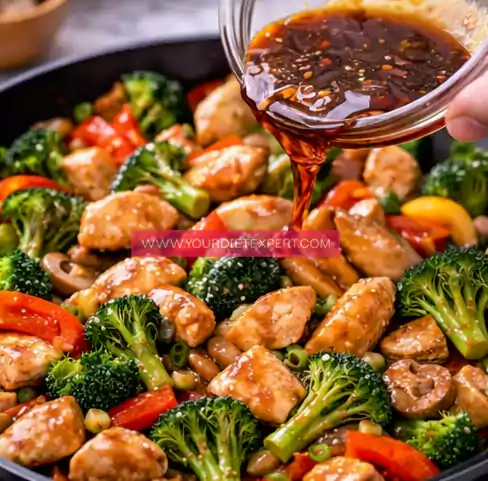
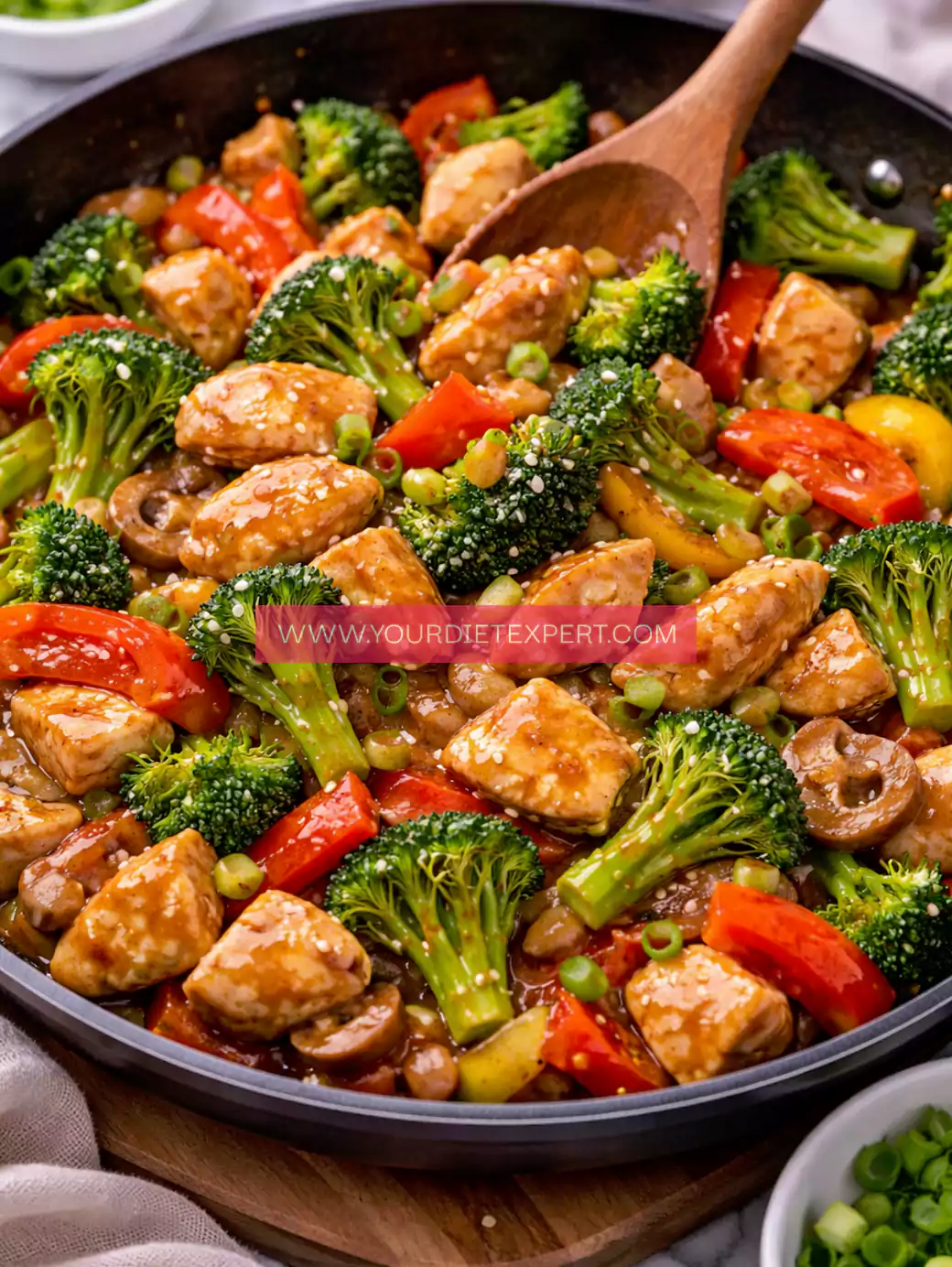
Return the chicken to the skillet and pour in the teriyaki sauce. Toss gently until everything is evenly coated. Cook briefly until the sauce thickens and clings to the chicken and vegetables.
7. Health & Nutrition Insights 💪
This High-Protein Low-Carb Teriyaki Chicken & Veggies works so well nutritionally because it aligns with how the body actually uses food for energy, recovery, and satiety. Instead of spiking blood sugar with sugary sauces or refined carbs, this meal delivers steady fuel through protein, fiber, and clean fats.
From a muscle-recovery standpoint, lean chicken breast provides complete protein with all essential amino acids needed for muscle repair and growth. Whether you train regularly or simply want to preserve lean muscle mass, protein-forward meals like this help protect metabolism and strength over time.
Low-carb vegetables such as broccoli and bell peppers add fiber and micronutrients without overwhelming digestion. Fiber slows nutrient absorption, helping stabilize blood sugar and prevent post-meal crashes. The result is sustained energy, improved focus, and fewer cravings later in the evening.
Because the sauce is carefully balanced and low in sugar, this dish supports insulin sensitivity and metabolic health while still delivering the bold flavor people expect from teriyaki-style meals.
8. High Protein Plan & Macro Insights 📊
This recipe fits cleanly into a high-protein, low-carb eating plan, whether your goal is fat loss, body recomposition, or muscle maintenance. It’s structured, predictable, and easy to portion — all critical for consistency.
Estimated macros per serving:
- Protein: ~38–42 g
- Carbohydrates: ~10–14 g (mostly from vegetables)
- Fat: ~10–14 g
- Calories: ~330–380
How it supports different goals:
- Bulking: Increase portion size or add a side of rice or quinoa.
- Cutting: Keep portions controlled and use minimal oil.
- Maintenance: Enjoy as written for a balanced, satisfying dinner.
This meal works especially well as a post-workout dinner, when protein intake matters most but digestion still needs to stay light. It’s also ideal for evening meals, when low-carb choices support better sleep and recovery.
9. Serving + Pairing Ideas 🍽️
This dish is satisfying enough to stand on its own, especially for those following low-carb or macro-focused plans. Still, it pairs beautifully with simple sides depending on your needs.
Great serving options include:
- Cauliflower rice for extra volume without carbs
- A crisp cucumber or cabbage slaw
- Steamed zucchini or sautéed spinach
- Jasmine or brown rice for higher-energy training days
For presentation, garnish with sesame seeds or sliced green onions. These small touches enhance visual appeal without altering macros significantly.
10. Storage & Meal Prep Tips 🧊
Allow the dish to cool completely before storing. Portion into airtight containers and refrigerate for up to 4 days.
For reheating, warm gently in a skillet or microwave. Adding a small splash of water helps loosen the sauce and prevents the chicken from drying out.
This recipe is ideal for meal prep because the sauce continues to coat the chicken evenly even after reheating, preserving both texture and flavor.
11. FAQ Section ❓
Can I make this dairy-free?
Yes. This recipe is naturally dairy-free as written.
How much protein is in one serving?
Each serving provides approximately 38–42 grams of protein, depending on portion size.
Can I use plant-based protein?
Firm tofu or tempeh can be used, though protein density and texture will differ.
Can I prep this for the week?
Absolutely. It’s one of the most reliable high-protein stir-fry meals for meal prep.
Is this suitable for diabetics?
Yes. The low-carb, low-sugar sauce helps support stable blood sugar levels.
12. Kitchen Tips & Troubleshooting Notes
To prevent dry chicken, avoid overcooking and remove it from the pan as soon as it’s done. Return it only briefly when adding the sauce.
If the sauce thickens too quickly, add a splash of water and lower the heat slightly.
For extra caramelization, let the sauce simmer briefly without stirring once everything is combined.
13. Nutrition Breakdown (Approximate Per Serving)
Calories: ~360
Protein: ~40 g
Fat: ~12 g
Carbohydrates: ~12 g
Fiber: ~4 g
Sugar: ~3 g
Net Carbs: ~8 g
Sodium: Moderate (varies by sauce choice)
14. Recipe Details
Prep Time: 15 minutes
Cook Time: 20 minutes
Total Time: 35 minutes
Course: Main
Cuisine: Asian-Inspired
Servings: 4
Calories: ~360 per serving
15. Closing Note ❤️
This High-Protein Low-Carb Teriyaki Chicken & Veggies has become one of those recipes I trust completely — flavorful, filling, and supportive of real health goals. It proves that you don’t need takeout to enjoy bold flavors, just the right balance of ingredients and intention.

High-Protein Low-Carb Teriyaki Chicken & Veggies Recipe
Ingredients
Method
- Slice the chicken breasts into thin, even pieces so they cook quickly and evenly. Once sliced, pat the chicken dry with paper towels to remove excess moisture, which helps it brown properly instead of steaming in the pan.
- In a small bowl, whisk together the soy sauce or coconut aminos, vinegar, minced garlic, grated ginger, and low-carb sweetener. Whisk until the mixture looks smooth and well combined, then set it aside so the flavors can blend while you cook the chicken.
- Heat the oil in a large skillet over medium-high heat until hot but not smoking. Add the chicken in a single layer, working in batches if needed to avoid overcrowding. Let it cook undisturbed for a couple of minutes until lightly golden, then stir and continue cooking just until the chicken is fully cooked through. Transfer the chicken to a plate and set aside.
- Using the same skillet, add the vegetables and cook over medium-high heat, stirring frequently. Cook until they are crisp-tender and vibrant in color, making sure they retain a bit of bite rather than becoming soft or mushy.
- Return the cooked chicken to the pan with the vegetables and pour the prepared sauce evenly over everything. Gently toss to combine, making sure the chicken and vegetables are well coated.
- Continue cooking for a short time, stirring gently, until the sauce thickens slightly and clings to the chicken and vegetables without becoming too thick or sticky.
- Remove the skillet from the heat and serve immediately while hot, or divide into portions for meal prep once slightly cooled.




Leave a Reply