
1. Warm Introduction 🌴🍍
The first time I made this High-Protein Pineapple Coconut Dream Cake, it was right after a long workout when my body was craving comfort but my goals demanded balance. I wanted something sweet, soft, and indulgent—yet still aligned with clean eating and muscle-focused nutrition. That craving led me to the kitchen, and what came out of the oven quickly became one of my most-loved healthy desserts.
Pineapple and coconut have a way of transporting you somewhere warm and calm. The flavors feel nostalgic, almost vacation-like, yet most traditional pineapple coconut cakes are loaded with sugar, refined flour, and very little protein. This version keeps all the tropical charm while transforming it into a macro-friendly recipe that actually supports fitness goals.
What makes this cake special is how it feels indulgent while quietly working for you. It’s light, moist, naturally sweet, and packed with protein—making it perfect for anyone who loves dessert but also cares about energy levels, recovery, and staying consistent with healthy habits.
2. What Makes This Recipe Stand Out 💪🥥
This High-Protein Pineapple Coconut Dream Cake isn’t just a healthier swap—it’s a complete rethink of what a dessert can be in a protein-focused lifestyle.
✔ High Protein Without the “Protein Taste”
Each serving delivers a meaningful amount of protein using clean sources like Greek yogurt, eggs, and high-quality protein powder. The texture stays soft and tender, with no chalky aftertaste or dry crumb that often comes with protein baking.
✔ Balanced Macros for Real Life
Instead of extreme low-carb or sugar-heavy ingredients, this cake balances protein, carbs, and healthy fats. That balance helps stabilize blood sugar, prevent cravings, and support sustained energy—especially important for active individuals.
✔ Meal-Prep Friendly & Freezer-Safe
This cake holds its moisture beautifully, even after refrigeration. It slices cleanly, reheats well, and works perfectly for fitness meal prep or planned snacks throughout the week.
✔ Indulgent Flavor, Clean Ingredients
You still get juicy pineapple, subtle coconut sweetness, and a soft crumb—but without refined oils or excessive sugar. It tastes like a cheat dessert while quietly supporting muscle recovery and clean eating goals.
For anyone focused on muscle-building meals, recovery nutrition, or simply making smarter dessert choices, this recipe bridges the gap between discipline and enjoyment.
3. Personal Blogger Note ❤️
I first tested this recipe after a strength-training day when my appetite was high but my motivation to “stay on track” was even higher. I wanted a dessert that felt comforting without undoing the effort I’d just put in at the gym. That’s when the idea of a protein-forward tropical cake started to take shape.
After a few tweaks—adjusting moisture levels, balancing sweetness, and refining the protein blend—I pulled a golden, lightly scented cake from the oven that honestly surprised me. It was soft, fragrant, and tasted like something you’d bring to a family gathering, not a “healthy alternative.”
Now, this cake has become one of those recipes I return to again and again. It’s what I make when I want to enjoy dessert without guilt, when I’m prepping snacks for the week, or when I need a reminder that healthy eating doesn’t have to feel restrictive. It’s comforting, nourishing, and deeply satisfying in a way that supports both body and mindset.
4. Equipment Needed 🧰
You don’t need anything fancy to make this High-Protein Pineapple Coconut Dream Cake, but using the right tools helps preserve moisture, texture, and structure—especially important when baking with protein-rich ingredients.
- Large Mixing Bowl
This is where everything comes together. A roomy bowl helps you mix gently, which is essential for keeping protein-based batters light instead of dense. - Medium Mixing Bowl
Useful for whisking dry ingredients separately. Keeping protein powder and flour evenly distributed prevents clumping and ensures consistent texture. - Whisk
A whisk incorporates air into the batter without overmixing. This step is crucial when working with Greek yogurt and protein powder to avoid heaviness. - Silicone or Rubber Spatula
Ideal for folding ingredients together gently. It helps preserve moisture and keeps the cake tender. - Measuring Cups and Spoons
Precision matters in macro-friendly baking. Accurate measurements keep protein, carbs, and fats in balance while maintaining flavor. - 8×8-inch or 9×9-inch Baking Dish
A square baking dish allows the cake to cook evenly and slice cleanly into meal-prep portions. - Parchment Paper or Light Grease
Prevents sticking and makes removal easy without damaging the soft crumb. - Oven
A steady baking temperature ensures the cake sets properly without drying out.
These simple tools make the process smooth and stress-free, especially if you plan to bake this regularly as part of a fitness meal prep routine.
5. Ingredients with Substitutions 🥣
Every ingredient in this recipe was chosen intentionally to support high-protein nutrition, balanced macros, and a soft, moist texture.
Core Ingredients
- Plain Nonfat Greek Yogurt – 1 cup
This is the backbone of the cake. Greek yogurt boosts protein content significantly while replacing heavier fats. It also keeps the crumb moist and tender. - Eggs – 2 large
Eggs provide structure, protein, and richness. They help the cake rise and set properly while contributing essential amino acids for muscle recovery. - Vanilla Protein Powder – ½ cup
A high-quality whey or plant-based protein powder adds concentrated protein without overpowering flavor. Vanilla complements the tropical notes beautifully. - Oat Flour – ¾ cup
Oat flour adds gentle carbs and fiber, helping balance macros while keeping the cake soft. It’s less refined than white flour and easier on digestion. - Crushed Pineapple (in Juice, Drained) – ¾ cup
Pineapple adds natural sweetness and moisture. Draining it prevents excess liquid while preserving flavor. - Unsweetened Shredded Coconut – ¼ cup
Coconut enhances texture and aroma without adding unnecessary sugar or oils. - Honey or Maple Syrup – ⅓ cup
A natural sweetener that adds flavor while avoiding refined sugar spikes. The amount keeps the cake lightly sweet, not overpowering. - Baking Powder – 1½ teaspoons
Helps the cake rise evenly and prevents density caused by protein powder. - Vanilla Extract – 1 teaspoon
Rounds out the flavors and enhances sweetness naturally. - Salt – ¼ teaspoon
Balances sweetness and sharpens tropical flavors.
Smart Substitutions & Swaps
- Dairy-Free Option
Replace Greek yogurt with thick coconut-based yogurt and use plant-based protein powder. Protein content will slightly decrease, but texture remains moist. - Lower-Carb Version
Swap oat flour for almond flour and reduce honey slightly. This increases healthy fats while lowering carbs. - Higher-Protein Boost
Add an extra 2–3 tablespoons of protein powder and a splash of milk to maintain batter consistency. - Egg-Free Option
Use flax eggs (1 tablespoon ground flax + 2½ tablespoons water per egg). Texture will be slightly denser but still enjoyable.
Each substitution affects macros slightly, so adjust portions based on your fitness or nutrition goals. This flexibility makes the recipe adaptable for many dietary needs while staying clean and balanced.
6. Step-by-Step Cooking Process 🧁
This recipe is designed to feel calm and intuitive, even if you’re newer to high-protein baking. Take your time, enjoy the process, and trust that the structure of this cake is very forgiving.
Step 1: Prepare the Oven and Pan
Start by preheating your oven to 350°F (175°C). This moderate temperature helps protein-based batters bake evenly without drying out.
Line an 8×8-inch or 9×9-inch baking dish with parchment paper or lightly grease it. Protein-rich cakes tend to stick more than traditional ones, so this step saves frustration later.
Step 2: Mix the Dry Ingredients
In a medium bowl, whisk together the oat flour, protein powder, baking powder, and salt. Whisking well is important here because protein powder can clump easily. A smooth, evenly blended dry mix ensures the cake bakes with a consistent crumb.
Helpful tip: If your protein powder is very thick, sift it before mixing to prevent dense spots in the cake.

Step 3: Combine the Wet Ingredients
In a large mixing bowl, add the Greek yogurt, eggs, honey (or maple syrup), and vanilla extract. Whisk until smooth and creamy. The mixture should look glossy and slightly thick but pourable.
This step creates the moisture base that keeps the cake light and tender despite the high protein content.

Step 4: Add Pineapple and Coconut
Gently fold in the drained crushed pineapple and shredded coconut using a spatula. Stir slowly to avoid breaking down the pineapple too much. You want visible fruit pieces throughout the batter for bursts of flavor and moisture.
Mini note: If the pineapple is not well drained, the batter may become too loose. Press it gently in a sieve if needed.

Step 5: Bring Everything Together
Gradually add the dry ingredients into the wet mixture. Use a spatula and fold just until combined. Avoid overmixing at this stage—overworking protein-based batters can make the cake dense.
The batter should be thick, smooth, and spoonable, not runny.

Step 6: Bake to Perfection
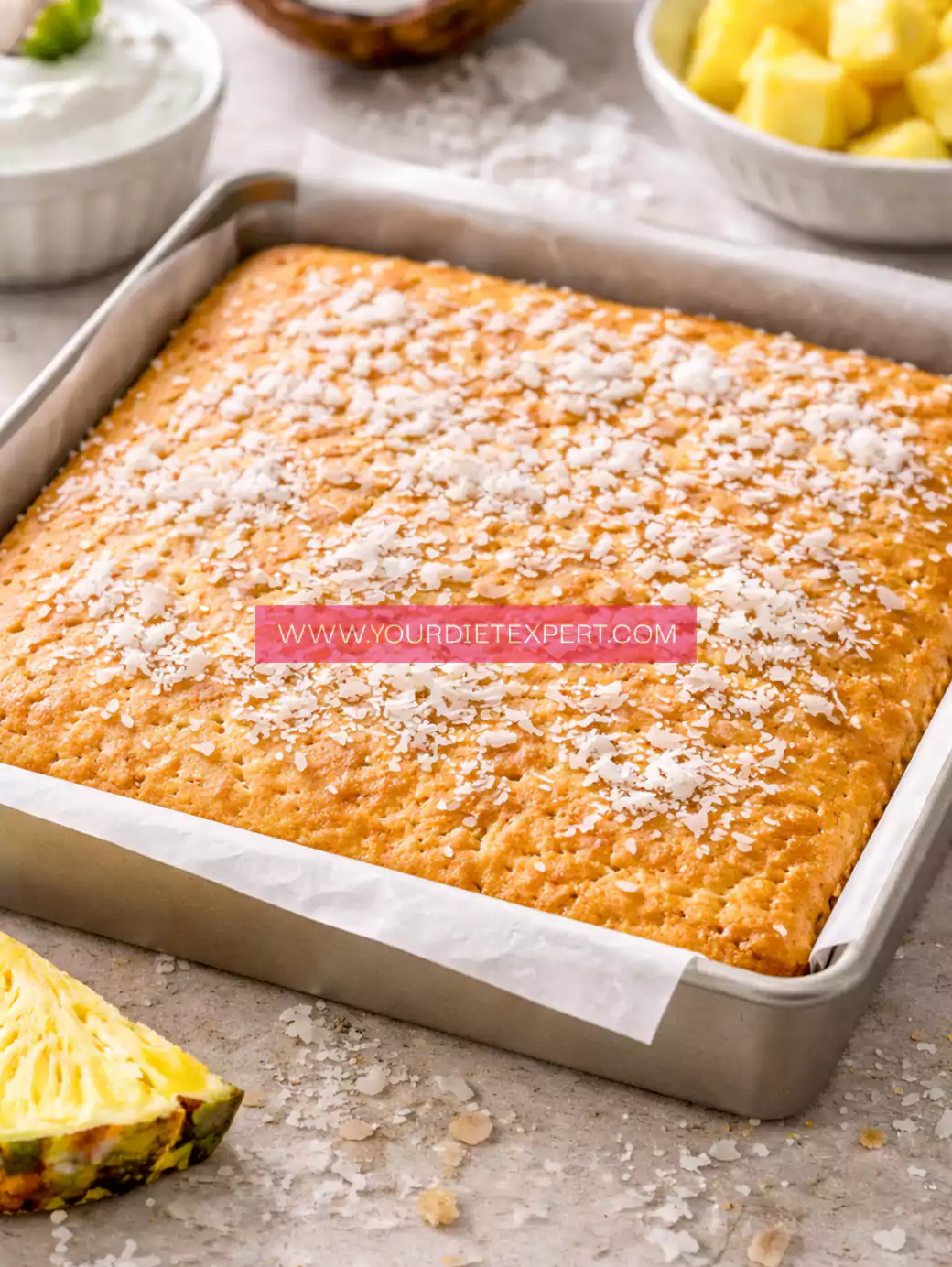
Transfer the batter to your prepared baking dish and smooth the top gently. Bake for 30–35 minutes, or until the center is set and a toothpick inserted comes out mostly clean with a few moist crumbs.
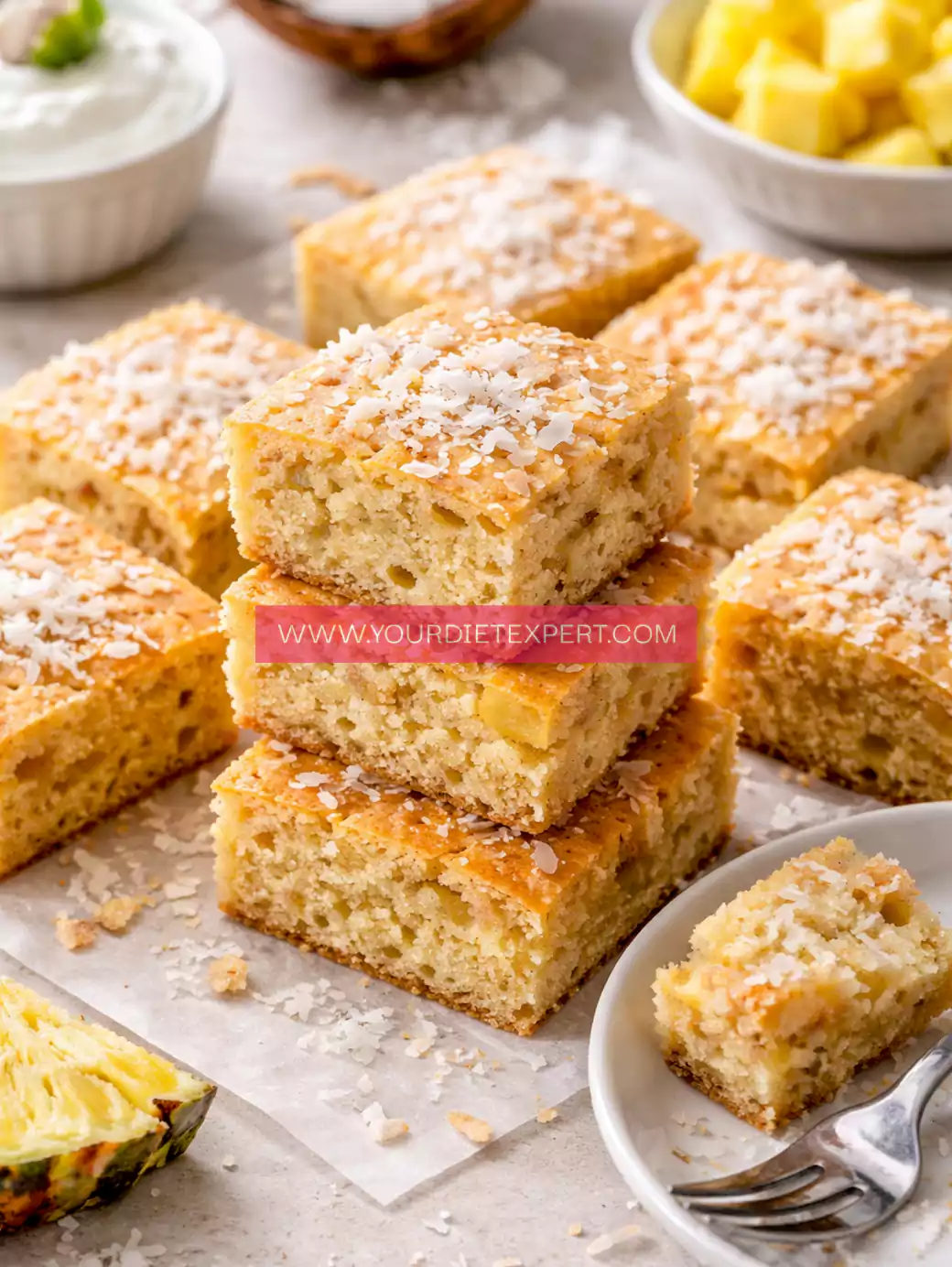
The edges should be lightly golden, and the cake should spring back slightly when pressed.
Step 7: Cool and Set
Allow the cake to cool in the pan for at least 20 minutes. This resting time helps the protein structure set fully and improves texture.
Once cooled, slice into even squares for serving or meal prep.
7. Health & Nutrition Insights 💪
This High-Protein Pineapple Coconut Dream Cake isn’t just a healthier dessert—it’s a strategic addition to a balanced, fitness-focused lifestyle.
Supports Muscle Recovery and Growth
Protein plays a critical role in muscle repair after workouts. With Greek yogurt, eggs, and protein powder working together, this cake provides a complete amino acid profile that supports recovery without feeling heavy.
Enhances Satiety and Reduces Cravings
Unlike traditional cakes that spike blood sugar, this macro-friendly recipe digests more slowly. The combination of protein, fiber from oat flour, and healthy fats from coconut helps you feel satisfied longer, reducing the urge to snack excessively later.
Sustains Energy Levels
Balanced macros help avoid the energy crashes often associated with sugary desserts. This makes the cake suitable not only as a treat but also as a post-workout snack or afternoon energy boost.
Supports Metabolic Health
Higher-protein meals are linked to improved metabolic efficiency and better appetite control. When desserts are built with intention, they can support long-term consistency rather than disrupt it.
By reframing dessert as nourishment instead of indulgence alone, this recipe encourages a healthier relationship with food—one that supports both physical goals and enjoyment.
8. High Protein Plan & Macro Insights 📊
This High-Protein Pineapple Coconut Dream Cake fits seamlessly into a structured, protein-focused eating plan without feeling restrictive or overly “diet” oriented. It’s designed to support real-life fitness goals—whether you’re building muscle, maintaining weight, or leaning out gradually.
Estimated Protein Per Serving
Each square (based on 9 servings) delivers approximately:
- Protein: 14–17 grams
- Calories: ~190–210 kcal
- Carbohydrates: Moderate, primarily from oats and fruit
- Fats: Balanced, coming naturally from coconut and eggs
This makes it a rare dessert that contributes meaningfully to daily protein targets rather than displacing them.
How It Fits Different Fitness Goals
For Muscle Building (Bulking Phase):
Pair a slice with a protein-rich meal or enjoy it post-workout when muscles are most receptive to nutrients. The carbs from pineapple and oats help replenish glycogen, while protein supports repair and growth.
For Fat Loss (Cutting Phase):
Enjoy smaller portions as a planned snack or dessert. The protein and fiber help control hunger and prevent late-night cravings that often derail calorie goals.
For Maintenance or Recomposition:
This cake works beautifully as a balanced snack or light dessert that keeps macros aligned while still feeling satisfying.
Ideal Times to Eat This Cake
- Post-workout recovery snack
- Afternoon energy boost
- Evening dessert without blood sugar spikes
- Prepped snack during busy workdays
For those tracking macros, this recipe is easy to log and adjust. Portion control is simple thanks to clean slicing and consistent texture, making it ideal for fitness meal prep.
9. Serving + Pairing Ideas 🍽️
One of the best things about this cake is how versatile it is. You can keep it simple or dress it up depending on the occasion.
Simple, Everyday Serving
Enjoy a slice slightly warm or chilled straight from the fridge. The flavors deepen as it rests, making leftovers even better the next day.
Protein-Boosted Pairings
- A spoonful of plain Greek yogurt on top
- A light coconut yogurt drizzle
- Fresh berries for added fiber and antioxidants
Balanced Snack Plates
Turn one slice into a complete snack by pairing it with:
- A handful of almonds or walnuts
- Cottage cheese or skyr
- A boiled egg on the side for extra protein
Meal Prep & Lunchbox Tips
Slice the cake into individual portions and store them in airtight containers. It travels well, doesn’t crumble, and keeps its moisture—making it perfect for work lunches or post-gym snacks.
Best Occasions to Serve
- Fitness meal prep Sundays
- Healthy family gatherings
- Weeknight dessert
- Recovery-focused nutrition days
This cake proves that high-protein desserts don’t have to feel boring or overly functional. It’s approachable, flexible, and easy to enjoy in many different ways.
10. Storage & Meal Prep Tips 🧊
One of the reasons this High-Protein Pineapple Coconut Dream Cake has become a repeat recipe for me is how well it stores. Protein-based baking can sometimes dry out quickly, but this cake holds its moisture beautifully when stored correctly.
Refrigeration
Once fully cooled, slice the cake into individual portions and place them in airtight containers. Store in the refrigerator for up to 5–6 days. The flavors actually improve after the first day as the pineapple and coconut settle into the crumb.
Freezing for Long-Term Prep
If you like planning ahead, this cake freezes very well.
- Wrap each slice individually in parchment paper or freezer-safe wrap
- Place wrapped slices in a freezer container or zip-top bag
- Freeze for up to 2 months
To enjoy, thaw overnight in the fridge or let it sit at room temperature for about 30 minutes.
Reheating Without Drying
For a warm slice:
- Microwave for 10–15 seconds only
- Avoid overheating, as protein-rich baked goods firm up quickly
For a chilled option, enjoy straight from the fridge with a spoonful of yogurt or fresh fruit.
Meal Prep Strategy
This cake works perfectly as part of a fitness meal prep routine. Bake once, portion it out, and you’ll have a protein-forward snack or dessert ready all week—no extra prep required.
11. FAQ Section ❓
Can I make this recipe dairy-free?
Yes, this recipe can be adapted. Use a thick, unsweetened coconut or almond-based yogurt in place of Greek yogurt, and choose a plant-based protein powder. The texture will remain moist, though the protein content may be slightly lower.
How much protein is in each serving?
Each slice contains approximately 14–17 grams of protein, depending on the protein powder used. This makes it a meaningful addition to daily protein intake, especially for a dessert.
Can I use plant-based protein powder?
Absolutely. Pea or blended plant proteins work well. Keep in mind that some plant-based powders absorb more liquid, so you may need to add 1–2 tablespoons of milk or water to maintain a smooth batter.
Can I prep this for the entire week?
Yes. This cake is ideal for weekly prep. It stores well, slices cleanly, and maintains its texture for several days in the refrigerator.
Is this recipe suitable for kids or non-dieters?
Definitely. The flavor is familiar and comforting, and it doesn’t taste “healthy” or restrictive. It’s a great way to introduce higher-protein foods without pushback.
12. Kitchen Tips & Troubleshooting Notes 🧠
High-protein baking behaves a little differently than traditional baking. These simple tips will help you get perfect results every time with this High-Protein Pineapple Coconut Dream Cake.
Preventing Dryness
Protein powder absorbs more moisture than regular flour. To avoid dryness:
- Measure protein powder carefully
- Avoid overbaking, even by a few minutes
- Allow the cake to cool fully before slicing so the structure can set
If your oven runs hot, check the cake around the 28-minute mark.
Keeping Protein Powder Smooth
Always whisk protein powder with dry ingredients before adding it to wet ingredients. This step prevents clumps and ensures even distribution throughout the batter.
Managing Batter Texture
The batter should be thick but spreadable. If it feels too stiff:
- Add 1–2 tablespoons of milk or water
If it feels too loose: - Sprinkle in 1 tablespoon oat flour and fold gently
Small adjustments go a long way in protein-based recipes.
Adjusting Sweetness
If you prefer a less sweet cake, reduce the honey slightly. For a sweeter finish without extra sugar, add a pinch of cinnamon or extra vanilla.
Reheating Smartly
Avoid reheating for long periods. Short bursts preserve moisture and keep the cake soft instead of rubbery.
These small details make the difference between a good protein dessert and one you’ll want to bake again and again.
13. Nutrition Breakdown 📋
The following nutrition information is an approximate estimate per serving (based on 9 servings). Values may vary depending on ingredient brands and substitutions.
- Calories: ~200 kcal
- Protein: 15–17 g
- Carbohydrates: 22–25 g
- Fat: 6–7 g
- Fiber: 3–4 g
- Sugar: ~9–11 g
- Sodium: ~180 mg
This balanced profile makes the cake suitable for:
- High-protein meal plans
- Macro-friendly recipes
- Fitness meal prep
- Clean-eating lifestyles
It delivers enough protein to support recovery while keeping calories reasonable for everyday enjoyment.
14. Recipe Details 🧾
- Prep Time: 15 minutes
- Cook Time: 30–35 minutes
- Total Time: 45–50 minutes
- Course: Healthy Dessert / High-Protein Snack
- Cuisine: Tropical-Inspired, Modern Healthy
- Servings: 9 slices
- Calories (per serving): ~200 kcal
15. Closing Note ❤️
This High-Protein Pineapple Coconut Dream Cake has become one of those recipes I truly rely on. It satisfies a sweet craving without undoing progress, supports protein goals without feeling forced, and brings a little joy into everyday healthy eating.
Whether you’re deep into a fitness routine or simply trying to make smarter food choices, this cake proves that balance is possible. It’s soft, comforting, lightly tropical, and nourishing in a way that supports consistency rather than perfection.
If you’ve ever felt torn between enjoying dessert and honoring your goals, this recipe is for you.

High-Protein Pineapple Coconut Dream Cake Recipe
Ingredients
Method
- Preheat oven to 350°F (175°C) and line or lightly grease an 8×8-inch or 9×9-inch baking dish.
- In a medium bowl, whisk together oat flour, protein powder, baking powder, and salt until evenly combined.
- In a large bowl, whisk Greek yogurt, eggs, honey or maple syrup, and vanilla extract until smooth and creamy.
- Gently fold in the drained crushed pineapple and shredded coconut until evenly distributed.
- Gradually add the dry ingredients to the wet mixture, folding gently until just combined. Avoid overmixing.
- Transfer the batter to the prepared baking dish and smooth the top evenly.
- Bake for 30–35 minutes, or until the center is set and a toothpick inserted comes out with a few moist crumbs.
- Allow the cake to cool in the pan for at least 20 minutes before slicing and serving.



Leave a Reply