Add the eggs to a mixing bowl and whisk thoroughly until the texture becomes smooth, slightly frothy, and evenly combined. This helps create a lighter, fluffier lemon cake.
Add the Greek yogurt to the bowl and whisk again until the mixture turns creamy, silky, and fully blended with no visible yogurt clumps. Take your time with this step for the best texture.
Sprinkle the lemon protein powder slowly and gradually into the wet mixture. Whisk continuously as you add it to prevent clumps from forming. Continue mixing until the batter looks smooth, thick, and completely lump-free. If the batter becomes too thick, add 1–2 tablespoons of water or milk and whisk until it loosens to a pourable consistency.
Stir in optional ingredients like lemon zest, a little fresh lemon juice, or a drop of vanilla extract. These small additions brighten the flavor and give the cake a more bakery-style lemon aroma.
Line an 8×8-inch baking pan with parchment paper, allowing some overhang for easy removal. Pour the batter into the pan and use a spatula or the back of a spoon to smooth out the surface evenly.
Bake the cake at 350°F (175°C) for 22–28 minutes. It’s ready when the top is lightly golden, the center springs back gently when touched, and a toothpick comes out clean or just slightly moist. Avoid overbaking because high-protein cakes continue firming up as they cool.
Let the cake cool in the pan for 15–20 minutes before slicing. Cooling allows the texture to set, the moisture to distribute evenly, and the lemon flavor to deepen naturally.
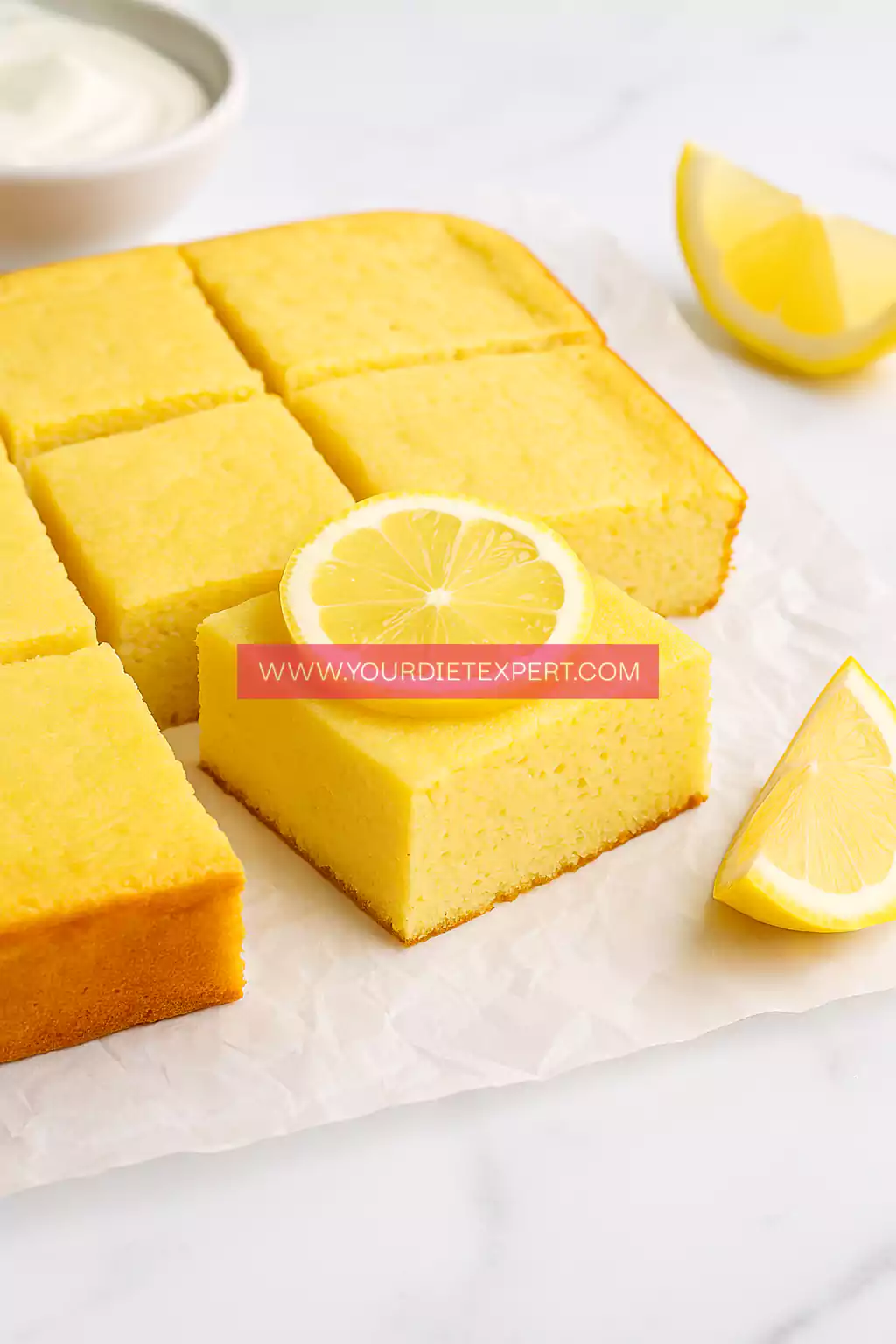
Slice into squares and enjoy the cake warm for a soft, custard-like texture or chilled for a firmer, more classic cake consistency. Serve it plain or pair it with berries, yogurt, or a light dusting of sugar-free powdered sweetener.
Store any leftovers in an airtight container in the refrigerator for 4–5 days. For longer storage, freeze individual slices for up to 2 months. Thaw in the fridge or microwave gently for a warm, quick protein treat.