Start by adding the cottage cheese and Greek yogurt to a blender. Blend for 5–10 seconds, just long enough for the mixture to turn silky-smooth without becoming watery. Stop as soon as there are no visible curds left.
Add the eggs, sweetener, vanilla extract, and protein powder to the blender. Blend again for a few short pulses until everything combines into a creamy batter. Avoid over-blending — too much air can cause cracks while baking.
If you want to boost the flavor, gently stir in optional add-ins like lemon zest, blueberries, or crushed graham-style protein crumbs. Fold them in with a spatula instead of blending so the texture stays thick and smooth.
Line an 8-inch round cake pan or springform pan with parchment paper. Make sure the bottom is fully covered to prevent sticking. Pour the cheesecake batter into the pan and smooth the top with a spatula so it bakes evenly.
Place the pan in the oven and bake at 325°F (165°C) for 40–55 minutes. The cheesecake is ready when the edges look set and the center still has a light jiggle when you gently tap the pan. Do not wait for it to fully firm in the oven — it sets as it cools.
Turn off the oven and crack the door open. Let the cheesecake sit inside for 10 minutes. This gradual temperature change helps prevent sinking or cracking.
Remove the cheesecake from the oven and let it cool on the counter for 30–60 minutes. Once it reaches room temperature, refrigerate it for at least 4 hours — or overnight if possible. Chilling is what transforms the texture into that classic creamy cheesecake consistency.
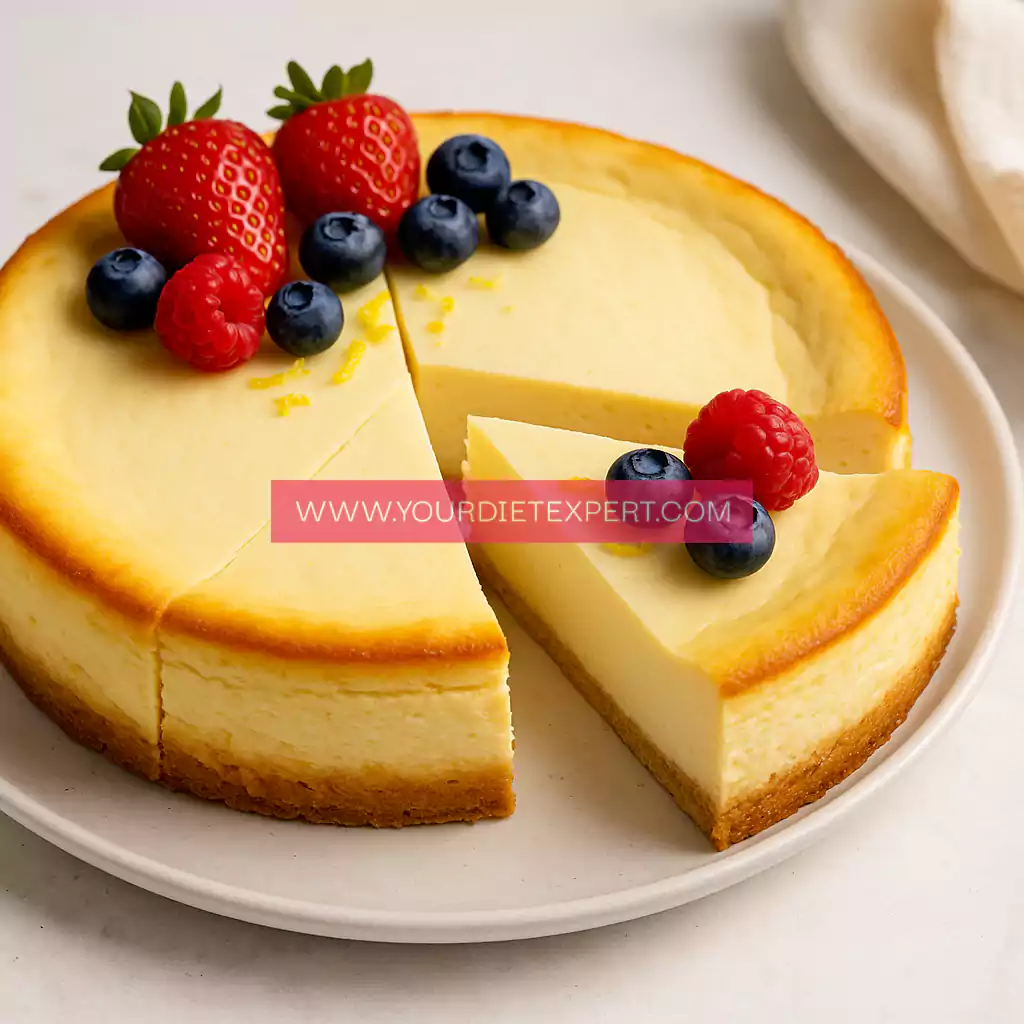
Slice the chilled cheesecake using a sharp knife. For clean slices, wipe the knife between cuts. Serve with fresh berries, a spoonful of Greek yogurt, a drizzle of sugar-free syrup, or enjoy it plain — it’s rich and creamy on its own.