Slice the zucchini lengthwise into thin, even strips using a sharp knife or mandoline. Lay the slices out in a single layer on a clean kitchen towel or paper towels and sprinkle them very lightly with salt. Let them rest for about 15 minutes. During this time, the salt will draw excess moisture out of the zucchini, which is crucial for preventing a watery lasagna. After resting, gently press and pat the slices dry with additional towels, removing as much surface moisture as possible without tearing the zucchini.
Place a large skillet over medium heat and add the olive oil. Once the oil is warm and shimmering, add the chopped onion. Cook slowly, stirring occasionally, until the onion becomes soft and translucent. This should take about 4–5 minutes. Avoid browning the onion, as you want a sweet, mellow base rather than a harsh flavor.
Stir the minced garlic into the softened onions and cook for about 20–30 seconds, just until fragrant. Keep the garlic moving and watch closely, as garlic can burn quickly and turn bitter if overheated.
Add the ground meat to the skillet, breaking it apart with a spoon or spatula as it cooks. Continue cooking until the meat is fully browned and no longer pink. Season with salt, black pepper, and Italian seasoning, stirring well so the seasoning is evenly distributed. Take a moment to taste and adjust seasoning if needed—this is the backbone of the lasagna’s flavor.
Pour the marinara sauce into the skillet with the cooked meat. Stir to combine, then reduce the heat to low and let the sauce simmer gently for about 10 minutes. This short simmer allows the flavors to meld and slightly thickens the sauce, helping the final lasagna hold its shape better.
While the sauce simmers, prepare the ricotta layer. In a medium bowl, add the ricotta cheese and crack in the egg. Mix thoroughly until smooth and fully combined. The mixture should be creamy and cohesive, with no visible streaks of egg. This mixture adds structure and creaminess to the lasagna layers.
Preheat the oven to 190°C (375°F). Lightly grease a baking dish with oil or butter, making sure to coat the bottom and sides to prevent sticking.
Spoon a thin layer of the meat sauce into the bottom of the prepared baking dish and spread it evenly. This initial layer prevents the zucchini from sticking and helps everything cook evenly.
Arrange a single layer of zucchini slices over the sauce, slightly overlapping them if necessary to fully cover the surface. Spread a portion of the ricotta mixture evenly over the zucchini, then sprinkle a generous layer of mozzarella cheese on top.
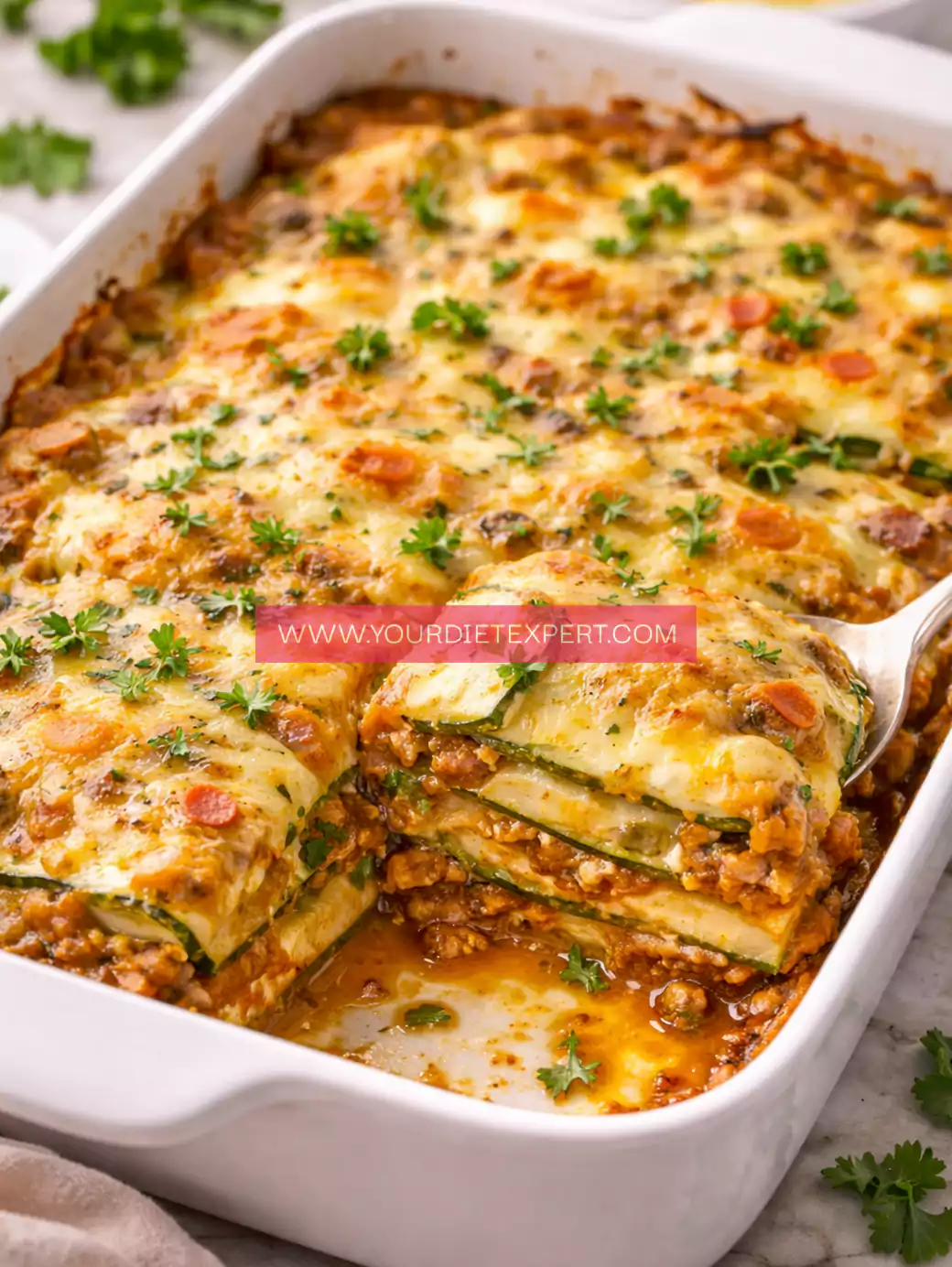
Repeat the layering process: meat sauce, zucchini slices, ricotta mixture, and mozzarella. Continue until all components are used, finishing with a final layer of meat sauce and the remaining cheese on top for a golden, bubbly finish.
Cover the baking dish loosely with foil, making sure it does not touch the cheese. Place the dish in the preheated oven and bake for 30 minutes. This covered stage allows the lasagna to heat through evenly without drying out.
Carefully remove the foil and return the dish to the oven. Bake for an additional 10–15 minutes, or until the cheese on top is melted, bubbling, and lightly golden around the edges.
Remove the lasagna from the oven and let it rest for 15–20 minutes before slicing. This resting time is essential—it allows the layers to set and the excess moisture to redistribute, making the lasagna much easier to slice cleanly.
Slice gently using a sharp knife and serve warm. The lasagna should hold its shape while still being tender, cheesy, and rich in flavor.