
A good meal-prep container does not have to contain a complicated recipe. Sometimes the most useful lunch is simply a collection of foods that work well together: a protein, a satisfying carbohydrate, colorful vegetables, fruit, healthy fats, and something crunchy.
That is the idea behind these balanced meal prep containers.
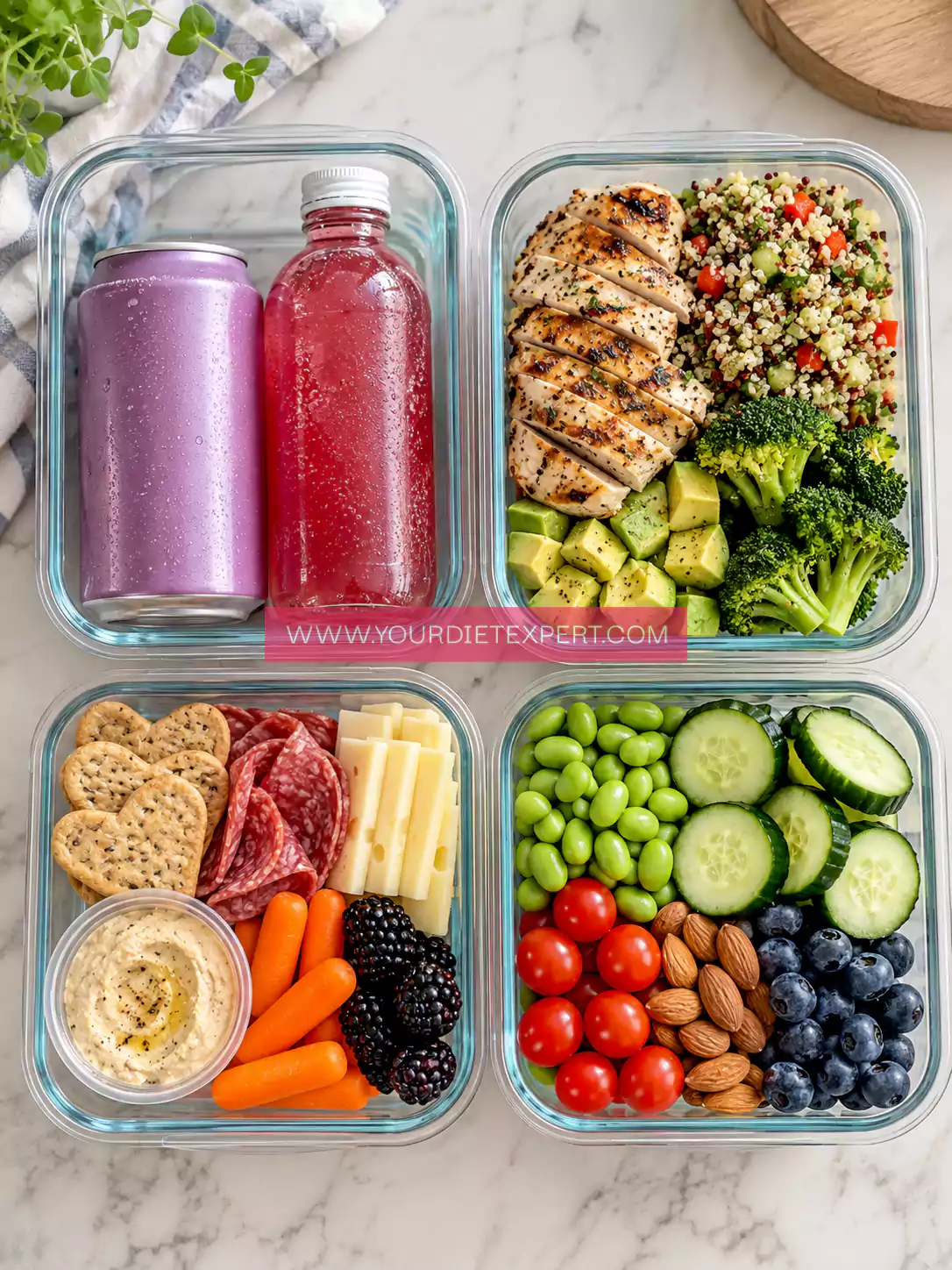
The combinations shown here range from a grilled chicken and quinoa lunch to a snack-style container with crackers, salami, cheese, hummus, berries, and carrots. Another box combines edamame with cucumber, tomatoes, almonds, and blueberries, while a separate container pairs two pre-packaged prebiotic sodas as a convenient drink option.
Rather than treating the photo as four rigid recipes, this article turns the concept into a practical meal-prep system you can customize.
You can use the same basic ingredients in different proportions depending on whether you’re packing a full lunch, a lighter snack, or something to eat between meals.
The biggest advantage is that these meals require relatively little complicated cooking. Chicken and quinoa can be prepared in a batch, vegetables can be washed and sliced at once, and snack-box ingredients can simply be portioned into compartments.
Build Around 5 Simple Components
You don’t need every component in equal amounts.
Why Balanced Meal Prep Containers Work
The advantage of a compartment-style lunch is that you can see exactly what you’re packing.
Instead of placing a single large portion of one food into a container, you can build a meal with several components. That creates variety in flavor, texture, color, and nutritional contribution.
A chicken-and-quinoa container, for example, can combine:
- Lean protein from chicken
- Carbohydrates and some protein from quinoa
- Fiber and micronutrients from broccoli
- Fat and additional nutrients from avocado
- Additional vegetables in the quinoa mixture
A snack-style box has a different structure. It may rely on cheese, salami, hummus, nuts, and vegetables rather than a traditional grain-based lunch.
The goal isn’t to make every box identical. Balance can look different from one meal to another.
This approach is especially useful if you become bored with conventional meal-prep dishes such as the same chicken, rice, and vegetables every day.
Choose Your Main Meal Style
Protein + grain + vegetables + healthy fat
Protein + produce + dip + crunch
A convenient beverage kept separate
1. Grilled Chicken, Quinoa, Broccoli & Avocado Box
This is the most traditional full-meal combination in the collection.
The container features sliced grilled chicken breast, a quinoa-and-vegetable mixture, steamed broccoli, and diced avocado.
It has a straightforward structure: protein, grain, vegetables, and a creamy source of fat.
Suggested Ingredients
For one lunch-sized container:
- 4–5 ounces cooked grilled chicken breast
- ½–¾ cup cooked quinoa
- ½ cup cooked mixed vegetables
- ½–1 cup steamed broccoli
- ¼–½ avocado, diced
- 1–2 teaspoons olive oil or a simple seasoning blend, optional
- Lemon juice, optional
- Salt and black pepper, to taste
The exact amount of each ingredient can be adjusted according to appetite and your overall calorie and protein needs.
How to Prepare It
- Season the chicken with salt, pepper, garlic, paprika, lemon, or your preferred seasoning.
- Grill or pan-cook until fully cooked.
- Allow the chicken to cool slightly before slicing.
- Cook quinoa according to the package directions.
- Steam the broccoli until tender but still slightly firm.
- Combine cooked quinoa with finely chopped vegetables.
- Add the quinoa mixture to one side of the container.
- Place sliced chicken beside it.
- Add broccoli to another section.
- Add diced avocado once the other ingredients have cooled.
Why This Combination Is Useful
Chicken provides a substantial protein component, while quinoa gives the meal a grain-based foundation. Broccoli contributes color, crunch, and fiber, while avocado adds creaminess and fat.
It also reheats well without the avocado.
If you plan to microwave the lunch, keep the avocado separate or add it after reheating.
Easy Variations
You can replace chicken with:
- Turkey breast
- Grilled tofu
- Salmon
- Lean beef
- Chickpeas
Quinoa can also be replaced with brown rice, farro, couscous, or another grain that fits your eating pattern.
Meal Prep Tips for Chicken and Quinoa
This box is particularly easy to batch prepare.
Cook several chicken breasts at once and prepare a larger batch of quinoa. Steam a large quantity of broccoli and portion everything after cooling.
Rather than putting all the chicken and quinoa into one large container, divide them immediately into individual servings.
That turns one cooking session into several lunches.
For the best texture, avoid sealing very hot food in airtight containers. Let cooked food cool appropriately before refrigerating, while still following safe food-handling practices.
2. Salami, Swiss Cheese, Hummus & Berry Snack Box
Not every meal needs to resemble a traditional lunch plate.
The second container is more like an elevated snack box, with heart-shaped crackers, salami slices, Swiss cheese, baby carrots, blackberries, and hummus.
This type of box is particularly convenient for people who prefer grazing-style meals or want something that can be eaten without reheating.
Suggested Ingredients
- 1 serving whole-grain or whole-wheat crackers
- 2–3 ounces sliced salami
- 1–2 ounces Swiss cheese
- ½ cup baby carrots
- ½ cup blackberries
- 2 tablespoons hummus
How to Assemble
- Place the crackers in a dry section of the container.
- Fold or roll the salami slices.
- Add sliced or cubed Swiss cheese.
- Arrange baby carrots beside the savory ingredients.
- Add blackberries separately.
- Place hummus in a small leak-resistant cup or compartment.
What Makes It Different?
The appeal of this box is contrast.
You get:
Crunch from crackers and carrots.
Creaminess from hummus and cheese.
Savory flavor from salami.
Freshness and acidity from blackberries.
This is a useful reminder that meal prep doesn’t always have to mean cooking a large entrée.
A Note About Processed Meats
Salami can be convenient, but it is generally higher in sodium and saturated fat than many leaner protein choices.
If you’re building this type of box regularly, you can alternate salami with sliced turkey, chicken, roast beef, tuna, eggs, or another protein.
That keeps the basic format while giving you more variety.
3. Edamame, Cucumber, Tomato, Almond & Blueberry Box
The third container is built almost entirely from fresh and minimally prepared ingredients.
It contains steamed edamame, sliced cucumber, cherry tomatoes, raw almonds, and blueberries.
This is a colorful combination with plenty of contrasting textures.
The edamame provides the main protein-containing component, while almonds contribute fat and crunch. Cucumber and tomatoes add freshness, and blueberries bring a naturally sweet element.
Suggested Ingredients
- ¾–1 cup shelled edamame
- ½ cucumber, sliced
- ½ cup cherry tomatoes
- 2 tablespoons almonds
- ½ cup blueberries
- Optional lemon wedge
- Optional pinch of salt and black pepper
Preparation
- Steam or boil shelled edamame according to the package instructions.
- Cool the edamame thoroughly.
- Wash and dry the cucumber and tomatoes.
- Slice the cucumber.
- Portion blueberries into a separate section.
- Add almonds to a dry compartment.
- Arrange the edamame and vegetables so they remain easy to grab.
Make It More Substantial
This combination can function as a lighter lunch or snack, but you can easily turn it into a larger meal.
Add:
- Grilled chicken
- Tofu
- Hard-boiled eggs
- Quinoa
- Whole-grain crackers
- A small hummus portion
For additional flavor, try a squeeze of lemon over the edamame and cucumber shortly before eating.
A Colorful Plant-Forward Combination
4. Prebiotic Soda Pairing Container
The fourth container in the image is different from the others.
Rather than containing a meal, it holds two pre-packaged prebiotic sodas: a grape-flavored Olipop and a raspberry-rose Poppi.
This is better thought of as a beverage-prep or drink-pairing container rather than a meal container.
That distinction matters because beverages don’t replace the protein, vegetables, fruit, or other foods that make up a balanced meal.
Why Keep Drinks Separate?
A dedicated drink container can be useful when you’re transporting beverages alongside prepared meals.
It can:
- Keep cans or bottles from rolling around in a lunch bag
- Prevent condensation from reaching food
- Make weekday packing faster
- Keep beverages separate from ingredients that need refrigeration
- Create a grab-and-go section in your meal-prep routine
If the beverage needs to remain cold, use appropriate refrigeration or an insulated lunch bag with cold packs.
What About Prebiotic Sodas?
Products marketed as prebiotic sodas commonly contain added ingredients intended to support the digestive system, but formulations differ substantially between brands and flavors.
Check the nutrition label for:
- Added sugar
- Total carbohydrate
- Fiber
- Sweeteners
- Caffeine, if applicable
- Serving size
A beverage can be part of an overall eating pattern without being necessary for a balanced meal.
Water should still remain an important everyday beverage choice.
Think of the Beverage as an Add-On
How to Build a Balanced Meal Prep Container
You don’t need to copy any one of the four boxes exactly.
Instead, use the combinations as a framework.
Start With Protein
Choose one main protein source.
Good options include:
- Grilled chicken
- Turkey
- Eggs
- Greek yogurt
- Cottage cheese
- Edamame
- Tofu
- Tuna
- Salmon
- Lean beef
If you are preparing lunches for several days, choose two proteins and alternate them.
For example, chicken can form the base of Monday, Wednesday, and Friday lunches while edamame, eggs, or another protein can be used on the other days.
Add a Satisfying Base
A full lunch may benefit from a carbohydrate-rich base such as:
- Quinoa
- Brown rice
- Whole-grain crackers
- Whole-wheat pita
- Whole-grain bread
- Potatoes
- Whole-grain pasta
You don’t necessarily need a grain in every container. The snack-style box demonstrates that vegetables, fruit, protein foods, and a crunchy side can create an entirely different meal structure.
Add Colorful Produce
This is where meal prep becomes much more visually appealing.
The image uses broccoli, avocado, carrots, blackberries, cucumber, cherry tomatoes, blueberries, and edamame.
You can rotate seasonal produce to keep your containers interesting.
Try combinations such as:
Green: broccoli + cucumber + edamame
Red: tomatoes + strawberries + red peppers
Orange: carrots + oranges + roasted sweet potato
Purple: blueberries + blackberries + purple cabbage
Using several colors naturally creates more visual variety without requiring elaborate recipes.
Use Color to Create Variety
Cucumber
Edamame
Peppers
Strawberries
Sweet potato
Citrus
Blackberries
Raspberries
Add a Healthy-Fat Component
A small portion of fat-containing foods can make a meal more satisfying and add another texture.
The photographed combinations use avocado, almonds, cheese, and hummus.
Other options include:
- Pumpkin seeds
- Sunflower seeds
- Walnuts
- Tahini
- Natural peanut butter
- Guacamole
- Olive-oil-based dressing
You don’t need several of these in one container. Usually, one is enough to complete the combination.
Add Something Crunchy
Crunch is one of the easiest ways to prevent meal-prep food from feeling monotonous.
Try:
- Whole-grain crackers
- Pretzels
- Almonds
- Walnuts
- Pumpkin seeds
- Roasted chickpeas
- Crisp vegetables
The key is keeping crunchy ingredients away from moisture.
A cracker sitting next to hummus for several days will not have the same texture as a cracker kept dry.
Keep Wet and Crunchy Foods Apart
Use separate compartments or small containers whenever possible.
A Simple Weekly Meal Prep Strategy
You can prepare these containers without spending hours in the kitchen.
Sunday: Cook the Basics
Prepare a batch of:
- Grilled chicken
- Quinoa
- Steamed broccoli
- Edamame
Allow cooked foods to cool appropriately before refrigerating.
Monday: Build Fresh Components
Wash and prepare:
- Cucumbers
- Cherry tomatoes
- Blueberries
- Blackberries
- Carrots
- Avocado
Keep delicate produce such as avocado for later assembly where possible.
Tuesday: Build Snack Boxes
Portion:
- Crackers
- Cheese
- Salami or turkey
- Hummus
- Carrots
- Berries
Keep dry ingredients separate from hummus and other moist foods.
Wednesday: Change the Flavor
Use the same chicken and quinoa components but change the seasoning.
Try:
- Lemon + garlic
- Paprika + cumin
- Italian herbs
- Black pepper + herbs
- Sesame + ginger
A different seasoning can make the same basic ingredients feel like a different lunch.
Prep Once, Recombine Throughout the Week
Storage and Food Safety
Meal prep becomes much easier when you separate foods according to how well they store.
Cooked chicken, quinoa, and steamed broccoli are well suited to batch cooking when cooled and refrigerated properly.
Fresh berries, cucumber, and tomatoes can also be prepared ahead, but they should be washed and dried thoroughly before packing.
Avocado is more delicate. If you notice browning or texture changes after storing it, prepare it closer to serving time instead.
For perishable foods, keep your refrigerator at 40°F (4°C) or below and avoid leaving prepared meals at room temperature for prolonged periods.
When transporting a lunch to work or school, use an insulated lunch bag and cold packs if refrigeration will not be immediately available.
How Long Should Meal Prep Last?
A four-day meal-prep cycle is a practical framework for many cooked lunches, but storage time depends on the ingredients, preparation method, refrigeration, and food-handling practices.
For the best quality, prepare highly perishable components in smaller batches and replenish them during the week rather than trying to make every container at once.
Use your senses as an additional quality check, but don’t rely on smell or appearance alone to determine whether potentially unsafe food is safe to eat.
When in doubt, discard it.
How to Make These Containers More Protein-Focused
The chicken-quinoa container already has a substantial protein component, but the other boxes can be modified.
For the snack box, increase the amount of lean meat, cheese, hummus, or add a hard-boiled egg.
For the edamame box, increase edamame or add tofu, eggs, chicken, or Greek yogurt.
You can also pair a snack-style container with a protein-rich yogurt.
The important point is that protein does not have to come from one specific food.
Several smaller protein sources can contribute to the overall meal.
Easy Ingredient Swaps
One of the best ways to make meal prep sustainable is to avoid buying an entirely different grocery list every week.
Instead, swap ingredients within the same category.
Chicken → turkey → tofu → eggs
Quinoa → brown rice → farro → whole-grain crackers
Broccoli → green beans → cauliflower → snap peas
Blueberries → strawberries → blackberries → raspberries
Avocado → hummus → guacamole → nuts
Almonds → walnuts → pumpkin seeds → sunflower seeds
This keeps the same meal-prep structure while changing the flavors.
One Formula, Many Ingredients
Chicken ↔ Turkey ↔ Tofu ↔ Eggs
Quinoa ↔ Brown rice ↔ Farro ↔ Crackers
Broccoli ↔ Snap peas ↔ Cauliflower ↔ Green beans
Blueberries ↔ Strawberries ↔ Blackberries ↔ Raspberries
Avocado ↔ Hummus ↔ Guacamole ↔ Nuts
Almonds ↔ Walnuts ↔ Seeds ↔ Whole-grain crackers
Frequently Asked Questions
What should a balanced meal prep container include?
A practical starting point is a protein source, vegetables or fruit, a satisfying carbohydrate when appropriate, and a source of healthy fat. A crunchy component or dip can also make the meal more enjoyable.
Can I use these ideas for work lunches?
Yes. The chicken and quinoa box can be eaten as a conventional lunch, while the snack-style containers work well for lunches that don’t require reheating. Use an insulated lunch bag and cold packs when refrigeration isn’t immediately available.
Is quinoa good for meal prep?
Yes. Cooked quinoa is convenient for batch preparation and can be combined with chicken, vegetables, herbs, or other ingredients. Cool and refrigerate it promptly using safe food-handling practices.
How can I make the snack box higher in protein?
Increase the amount of lean meat, add an egg, choose a higher-protein yogurt, or include more protein-containing foods such as edamame, hummus, cottage cheese, or tofu.
Can I replace salami in the snack box?
Absolutely. Turkey, grilled chicken, roast beef, eggs, tuna, or another preferred protein can replace salami. This can also give you more control over sodium and fat depending on the product you choose.
Are prebiotic sodas necessary for a healthy meal?
No. They are optional beverages rather than a required part of a balanced meal. Compare labels for sugar, fiber, sweeteners, caffeine, and serving size, and keep water as a regular hydration choice.
How do I keep meal prep vegetables fresh?
Wash and dry vegetables thoroughly before packing, avoid excess moisture, and keep particularly wet ingredients separated from foods that can become soggy. Produce quality also varies, so delicate vegetables may be better prepared closer to serving.
Can I freeze these meal prep containers?
Some cooked components, such as chicken and quinoa, may be suitable for freezing in freezer-safe containers. Fresh cucumber, berries, avocado, and other high-moisture ingredients generally have better texture when refrigerated rather than frozen. Check that your specific glass container is freezer-safe before freezing.
Final Takeaway
Balanced meal prep doesn’t have to mean eating the same reheated bowl every day.
These four combinations demonstrate several different ways to approach the same basic idea: prepare a few useful ingredients, portion them into containers, and combine protein, produce, carbohydrates, healthy fats, and enjoyable textures according to the type of meal you want.
The chicken, quinoa, broccoli, and avocado box works as a traditional full lunch.
The salami, Swiss cheese, hummus, cracker, carrot, and berry box takes a snack-board approach.
The edamame, cucumber, tomato, almond, and blueberry combination provides a fresh plant-forward option that can be expanded into a larger meal.
And the prebiotic soda container demonstrates how beverages can be organized separately as a convenient meal-prep add-on rather than being treated as the meal itself.
The real meal-prep strategy is the flexibility behind these combinations. Cook one or two proteins, prepare a grain, wash several vegetables and fruits, and portion a few crunchy sides. From there, you can build different containers throughout the week without starting from scratch every morning.

Leave a Reply