
Meal prep does not have to mean eating the same chicken-and-rice container five days in a row.
Sometimes the easiest way to stay interested in homemade lunches is to prepare meals that look and feel completely different from one another. A sushi-style lunch box one day, a Mediterranean wrap the next, a colorful spring-roll box after that—it gives you variety without making meal prep unnecessarily complicated.
These 6 healthy meal prep ideas are built around that idea.
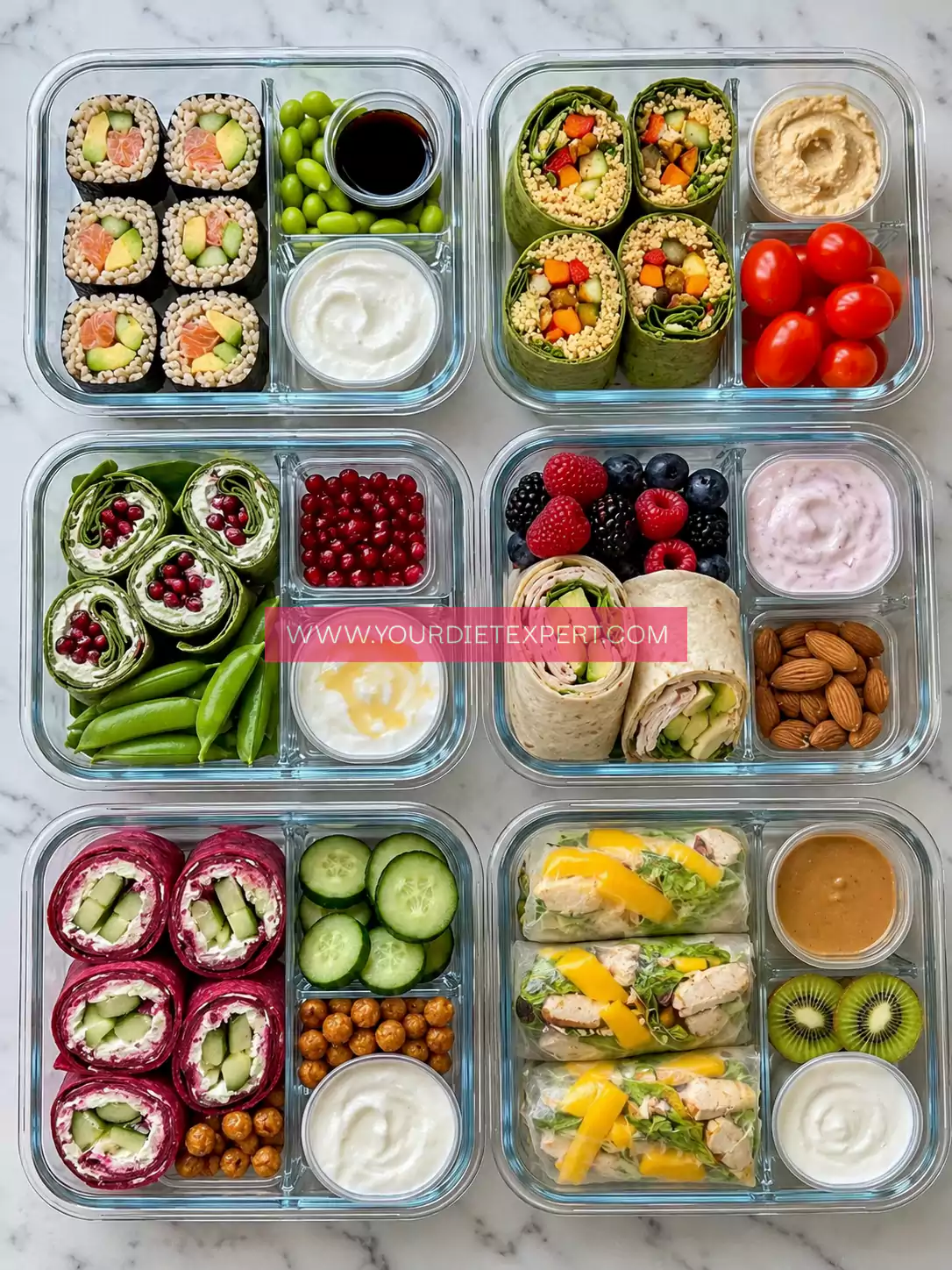
The inspiration here is a six-container meal-prep collection featuring sushi rolls, tortilla wraps, flatbread, cucumber pinwheels, and rice-paper spring rolls. Each meal combines a main item with simple sides such as fruit, yogurt, vegetables, edamame, almonds, hummus, or a dipping sauce.
That combination is useful because you are not relying on one food to make the entire meal satisfying. Instead, each lunch box has a main component plus supporting foods that add different textures, flavors, and nutrients.
You can also customize almost every box according to what you already have in the refrigerator.
Quick Meal Prep Overview
- Meal ideas: 6 colorful lunch boxes
- Main foods: sushi, wraps, pinwheels and spring rolls
- Prep style: make-ahead and portion into individual containers
- Best for: weekday lunches, work meals and grab-and-go meals
- Key strategy: combine a protein or filling main with produce and a simple side
- Storage: keep refrigerated and separate wet ingredients when possible
Why You’ll Love These Healthy Meal Prep Ideas
The biggest advantage of these lunches is variety.
A good meal-prep routine should make eating at home easier, not make food boring. These six combinations use different cuisines and ingredients while following a similar basic structure: a prepared main, something fresh, and a small side that complements the meal.
They are also visually appealing. Colorful vegetables, berries, mango, kiwi, pomegranate, avocado, and leafy greens make the containers look more appetizing before you even take the first bite.
Another advantage is flexibility.
You do not have to duplicate the exact containers shown in the photo. If you do not have couscous, use quinoa. If you prefer chicken instead of turkey, make that swap. If dairy does not work for you, use a dairy-free yogurt or another creamy spread.
The goal is to build a lunch that works for your schedule, appetite, dietary preferences, and available ingredients.
The Meal Prep Formula
For an easy balanced lunch box, think in four parts:
- Main: wrap, roll, sushi or another filling centerpiece
- Protein: salmon, turkey, chicken, yogurt, hummus, chickpeas or another suitable option
- Produce: vegetables or fruit for freshness and variety
- Flavor booster: hummus, soy sauce, peanut sauce, yogurt or another dip
1. Salmon Avocado Brown Rice Sushi Box
This is the most sushi-inspired lunch in the collection and makes a particularly fun alternative to a conventional sandwich.
The rolls combine brown rice with salmon and avocado inside sheets of nori. The lunch box is then rounded out with edamame, soy sauce, and a small serving of Greek yogurt.
For meal prep, the most important consideration is the salmon. If you are using raw salmon, it should be specifically intended for raw consumption and handled carefully. For a simpler make-ahead lunch, cooked salmon is an excellent alternative.
What You’ll Need
For the sushi:
- 2 nori sheets
- 1 cup cooked brown sushi rice, cooled
- 3–4 oz cooked salmon, flaked, or appropriately handled sushi-grade salmon
- ½ avocado, sliced
- 1–2 teaspoons rice vinegar
- Small pinch of salt
For the lunch box:
- ½ cup shelled edamame
- 1–2 tablespoons low-sodium soy sauce
- ½ cup plain or low-sugar Greek yogurt
How to Make It
- Cook the brown rice according to the package directions and allow it to cool until it is comfortable to handle.
- Mix the rice with a small amount of rice vinegar and a pinch of salt.
- Place a nori sheet on a sushi mat or clean flat surface.
- Spread a thin layer of rice over the nori, leaving a little space at one edge.
- Add salmon and avocado in a narrow line across the rice.
- Roll firmly and slice into bite-sized pieces with a sharp, slightly damp knife.
- Arrange the sushi pieces in one section of the container.
- Add edamame, yogurt, and a small sealed container of soy sauce.
The brown rice provides a slightly nutty flavor and more texture than very soft white sushi rice, while avocado adds creaminess that balances the salmon.
Easy Substitutions
Use cooked shrimp, cooked chicken, tofu, or canned salmon if you do not want to use raw fish.
You can also add cucumber strips or shredded carrot for extra crunch.
Sushi Meal Prep Tip
If you are preparing these several days ahead, cooked salmon is the more straightforward option. Keep soy sauce separate so the nori does not become unnecessarily soggy, and slice avocado as close to assembly as practical.
2. Mediterranean Couscous & Vegetable Wraps
These colorful wraps bring together couscous, roasted vegetables, leafy greens, and hummus.
They are especially useful when you want a meat-free lunch that still feels substantial. The combination of couscous and hummus gives the wrap body, while roasted peppers and zucchini add sweetness and savory flavor.
What You’ll Need
For 2 wraps:
- 2 large spinach tortillas
- 1 cup cooked couscous
- ½ medium zucchini, diced
- ½ red bell pepper, diced
- 1 cup baby spinach
- ¼ cup hummus
- ½ teaspoon olive oil
- Salt and black pepper
- Optional: lemon juice, paprika, garlic powder or dried oregano
For the side:
- 1 cup cherry tomatoes
- Additional hummus for dipping
How to Make It
- Toss the zucchini and bell pepper with olive oil, salt, pepper, and your preferred seasonings.
- Roast at about 425°F until the vegetables are tender and lightly browned.
- Prepare the couscous and allow it to cool.
- Lay the spinach tortillas flat.
- Spread hummus over the center of each tortilla.
- Add spinach, couscous, roasted zucchini, and roasted pepper.
- Fold in the sides and roll tightly.
- Cut each wrap in half and place in meal-prep containers.
- Add cherry tomatoes and extra hummus on the side.
The important meal-prep trick here is allowing the roasted vegetables and couscous to cool before assembling the wraps. Warm ingredients can create condensation inside the tortilla, which makes it soften faster.
Ingredient Swaps
Quinoa, bulgur, or cooked brown rice can replace couscous.
For more protein, add grilled chicken, chickpeas, lentils, or baked tofu.
You can also replace spinach tortillas with whole-wheat tortillas or another sturdy wrap.
Smart Wrap-Building Trick
Put the hummus between drier ingredients and the tortilla rather than soaking the outer surface. Cool roasted vegetables completely before assembly, and keep juicy tomatoes on the side when preparing several days in advance.
3. Goat Cheese & Pomegranate Spinach Wraps
These wraps are a completely different flavor profile from the Mediterranean couscous version.
Soft goat cheese provides a tangy, creamy base while spinach keeps the wrap fresh. Pomegranate arils bring little bursts of sweetness and acidity, making every bite more interesting.
The original lunch-box combination also includes snap peas and honey Greek yogurt.
What You’ll Need
For 2 wraps:
- 2 spinach tortillas
- 3 oz soft goat cheese
- 1–1½ cups fresh baby spinach
- ⅓ cup pomegranate arils
- Black pepper
- Optional: a small drizzle of honey
For the sides:
- 1 cup snap peas
- ½–¾ cup Greek yogurt
- Small drizzle of honey if desired
Preparation
- Spread goat cheese evenly over each tortilla.
- Layer fresh spinach over the cheese.
- Sprinkle pomegranate arils across the center.
- Add black pepper and, if desired, a very small amount of honey.
- Roll the tortillas firmly and slice into pinwheels or halves.
- Place the wraps into containers with snap peas.
- Add Greek yogurt separately.
Because pomegranate arils release moisture, they are best kept toward the center of the wrap rather than directly against the outer tortilla.
Making It More Filling
If you want more protein and staying power, add sliced turkey, grilled chicken, or chickpeas.
For a vegetarian option, you can combine the goat cheese with chickpeas or white beans and lightly mash them together before spreading.
Storage Tip
These wraps are best prepared relatively close to the day you plan to eat them. If preparing several days ahead, keep the pomegranate arils separate and assemble the wrap the night before.
4. Turkey Avocado Flatbread Wrap Box
This is probably the most familiar combination in the collection.
Turkey, avocado, and lettuce are wrapped in soft flatbread and served with berries, almonds, and strawberry yogurt. The result is a lunch that combines savory, creamy, sweet, crisp, and crunchy components in one container.
What You’ll Need
For 2 wraps:
- 2 flatbreads
- 6–8 oz sliced turkey
- 1 avocado, sliced
- 1–2 cups shredded or chopped lettuce
- Black pepper
- Optional: mustard or a thin layer of hummus
For each lunch box:
- ½ cup mixed berries
- 1 oz almonds
- ½–¾ cup strawberry Greek yogurt
How to Assemble
- Place the flatbread on a clean work surface.
- Add lettuce first.
- Layer turkey over the lettuce.
- Add avocado slices.
- Add mustard or hummus if desired.
- Roll tightly and slice into manageable pieces.
- Add berries, almonds, and yogurt to separate compartments.
This is a particularly convenient office lunch because there is very little cooking involved.
What Makes This Box Balanced?
Turkey supplies the main protein component, avocado contributes unsaturated fat and creaminess, lettuce adds volume, berries provide fruit, and almonds contribute crunch and additional fat and protein. Yogurt adds another protein-containing food to the box.
Keep the Avocado Fresh
Avocado can brown after cutting. A practical approach is to slice it shortly before assembling the wrap or coat the exposed surface lightly with lemon or lime juice.
If the wrap is being prepared several days in advance, you can also leave the avocado out of the wrap and add it shortly before eating.
Simple Variations
Use chicken instead of turkey.
Replace flatbread with a whole-wheat tortilla.
Swap almonds for walnuts, pistachios, or pumpkin seeds if preferred.
For a dairy-free lunch, use a suitable dairy-free yogurt.
5. Beet & Cream Cheese Cucumber Pinwheels
These vibrant pinwheels are one of the most visually distinctive options.
The beet-colored tortilla creates a bright base for creamy cheese and fresh cucumber. The accompanying container includes sliced cucumber, roasted chickpeas, and vanilla yogurt.
This is also a useful example of how a lunch box can include both familiar foods and something a little more creative.
What You’ll Need
- 2 beet-infused tortillas
- 3–4 oz cream cheese
- ½ large cucumber, thinly sliced
- Black pepper
- Optional: fresh herbs such as dill or parsley
For the sides:
- ½–1 cup cucumber slices
- ½ cup roasted chickpeas
- ½–¾ cup vanilla Greek yogurt
How to Make the Pinwheels
- Lay the beet tortillas flat.
- Spread cream cheese evenly across the surface.
- Arrange thin cucumber slices in a single layer.
- Sprinkle with black pepper and optional herbs.
- Roll the tortilla tightly from one side to the other.
- Chill briefly if necessary to make slicing easier.
- Cut into thick pinwheels.
- Place the pinwheels in the container with cucumber slices and roasted chickpeas.
- Add yogurt in a separate compartment.
The key is using thin cucumber slices. Thick pieces make the tortilla harder to roll and can cause the pinwheels to fall apart.
Boosting the Protein
Cream cheese is primarily there for texture and flavor rather than as the main protein source.
If you want this lunch to be more protein-forward, add sliced turkey or chicken to the pinwheels, or pair the meal with a higher-protein Greek yogurt.
You can also season roasted chickpeas with smoked paprika, garlic powder, cumin, or chili powder.
Keep Pinwheels Firm
Use a moderate layer of cream cheese rather than spreading it too thickly. Excess filling and watery cucumber can make the tortilla difficult to roll and cause the pinwheels to loosen during storage.
6. Chicken & Mango Rice Paper Spring Rolls
The final box takes inspiration from fresh spring rolls.
Rice-paper wrappers surround grilled chicken, mango, lettuce, and yellow bell pepper. The lunch is served with peanut dipping sauce, kiwi, and coconut yogurt.
This combination is especially good when you want something fresh rather than a heavy cooked lunch.
What You’ll Need
For 4–6 spring rolls:
- 4–6 rice-paper wrappers
- 6 oz cooked grilled chicken, sliced thinly
- ½ mango, cut into thin strips
- 1 cup shredded lettuce
- ½ yellow bell pepper, thinly sliced
- 2 kiwi fruits
- ½ cup coconut yogurt
For the dipping sauce:
- 2 tablespoons natural peanut butter
- 1–2 tablespoons warm water
- 1 teaspoon low-sodium soy sauce
- Small squeeze of lime juice
- Optional: chili flakes
How to Make the Spring Rolls
- Prepare all fillings before soaking the rice paper.
- Fill a shallow dish with lukewarm water.
- Dip one rice-paper wrapper briefly until it becomes flexible.
- Place it on a clean damp surface.
- Add lettuce, chicken, mango, and bell pepper near the lower third.
- Fold the bottom over the filling.
- Fold in both sides.
- Roll firmly upward until sealed.
- Repeat with the remaining wrappers.
- Mix the peanut sauce ingredients and place the sauce in a separate sealed container.
- Pack kiwi and coconut yogurt alongside the rolls.
Do not soak the rice paper for too long. It continues softening after it comes out of the water, and an overly soft wrapper is more likely to tear while rolling.
Prevent Spring Rolls From Sticking
Leave a little space between finished rolls rather than stacking them directly on top of one another. If needed, separate them with lettuce leaves or parchment. Keep the peanut sauce completely separate until serving.
How to Meal Prep All 6 Lunches Efficiently
You do not need to make all six meals from scratch at the same time.
A better approach is to prepare ingredients in batches and then assemble different combinations.
Start with foods that take the longest.
Cook your brown rice and couscous first. While they cook, roast the zucchini, bell pepper, and chickpeas. At the same time, prepare chicken or salmon if you are using cooked proteins.
Once those ingredients cool, wash and cut the vegetables and fruit.
Then assemble the wraps and containers.
A Simple 60–90 Minute Prep Strategy
- 10 minutes: Wash produce and organize containers.
- 20–30 minutes: Cook rice, couscous, chicken or salmon as needed.
- 20 minutes: Roast vegetables and chickpeas.
- 10–15 minutes: Slice fruit and fresh vegetables.
- 15–20 minutes: Assemble wraps, sushi components and side portions.
- 5 minutes: Label containers and refrigerate.
The exact timing depends on your equipment and how many portions you prepare, but the principle is simple: batch the components instead of treating every lunch as a separate recipe.
How to Keep Meal-Prep Wraps From Getting Soggy
Soggy wraps are one of the most common meal-prep problems.
The biggest causes are wet vegetables, warm fillings, sauces, and excessive spreads.
A few small changes make a major difference.
First, allow cooked ingredients to cool before wrapping them. Steam trapped inside a tortilla eventually turns into condensation.
Second, keep high-moisture ingredients separate whenever practical. Tomatoes, cucumber, berries, and dipping sauces are often better in their own compartments.
Third, use sturdy tortillas or flatbreads when you know the meal will sit in the refrigerator overnight.
Finally, avoid overfilling. A tightly packed wrap can look impressive when assembled but become difficult to eat and more likely to split.
How to Store These Healthy Meal Prep Ideas
Keep all prepared meals refrigerated promptly rather than leaving them at room temperature for extended periods.
A refrigerator should be kept at 40°F/4°C or below for safe cold storage.
For the freshest texture, delicate wraps and fresh spring rolls are generally best eaten sooner rather than later. Cooked proteins and grains should also be cooled and refrigerated promptly.
Raw fish requires additional care. If you are using raw salmon for sushi, use fish specifically suitable for raw consumption and follow the handling instructions provided for that product. Cooked salmon is a simpler choice for routine meal prep.
Storage Checklist
- Refrigerate prepared lunches promptly.
- Keep sauces and wet ingredients separate when possible.
- Cool cooked rice, grains and proteins before sealing containers.
- Use airtight containers to protect texture and freshness.
- Check fresh produce before eating and discard anything that looks spoiled.
- For longer storage, freeze only components that tolerate freezing well rather than freezing delicate fresh wraps.
Which Ingredients Can You Prepare Ahead?
A major benefit of these lunch boxes is that many components can be prepared independently.
Good Make-Ahead Components
Cooked grains:
Brown rice and couscous can be prepared ahead and refrigerated.
Cooked chicken:
Grilled chicken can be cooked in batches and portioned for several lunches.
Roasted vegetables:
Zucchini, peppers, and chickpeas are excellent batch-prep foods.
Dips:
Hummus and peanut sauce can be portioned into small containers.
Washed produce:
Berries, snap peas, lettuce, and other produce can be cleaned and prepared ahead, provided they are stored properly.
Better Prepared Closer to Eating
Avocado is best added relatively close to serving.
Rice-paper spring rolls are also more delicate than a traditional wrap.
Fresh cucumber can release moisture, so it may be preferable to prepare cucumber-heavy pinwheels closer to the day they will be eaten.
Building These Meals Around Protein
If your goal is a more filling meal or you are intentionally increasing protein intake, pay particular attention to the centerpiece of each box.
The turkey and chicken wraps naturally provide an obvious protein source. Salmon sushi can also contribute a meaningful amount of protein.
The vegetarian meals can be adjusted more deliberately.
For the couscous wrap, add chickpeas, tofu, lentils, or grilled chicken.
For the goat cheese wrap, turkey, chicken, chickpeas, or another protein can be added.
For the cucumber pinwheels, use a higher-protein yogurt alongside them or add turkey to the roll.
The key is not to assume that every colorful or vegetable-heavy lunch is automatically high in protein. Protein depends on the ingredients and portions actually used.
Nutrition Takeaway
These lunch boxes can provide a useful combination of protein, carbohydrates, fats and produce, but the nutritional profile changes substantially with portion sizes and ingredient choices.
For a more protein-focused meal, prioritize portions of salmon, chicken, turkey, Greek yogurt, chickpeas, tofu or another protein-rich ingredient rather than relying mainly on tortillas, rice or fruit.
A 6-Day Meal Prep Rotation
You do not necessarily have to eat the same lunch every day.
These six containers can become a simple rotation:
Day 1: Salmon avocado brown rice sushi
Day 2: Mediterranean couscous and vegetable wraps
Day 3: Goat cheese and pomegranate spinach wraps
Day 4: Turkey avocado flatbread wraps
Day 5: Beet and cream cheese cucumber pinwheels
Day 6: Chicken and mango rice-paper spring rolls
If six different recipes feel like too much preparation, choose three and make two variations of each.
For example, prepare chicken once and use it in both a flatbread wrap and rice-paper spring rolls. Cook one batch of roasted vegetables and use them in multiple lunches. Buy one large container of Greek yogurt and portion it throughout the week.
That approach reduces both cooking time and food waste.
Ingredient Swaps for Different Dietary Preferences
One of the strengths of this meal-prep collection is how easily the components can be adjusted.
Dairy-Free
Replace goat cheese, cream cheese, and dairy yogurt with suitable dairy-free alternatives.
Vegetarian
The sushi can use tofu or avocado with cucumber and edamame instead of salmon.
The turkey and chicken wraps can be replaced with chickpeas, tofu, tempeh, or another plant-based protein.
Gluten-Free
Choose certified gluten-free tortillas, flatbreads, and sauces where necessary. Rice paper is naturally useful for the spring-roll option, while rice and quinoa can replace wheat-based grains.
Higher Protein
Add chicken, turkey, salmon, tofu, edamame, chickpeas, or Greek yogurt according to the meal.
Lower-Carbohydrate
Use a lower-carbohydrate tortilla where appropriate, increase the vegetable and protein portions, and reduce the rice or couscous portion.
Easy Ingredient Swap Guide
| Original | Try Instead |
|---|---|
| Salmon | Cooked shrimp, chicken or tofu |
| Couscous | Quinoa, bulgur or brown rice |
| Turkey | Chicken or plant-based protein |
| Goat cheese | Hummus or dairy-free spread |
| Greek yogurt | Suitable dairy-free yogurt |
| Almonds | Walnuts, pistachios or pumpkin seeds |
Frequently Asked Questions
Can I make these healthy meal prep ideas ahead of time?
Yes. Most components can be prepared ahead, but the best storage time depends on the ingredient. Cooked grains and proteins generally work well for advance preparation, while avocado, cucumber-heavy wraps, and rice-paper rolls are better closer to serving for optimal texture.
How do I stop meal-prep wraps from becoming soggy?
Cool cooked ingredients completely before assembling them, avoid excessive wet fillings, and keep sauces separate. Juicy vegetables such as tomatoes and cucumber can also be packed separately when preparing the meals several days ahead.
Are these meal prep ideas high in protein?
Some are naturally more protein-focused than others. Salmon, turkey, chicken, Greek yogurt, edamame, chickpeas, and hummus can all contribute protein. If protein is a priority, increase the portion of the main protein source rather than simply adding more rice or tortilla.
Can I make these lunches vegetarian?
Absolutely. The couscous and vegetable wrap and goat cheese wrap are already vegetarian. The salmon, turkey, and chicken can also be replaced with tofu, chickpeas, edamame, lentils, or another suitable plant-based protein.
Can I freeze these meal-prep lunches?
Freezing is not ideal for every component. Cooked chicken, some grains, and roasted chickpeas can be frozen successfully, while fresh lettuce, cucumber, avocado, yogurt, and assembled rice-paper rolls generally lose quality when frozen. For best results, freeze individual components rather than the complete lunch box.
How long do homemade wraps last in the refrigerator?
The exact storage life depends on the ingredients and how quickly the food was refrigerated. For best quality, consume delicate fresh wraps sooner and keep all perishable foods properly chilled. When in doubt, follow the storage guidance for the individual ingredients and discard food that shows signs of spoilage.
What can I use instead of Greek yogurt?
You can use plain yogurt, skyr, cottage cheese on the side, or a suitable dairy-free yogurt. For a savory meal, hummus can also replace yogurt as a dip or creamy component.
How can I make these lunches more filling?
Increase the amount of protein and high-fiber foods, and include a combination of protein, produce, and satisfying fats. For example, add extra chicken or turkey, more edamame or chickpeas, a larger vegetable portion, or a small serving of nuts or seeds.
Quick answers for planning the six lunch boxes
Best for variety: Rotate all six options rather than repeating one lunch.
Best no-cook option: Turkey avocado flatbread wraps.
Best vegetarian starting point: Mediterranean couscous and vegetable wraps.
Best fresh option: Chicken and mango rice-paper spring rolls.
Best protein-focused options: Salmon sushi, turkey wraps and chicken spring rolls, depending on portions.
Final Thoughts
Meal prep works best when it fits your actual life.
You do not need six complicated recipes, a refrigerator full of specialty ingredients, or an entire Sunday spent cooking. These six lunch boxes show how a few prepared components can be turned into very different meals.
Use the sushi box when you want something fresh and different. Make the Mediterranean wraps when you have roasted vegetables available. Choose the turkey avocado wrap when you need something quick. Prepare the chicken and mango spring rolls when you want a lighter, colorful lunch.
And if six recipes feel excessive, start with two or three.
The most sustainable healthy meal prep ideas are the ones you will actually prepare, enjoy, and eat. Build around foods you like, keep wet ingredients separate when necessary, prepare versatile ingredients in batches, and adjust the protein, carbohydrate, and produce portions to suit your needs.
A colorful meal-prep container is nice—but a lunch that is convenient, satisfying, and realistic for your week is what makes the routine worthwhile.

Leave a Reply