
A good meal-prep lunch should do more than simply fit inside a container.
It should be filling enough to carry you through the afternoon, interesting enough that you actually look forward to eating it, and practical enough that preparing several portions does not turn your kitchen into a disaster.
That is exactly what makes healthy meal prep bowls so useful.
Instead of preparing nine completely different recipes, you can use a simple formula: choose a protein, add a grain or starchy carbohydrate when desired, pile in vegetables, and finish with a flavorful side or creamy component.
The nine meal combinations in this collection take that approach in different directions.
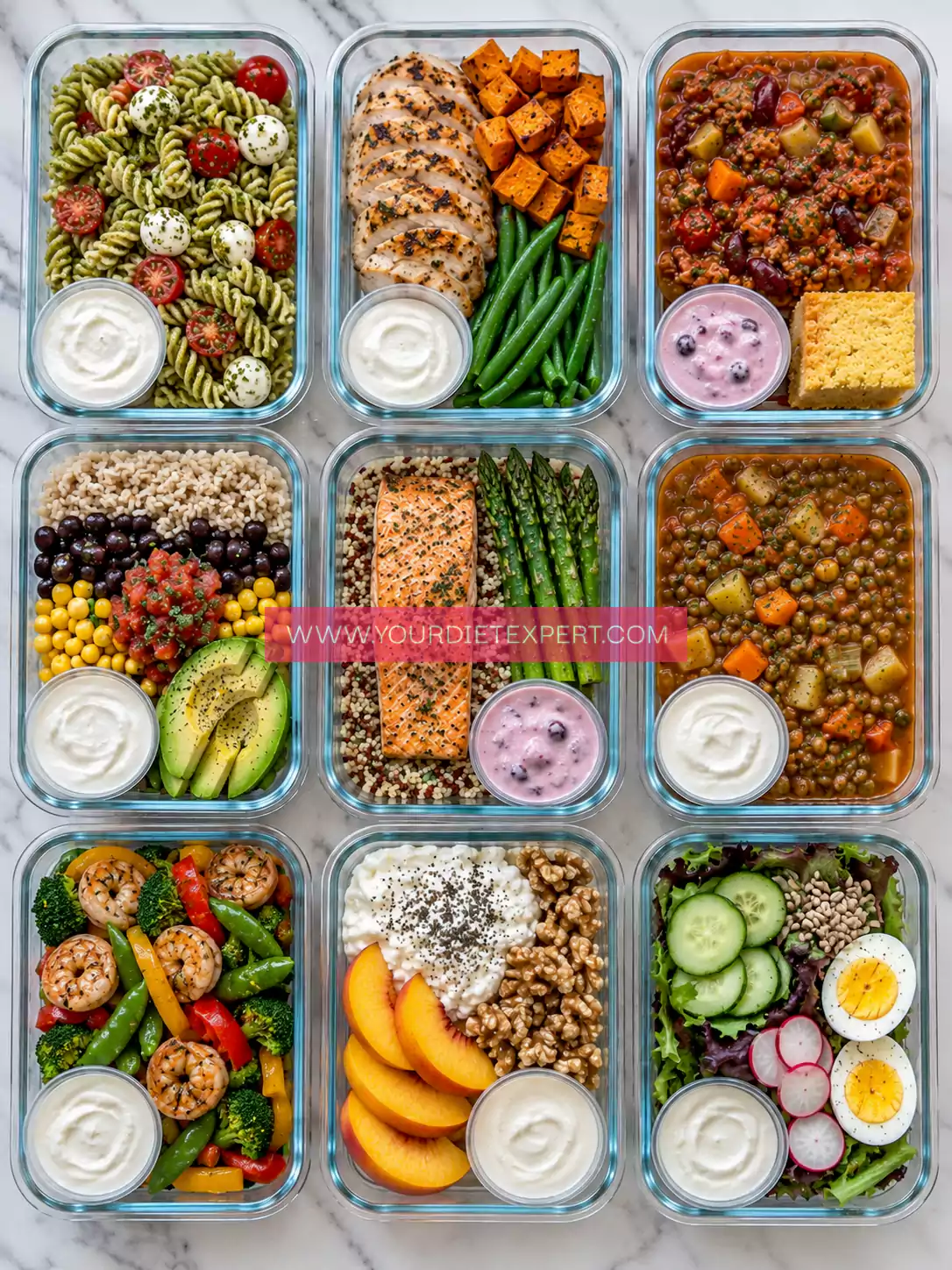
There is a pesto pasta and mozzarella salad for a cold lunch, grilled chicken with sweet potatoes and green beans for a classic meal-prep combination, turkey chili with cornbread for something hearty, and a black bean, corn and rice bowl for a plant-forward option.
There is also baked salmon with quinoa and asparagus, lentil and vegetable stew, garlic shrimp stir-fry, a cottage cheese and peach bowl, and a fresh garden salad topped with egg.
That gives you a useful mixture of warm and cold lunches, animal and plant proteins, grains, vegetables, fruit, dairy, and different textures.
9 Meal Prep Bowls at a Glance
- Cold option: Pesto pasta and mozzarella salad
- Chicken option: Grilled chicken, sweet potato and green beans
- Hearty option: Turkey and vegetable chili with cornbread
- Vegetarian options: Black bean rice bowl, lentil stew and cottage cheese bowl
- Seafood options: Baked salmon and garlic shrimp stir-fry
- Fresh option: Garden green salad with hard-boiled egg
- Best strategy: Batch-cook versatile ingredients and assemble different combinations throughout the week
Why You’ll Love These Healthy Meal Prep Bowls
Meal-prep bowls are one of the easiest formats to customize.
You can make them higher in protein, lower in carbohydrates, more vegetable-heavy, vegetarian, dairy-free, or simply larger or smaller depending on your needs.
They also make leftovers much more useful.
A batch of grilled chicken can become one lunch with sweet potatoes and green beans. Cook extra quinoa and it is ready for a salmon bowl. Brown rice can be paired with black beans, corn, salsa and avocado. A pot of lentil stew can provide several portions with very little additional work.
The nine ideas below also have another advantage: they do not all need to be eaten hot.
Some are designed to be enjoyed cold or at room temperature, while others are much better reheated. That gives you options if you work somewhere without a microwave.
The Basic Meal Prep Bowl Formula
Build a satisfying bowl around four components:
- Protein: chicken, salmon, shrimp, turkey, lentils, beans, eggs or cottage cheese
- Carbohydrate: rice, quinoa, pasta, potatoes, corn or another preferred source
- Vegetables or fruit: add color, texture and variety
- Flavor: pesto, salsa, herbs, yogurt, dressing or another sauce
1. Pesto Pasta & Mozzarella Salad
This is the cold lunch I would reach for when I want something that feels more like a pasta salad than traditional meal prep.
Fusilli pasta is tossed with green basil pesto, halved cherry tomatoes, and small mozzarella balls. A serving of plain Greek yogurt is included alongside it.
The spiral shape of fusilli works particularly well with pesto because the sauce clings to the ridges instead of pooling at the bottom of the container.
Ingredients
For 2 servings:
- 4 oz dry fusilli pasta
- 3 tablespoons basil pesto
- 1 cup cherry tomatoes, halved
- 3–4 oz mini mozzarella balls
- ½–1 cup plain Greek yogurt
- Fresh basil, optional
- Black pepper, to taste
How to Make It
- Cook the pasta according to the package directions.
- Drain and allow it to cool.
- Toss the cooled pasta with pesto.
- Add the halved cherry tomatoes and mozzarella.
- Season lightly with black pepper.
- Divide between meal-prep containers.
- Add Greek yogurt in a separate compartment.
If the pasta seems dry after refrigeration, a small amount of olive oil or an additional spoonful of pesto can restore its texture.
Easy Swaps
Use whole-wheat pasta for a more fiber-focused option.
Mozzarella can be replaced with feta, cottage cheese, or another cheese you enjoy.
For additional protein, add grilled chicken, tuna, chickpeas, or white beans.
Meal Prep Tip
Tomatoes release moisture as they sit. For the freshest texture, use firm cherry tomatoes and keep the salad refrigerated.
2. Grilled Chicken, Sweet Potatoes & Green Beans
This is the classic meal-prep bowl: lean grilled chicken, roasted sweet potatoes, and green beans.
It is simple for a reason.
The combination is easy to cook in batches, easy to portion, and easy to season differently from week to week.
Ingredients
For 2 servings:
- 10–12 oz boneless chicken breast
- 2 medium sweet potatoes
- 2 cups green beans
- 1 tablespoon olive oil
- Garlic powder
- Paprika
- Black pepper
- Salt, as appropriate
- Optional: lemon juice or herbs
- Plain or vanilla-cinnamon plant-based yogurt for serving
Preparation
- Season the chicken with paprika, garlic powder, black pepper, and your preferred herbs.
- Grill or pan-cook until completely cooked through.
- Cut the sweet potatoes into bite-sized cubes.
- Toss lightly with olive oil and seasonings.
- Roast until tender and lightly browned.
- Steam or sauté the green beans until tender-crisp.
- Allow everything to cool slightly before portioning.
- Divide the chicken, sweet potatoes, and green beans between containers.
- Add yogurt separately.
The most useful part of this recipe is that each component can be prepared in bulk.
If you are preparing four or five lunches, simply multiply the ingredients rather than cooking each container individually.
Batch-Cooking Tip
Cook several chicken breasts, a large tray of sweet potatoes and a large batch of green beans at once. Let the cooked foods cool before sealing the containers, then portion them according to your individual lunch needs.
3. Turkey & Vegetable Chili With Cornbread
When the weather turns cooler, a cold lunch box can lose some of its appeal.
That is where turkey chili comes in.
This hearty combination uses ground turkey, kidney beans, carrots, peas, and other vegetables in a savory tomato-based broth. A piece of cornbread adds a soft, slightly sweet component, while berry yogurt provides a cool side.
Ingredients
For approximately 4 servings:
- 1 lb lean ground turkey
- 1 can kidney beans, drained and rinsed
- 1 cup diced carrots
- 1 cup peas
- 1 can diced tomatoes
- 1 small onion, diced
- 1–2 cloves garlic, minced
- 1 tablespoon tomato paste
- 2 cups low-sodium broth
- 1–2 teaspoons chili powder
- 1 teaspoon cumin
- Black pepper
- Cornbread, for serving
- Berry Greek yogurt, for serving
How to Make It
- Brown the ground turkey in a large pot.
- Add onion and garlic and cook until softened.
- Stir in tomato paste and seasonings.
- Add tomatoes, carrots, beans, peas, and broth.
- Bring the mixture to a simmer.
- Cook until the vegetables are tender and the chili has thickened.
- Allow it to cool before transferring to containers.
- Add a piece of cornbread separately.
- Pack yogurt separately.
The chili can actually become more flavorful after resting, making it particularly useful for meal prep.
Making It More Vegetable-Forward
Add diced zucchini, bell peppers, celery, mushrooms, or spinach.
You can also replace some of the turkey with additional beans or lentils.
4. Black Bean, Corn & Rice Bowl With Avocado
This bowl takes a simple combination of brown rice, black beans, sweet corn, salsa, and avocado and turns it into a colorful meat-free lunch.
It is an especially useful option when you want to prepare a vegetarian meal without relying on highly processed meat alternatives.
Ingredients
- 1 cup cooked brown rice
- 1 cup cooked black beans
- 1 cup sweet corn
- ½ cup tomato salsa
- 1 avocado
- Plain skyr
- Lime juice
- Cilantro, optional
- Cumin or chili powder, optional
Assembly
- Prepare and cool the brown rice.
- Season the black beans with cumin, chili powder, or lime.
- Add rice to the base of the container.
- Arrange black beans and corn alongside the rice.
- Add salsa.
- Slice the avocado and add it just before serving if possible.
- Include plain skyr separately.
Keeping Avocado Fresh
Avocado is one of the ingredients that can make meal prep frustrating because it changes texture and color after cutting.
For the best result, prepare the avocado shortly before eating.
If you need to pack it ahead, a little lemon or lime juice over the exposed flesh can help slow browning.
Vegetarian Protein Tip
Beans, skyr and other protein-rich ingredients can work together in a vegetarian meal-prep bowl. If you want more protein, increase the bean portion or add tofu, edamame, lentils or another preferred protein source.
5. Baked Salmon & Quinoa With Asparagus
This is one of the most straightforward seafood meal-prep combinations.
A seasoned salmon fillet is served over quinoa with asparagus. Berry Greek yogurt is included as the side.
The bowl has a useful combination of rich salmon, nutty quinoa, and fresh green asparagus.
Ingredients
- 2 salmon fillets
- 1 cup cooked quinoa
- 2 cups asparagus
- 1 tablespoon olive oil
- Garlic powder
- Black pepper
- Lemon
- Berry Greek yogurt
Instructions
- Heat the oven to approximately 400°F.
- Season salmon with garlic, pepper, lemon, and your preferred herbs.
- Place salmon on a lined baking sheet.
- Roast until the salmon is cooked through and flakes easily.
- Prepare quinoa according to the package directions.
- Steam or roast the asparagus until tender.
- Allow the components to cool slightly.
- Divide quinoa between containers.
- Add salmon and asparagus.
- Store yogurt separately.
Salmon Meal Prep Tip
Do not overcook the salmon.
A slightly overcooked fillet can become dry after reheating. If you know you will reheat it, gentle reheating is preferable to very high heat.
6. Lentil & Vegetable Stew
Lentil stew is one of the most practical vegetarian meal-prep foods because it is inexpensive, filling, and easy to prepare in a large pot.
This version combines brown lentils with carrots, celery, potatoes, and savory broth.
Ingredients
- 1½ cups cooked brown lentils
- 2 carrots, diced
- 2 celery stalks, diced
- 2 medium potatoes, diced
- 1 onion, diced
- 2 cloves garlic
- 4 cups vegetable broth
- 1 cup diced tomatoes
- 1 teaspoon cumin
- ½ teaspoon paprika
- Black pepper
- Fresh herbs, optional
- Plain Greek yogurt for serving
Preparation
- Sauté onion, celery, and carrots until they begin to soften.
- Add garlic and seasonings.
- Add potatoes, lentils, tomatoes, and broth.
- Bring to a gentle boil.
- Reduce the heat and simmer until the potatoes are tender.
- Adjust the seasoning.
- Cool before portioning.
- Add Greek yogurt separately when serving.
Why It Works for Meal Prep
Stews generally tolerate refrigeration and reheating better than many delicate meals.
The flavors also have time to develop as the stew rests.
If the stew thickens significantly in the refrigerator, add a small splash of broth or water when reheating.
Stew Storage Tip
Store lentil stew in airtight containers and cool it promptly before refrigeration. Keep yogurt separate until serving. If the stew becomes thicker after chilling, loosen it with a little broth when reheating.
7. Garlic Shrimp & Broccoli Stir-Fry
This colorful shrimp bowl is packed with vegetables.
Jumbo shrimp are sautéed with broccoli, bell peppers, and sugar snap peas, then paired with plain Greek yogurt.
It is a useful option when you want a lighter-feeling lunch that still has a substantial protein centerpiece.
Ingredients
- 12 oz peeled shrimp
- 2 cups broccoli florets
- 1 bell pepper, sliced
- 1 cup sugar snap peas
- 2 cloves garlic, minced
- 1 tablespoon olive oil
- 1 tablespoon low-sodium soy sauce
- Squeeze of lemon or lime
- Black pepper
- Greek yogurt, for serving
How to Make It
- Pat the shrimp dry.
- Heat oil in a large skillet.
- Add broccoli, bell pepper, and snap peas.
- Stir-fry until the vegetables are crisp-tender.
- Add garlic.
- Add shrimp and cook until opaque and cooked through.
- Add soy sauce and a squeeze of lemon or lime.
- Toss everything together.
- Cool slightly before portioning.
For a more substantial meal, serve the stir-fry over brown rice, quinoa, or another grain.
Keeping the Vegetables Crisp
Avoid overcooking them.
The vegetables should still have some bite when the stir-fry leaves the pan because they will soften slightly during storage and reheating.
8. Cottage Cheese & Fresh Peach Bowl
Not every meal-prep bowl needs to be savory.
This cottage cheese bowl works especially well as a breakfast, light lunch, post-workout meal, or snack-style meal depending on portion size.
Creamy cottage cheese is topped with chia seeds, fresh peach slices, and walnuts. Vanilla yogurt provides another creamy element.
Ingredients
- 1 cup cottage cheese
- 1 fresh peach
- 1 tablespoon chia seeds
- ¼ cup walnuts
- ½ cup vanilla yogurt
- Cinnamon, optional
Assembly
- Add cottage cheese to the container.
- Sprinkle chia seeds over the top.
- Slice the peach.
- Arrange peach slices alongside the cottage cheese.
- Add walnuts.
- Keep yogurt separate or add shortly before eating.
The combination works because the cottage cheese is creamy and mildly salty, while peach adds natural sweetness and walnuts contribute crunch.
Ingredient Swaps
Use nectarines instead of peaches.
Berries, apples, pears, or plums can also work.
Walnuts can be replaced with almonds, pecans, pistachios, or pumpkin seeds.
Cottage Cheese Bowl Formula
For an easy variation, combine:
- Base: cottage cheese, Greek yogurt or skyr
- Fruit: peaches, berries, apples or pears
- Crunch: walnuts, almonds, pumpkin seeds or chia seeds
- Flavor: cinnamon, vanilla or a small amount of honey if desired
9. Garden Green Salad With Hard-Boiled Egg
The final bowl is the freshest option in the collection.
Mixed greens are topped with sliced cucumber, radishes, sunflower seeds, and hard-boiled egg. Plain Greek yogurt is served separately.
It is simple, but that simplicity can be useful when you want a lunch that requires very little cooking.
Ingredients
- 2–3 cups mixed leafy greens
- ½ cucumber, sliced
- 4–5 radishes, sliced
- 1 hard-boiled egg
- 1–2 tablespoons sunflower seeds
- Plain Greek yogurt
- Optional: lemon juice, olive oil, herbs or dressing
How to Assemble
- Wash and thoroughly dry the greens.
- Add greens to the meal-prep container.
- Arrange cucumber and radishes on top.
- Slice the hard-boiled egg and add it.
- Sprinkle sunflower seeds over the salad.
- Keep dressing or yogurt separate until eating.
Preventing Salad Sogginess
Dry greens are essential.
Even a small amount of excess water can make leafy greens deteriorate more quickly.
If you are preparing the salad several days ahead, store the dressing separately and consider keeping the cucumber and other high-moisture vegetables separate as well.
How to Meal Prep All 9 Bowls Efficiently
The biggest mistake would be trying to prepare every recipe individually.
Instead, organize your prep around shared ingredients.
You can cook chicken and use it for several meals.
You can prepare rice and quinoa at the same time.
You can roast a large tray of sweet potatoes while another pot of lentils simmers.
At the same time, hard-boil eggs, wash vegetables, and portion yogurt.
Once everything is cooled, meal assembly becomes much faster.
Efficient Weekend Meal Prep Plan
- Cook grains: prepare brown rice and quinoa.
- Cook proteins: grill chicken, bake salmon, cook shrimp and turkey chili.
- Prepare vegetables: roast sweet potatoes, steam green beans and asparagus, and wash salad greens.
- Make the stew: prepare a batch of lentil and vegetable stew.
- Prepare cold ingredients: wash fruit, slice vegetables and portion yogurt.
- Boil eggs: prepare hard-boiled eggs for the salad.
- Assemble: cool cooked foods before sealing containers.
How to Keep Meal Prep Bowls Fresh
Good meal prep is largely about managing moisture.
Cooked foods should be allowed to cool appropriately before being sealed.
Wet foods such as salsa, yogurt, pesto, dressings, and some fruits are often better stored separately.
Leafy greens should be completely dry before packing.
Avocado should generally be added closer to serving when possible.
Crunchy toppings such as nuts and seeds can also be kept separate if you want maximum texture.
For hot meals, reheating should be done thoroughly and evenly rather than using extremely high heat that can dry out the food.
What Can Be Frozen?
Some of these meals freeze considerably better than others.
Good Freezer Candidates
- Turkey chili
- Lentil stew
- Cooked chicken
- Cooked rice
- Cooked quinoa
- Some cooked vegetables
Better Fresh
- Garden salad
- Cottage cheese and peach bowl
- Pesto pasta salad
- Avocado
- Yogurt
- Fresh cucumber
- Fresh leafy greens
The shrimp stir-fry can be frozen, but the vegetables may lose some of their crisp texture after thawing.
For the best quality, freeze components rather than delicate fully assembled bowls.
Freezer-Friendly vs. Fresh
Freeze: chili, lentil stew, cooked chicken, rice and quinoa.
Keep fresh: salads, avocado, cottage cheese bowls, yogurt and delicate fresh vegetables.
Best compromise: freeze cooked components separately and add fresh ingredients after thawing.
Making These Bowls Higher in Protein
The phrase “healthy” does not automatically mean “high protein.”
Protein content depends on what you put into the bowl and how much you use.
The chicken, turkey, salmon, shrimp, cottage cheese, Greek yogurt, skyr, eggs, lentils, and beans all provide useful protein sources.
If protein is one of your priorities, make the protein component deliberate rather than treating it as a small garnish.
For example, a salmon bowl should contain a meaningful portion of salmon. A chicken bowl should not be mostly sweet potatoes and green beans with a few strips of chicken.
Vegetarian bowls can also be built around substantial protein sources. Beans, lentils, cottage cheese, Greek yogurt, skyr, tofu, and edamame can all play useful roles.
Protein-Building Guide
- Chicken bowl: make chicken the main portion rather than a garnish.
- Seafood bowl: use a substantial serving of salmon or shrimp.
- Turkey chili: combine lean turkey with beans.
- Vegetarian bowl: emphasize beans, lentils, cottage cheese, skyr or Greek yogurt.
- Salad: add eggs plus another protein source if needed.
Easy Ingredient Swaps
You do not need to follow these bowls exactly.
The best meal prep system is flexible enough to accommodate what you already have.
Chicken
Swap chicken for turkey, tofu, tempeh, or another preferred protein.
Salmon
Use trout, cooked shrimp, tuna, or another fish.
Quinoa
Use brown rice, farro, bulgur, couscous, or another grain that fits your meal plan.
Sweet Potato
Regular potatoes, butternut squash, pumpkin, or another roasted vegetable can work.
Greek Yogurt
Use skyr, cottage cheese, or an appropriate dairy-free yogurt.
Mozzarella
Try feta, goat cheese, cottage cheese, or another cheese.
Black Beans
Use chickpeas, kidney beans, lentils, or another bean.
Walnuts
Almonds, pecans, pistachios, sunflower seeds, or pumpkin seeds are easy alternatives.
A Simple 5-Day Meal Prep Schedule
If preparing nine different bowls feels excessive, use five of them for one workweek.
Monday: Grilled chicken, sweet potatoes and green beans
Tuesday: Baked salmon, quinoa and asparagus
Wednesday: Turkey and vegetable chili with cornbread
Thursday: Black bean, corn and rice bowl with avocado
Friday: Garlic shrimp and broccoli stir-fry
Then rotate the remaining four options into the following week.
For a completely cold-lunch week, choose the pesto pasta salad, cottage cheese and peach bowl, and garden salad as part of the rotation.
This gives you flexibility without requiring you to cook something entirely different every day.
Nutrition Considerations
These bowls cover a wide range of macronutrient profiles.
The chicken, salmon, turkey, shrimp, eggs, cottage cheese, yogurt, beans, and lentils provide protein.
Rice, pasta, quinoa, potatoes, sweet potatoes, corn, and cornbread contribute carbohydrates.
Avocado, pesto, mozzarella, walnuts, seeds, and other ingredients contribute fats.
Vegetables and fruit add fiber and micronutrients, while portions determine the overall calorie content.
There is no single “correct” ratio for every person.
Someone looking for a more substantial meal may need a larger serving of rice or potatoes. Someone building a lower-carbohydrate lunch may reduce those portions and emphasize vegetables and protein. Someone with higher activity levels may intentionally include more carbohydrate.
The important part is understanding what each component contributes so you can adjust the bowl intentionally.
Nutrition Takeaway
These bowls can provide a useful combination of:
- Protein: chicken, fish, shrimp, turkey, eggs, beans, lentils and dairy
- Carbohydrates: rice, quinoa, pasta, potatoes, corn and fruit
- Fats: avocado, pesto, nuts, seeds and cheese
- Fiber: vegetables, beans, lentils, fruit and whole grains
Exact calories and macros will vary with ingredients and portion sizes, so use your actual portions when tracking nutrition.
Food Safety and Storage
Because these bowls contain cooked meats, seafood, dairy products, cooked grains, and fresh produce, proper refrigeration is important.
Keep your refrigerator at 40°F/4°C or below.
Refrigerate perishable foods promptly rather than allowing them to sit at room temperature for extended periods.
When preparing large batches, divide hot foods into reasonably shallow containers so they can cool efficiently before long-term refrigeration.
Cooked chicken, turkey, salmon, shrimp, rice, quinoa, and lentils should be handled carefully and stored in clean airtight containers.
When reheating a meal, heat it thoroughly and evenly.
If food develops an unusual odor, appearance, texture, or other signs of spoilage, discard it rather than trying to salvage it.
Frequently Asked Questions
Are meal prep bowls healthy?
They can be. A meal-prep bowl can include protein, vegetables, whole grains, fruit, beans, and healthy fat in proportions appropriate for the person’s needs. The nutritional quality depends on the ingredients and portions used.
How long do meal prep bowls last in the refrigerator?
Storage time varies according to the specific ingredients and preparation method. Cooked meat, seafood, dairy, grains, and vegetables should be refrigerated promptly and stored properly. For best quality, delicate fresh ingredients should often be eaten sooner than sturdier cooked meals.
Can I freeze meal prep bowls?
Some freeze well, particularly chili, lentil stew, cooked chicken, rice, and quinoa. Salads, yogurt, avocado, and other delicate fresh ingredients generally have better texture when prepared fresh.
Are these meal prep bowls high in protein?
Several can be made high in protein because they contain chicken, salmon, shrimp, turkey, eggs, cottage cheese, skyr, Greek yogurt, beans, or lentils. Exact protein amounts depend on your portions.
Can I make these meal prep bowls vegetarian?
Yes. The black bean and rice bowl, lentil stew, and cottage cheese bowl are vegetarian as written. Chicken, turkey, and seafood can also be replaced with tofu, tempeh, beans, lentils, or another plant-based protein.
How do I stop meal prep bowls from getting soggy?
Keep wet ingredients such as dressings, salsa, yogurt, and sauces separate when possible. Dry leafy greens thoroughly, cool cooked ingredients before sealing, and add avocado close to serving.
Can I eat these bowls cold?
Several can be eaten cold, including the pesto pasta salad, cottage cheese bowl, and garden salad. The chili, lentil stew, chicken, salmon, and shrimp dishes are generally more appealing warm, although individual preferences vary.
How do I make meal prep easier?
Batch-cook shared ingredients instead of preparing every meal independently. Cook grains in bulk, roast several vegetables at once, prepare multiple protein portions, and assemble the containers after the cooked foods have cooled. <details style=”border:1px solid #d9e2dc;border-radius:10px;padding:15px 18px;margin-top:24px;background:#fafcfb;”> <summary style=”font-weight:700;cursor:pointer;”>Quick Meal Prep Guide</summary> <div style=”padding-top:12px;”> <p><strong>Best cold lunch:</strong> Pesto pasta and mozzarella salad.</p> <p><strong>Best classic meal-prep combination:</strong> Chicken, sweet potatoes and green beans.</p> <p><strong>Best hearty option:</strong> Turkey and vegetable chili.</p> <p><strong>Best vegetarian bowl:</strong> Black bean, corn and rice bowl.</p> <p><strong>Best seafood options:</strong> Salmon quinoa bowl or garlic shrimp stir-fry.</p> <p><strong>Best no-cook-style option:</strong> Cottage cheese, peach and walnut bowl.</p> <p><strong>Best fresh lunch:</strong> Garden green salad with egg.</p> </div> </details>
Final Thoughts
Meal prep becomes much easier when you stop thinking of it as nine separate recipes and start thinking of it as a collection of components.
Cook a few proteins.
Prepare a couple of grains.
Roast or steam several vegetables.
Wash your produce.
Make one or two sauces or dips.
Then combine those ingredients in different ways.
That is how a grilled chicken bowl, salmon quinoa bowl, turkey chili, shrimp stir-fry, and vegetarian rice bowl can all become part of the same meal-prep routine without requiring nine completely separate cooking sessions.
These 9 healthy meal prep bowls also give you plenty of room to adjust portions. Increase protein when you need a more protein-focused meal, add more vegetables when you want additional volume, change the grain according to your preferences, or keep sauces separate to improve storage.
You do not need every bowl to be perfect.
You simply need a few reliable combinations that make your weekday meals easier, more varied, and enjoyable enough that you actually want to eat what you prepared.

Leave a Reply