
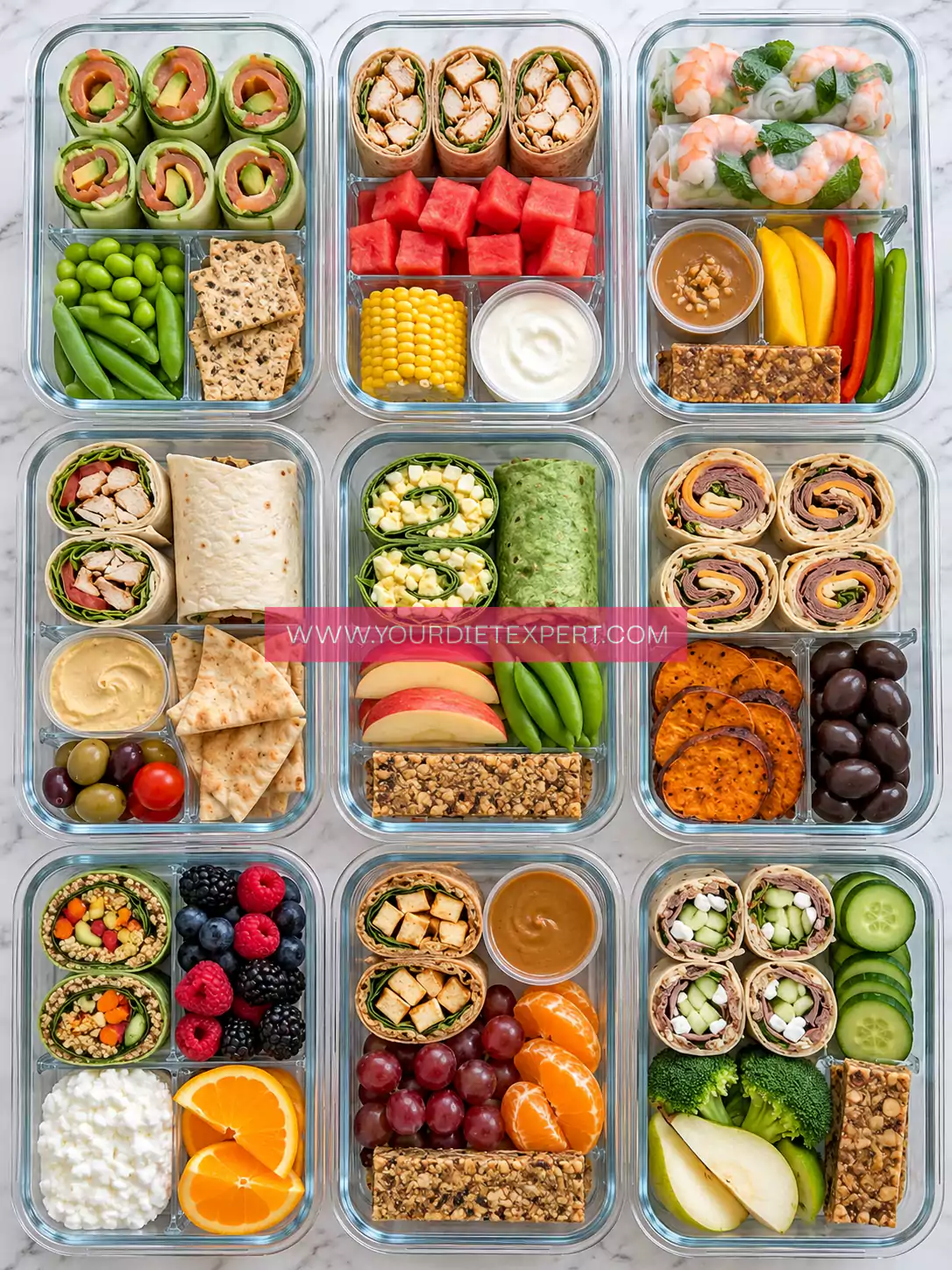
A packed lunch becomes much easier to stick with when it gives you more than one texture and more than one flavor. Instead of preparing one large entrée and eating the same leftovers several days in a row, a compartment-style container lets you build a lunch from several smaller foods.
These 9 healthy glass container bento prep ideas use that approach.
The combinations include salmon and avocado cucumber pinwheels, grilled chicken wraps, shrimp spring rolls, chicken pita lunches, egg salad pinwheels, roast beef and cheddar roll-ups, quinoa-filled vegetable wraps, tofu or chicken roll-ups, and roast beef pinwheels with cucumber and feta.
Alongside the main item, each container adds different combinations of fruit, vegetables, dips, yogurt, cottage cheese, nuts, crackers, or snack bars.
That variety is what makes this style of meal prep useful. One container might lean fresh and Mediterranean-inspired, while another combines sweet fruit with savory roast beef, and another brings together spring rolls with mango and peanut dipping sauce.
The goal isn’t to make every box identical or perfectly symmetrical. Instead, think of each container as a complete lunch assembled from complementary components.
The recipes below are practical interpretations of the foods shown in the image and supplied descriptions. Because exact quantities are not provided, the ingredient amounts are suggested serving sizes rather than measurements from the original meal-prep setup.
A Different Bento for Every Kind of Lunch Mood
Prep a few components once, then mix textures, colors and flavors throughout the week.
Salmon + Cucumber
Chicken Wrap
Shrimp Spring Rolls
Chicken Pita
Egg Salad + Apple
Roast Beef + Sweet Potato
Quinoa + Berries
Tofu/Chicken + Fruit
Roast Beef + Feta
Why Glass Container Bento Lunches Work So Well
A compartment container solves a surprisingly common meal-prep problem: different foods have different storage needs.
Crunchy vegetables don’t have to sit underneath a moist wrap. Crackers can stay away from hummus. Fruit can occupy its own section instead of releasing moisture into a sandwich. Nuts and snack bars can remain dry while yogurt stays chilled in its own space.
This makes the meal more enjoyable when you actually eat it.
There is also plenty of room for customization. A person who wants more protein can increase the chicken, salmon, shrimp, turkey, roast beef, eggs, tofu, cottage cheese, or yogurt. Someone who prefers more produce can increase the fruit and vegetable compartments.
And because the main components are different, you don’t need to cook nine completely different meals to recreate the concept.
Build Lunch From 4 Simple Layers
1. Salmon Cucumber Pinwheels with Edamame and Snap Peas
This fresh bento combines cucumber ribbons, smoked salmon, and avocado into small pinwheels. The savory roll-ups are paired with edamame, sugar snap peas, and almond flour crackers.
It is a particularly appealing combination if you like lunches that feel fresh rather than heavy.
Suggested Ingredients
For the pinwheels:
- 1 large cucumber
- 3–4 ounces smoked salmon
- ½ avocado
- Optional lemon juice
- Fresh herbs, if desired
For the container:
- ½ cup shelled edamame
- ½ cup sugar snap peas
- A small serving of almond flour crackers
How to Make It
- Use a vegetable peeler or mandoline to create long, thin cucumber ribbons.
- Pat the ribbons dry with paper towels.
- Place smoked salmon over the cucumber.
- Add thin strips of avocado.
- Roll each cucumber ribbon firmly into a pinwheel.
- Add the pinwheels to the largest compartment.
- Place edamame and snap peas in separate sections.
- Keep the crackers in a dry compartment so they remain crisp.
The cucumber provides a cool, crisp exterior while the smoked salmon and avocado create a richer center.
Prep Tip
Cucumber contains a considerable amount of water, so drying the ribbons before rolling is especially important. If preparing this lunch ahead, keep the crackers separated from anything moist.
Internal Link Opportunity: Link “healthy high-protein lunch ideas” to a relevant YDE article.
2. Chicken Wrap Bento with Watermelon and Corn
The second container keeps things familiar with a whole-wheat wrap filled with sliced grilled chicken. The supporting foods are simple: watermelon cubes, corn on the cob, and almond-milk yogurt.
This is a practical lunch for someone who prefers recognizable ingredients rather than complicated combinations.
Suggested Ingredients
- 1 whole-wheat tortilla
- 3–4 ounces grilled chicken breast
- 1 handful lettuce or spinach
- ¼ cup sliced bell pepper or cucumber
- ¾ cup watermelon cubes
- Small piece of cooked corn on the cob
- 1 single-serving almond-milk yogurt
Preparation
- Grill or cook the chicken until fully cooked.
- Allow it to cool before assembling the wrap.
- Place chicken and greens on the tortilla.
- Add vegetables if desired.
- Roll tightly and slice into pinwheels or leave whole.
- Add watermelon to its own compartment.
- Include a small piece of cooked corn.
- Pack the yogurt separately.
The combination works because the savory chicken wrap contrasts with juicy watermelon and sweet corn.
Make It More Filling
If the lunch needs more protein, increase the chicken portion or choose a higher-protein yogurt. You can also add hummus inside the wrap.
3. Shrimp Spring Roll Bento with Mango
This container has one of the most interesting combinations in the collection: fresh rice-paper spring rolls filled with poached shrimp, mint, and rice noodles.
The rolls are paired with peanut dipping sauce, mango, bell pepper strips, and a peanut-butter snack bar.
Suggested Ingredients
For the spring rolls:
- 2–3 rice-paper wrappers
- 3–4 ounces cooked shrimp
- ¼ cup cooked rice noodles
- Fresh mint
- Thin bell pepper or cucumber strips
For the container:
- 2 tablespoons peanut dipping sauce
- ½ cup sliced mango
- Bell pepper strips
- 1 small peanut-butter snack bar
How to Make It
- Soften a rice-paper wrapper briefly in warm water.
- Place shrimp, rice noodles, mint, and vegetables toward the lower third.
- Fold the sides inward.
- Roll tightly while keeping the filling contained.
- Repeat with the remaining wrappers.
- Add peanut sauce to a small leak-resistant container.
- Place mango and bell pepper in separate compartments.
- Add the snack bar last.
Keep Spring Rolls Fresh
Fresh spring rolls are best prepared relatively close to when you plan to eat them. The rice paper can become sticky as it absorbs moisture.
If preparing ahead, wrap each spring roll individually and keep it from touching other rolls. Keep the dipping sauce separate.
The Moisture-Control Method
4. Chicken Pita Bento with Hummus and Tzatziki
This lunch takes a Mediterranean-inspired direction with chicken wrap pinwheels, pita triangles, hummus, tzatziki, mixed olives, and cherry tomatoes.
It is particularly useful when you want several small savory foods rather than one large sandwich.
Suggested Ingredients
- 1 whole-wheat tortilla
- 3–4 ounces cooked chicken
- Lettuce or spinach
- 2 tablespoons hummus
- ½ small pita, cut into triangles
- 2 tablespoons tzatziki
- ¼ cup mixed olives
- ½ cup cherry tomatoes
Preparation
Make the chicken pinwheels using the same basic method as the other wraps. Add the hummus and chicken to the tortilla, roll tightly, and slice.
Keep pita triangles away from the hummus and tzatziki until serving if you want them to stay crisp.
The olives and tomatoes bring a salty, juicy contrast to the chicken and creamy dips.
Smart Swap
If you want more vegetables, add cucumber, roasted peppers, or shredded lettuce. If you want more protein, increase the chicken or serve a higher-protein yogurt alongside the meal.
5. Egg Salad Spinach Pinwheels with Apple
Egg salad becomes much more portable when it is spread into a spinach tortilla and cut into pinwheels.
The container pairs the savory egg salad with crisp apple slices, snap peas, fresh greens, and a snack bar.
Suggested Ingredients
Egg salad:
- 2 hard-boiled eggs
- 1 tablespoon Greek yogurt or mayonnaise
- 1 teaspoon mustard
- Pinch of salt and pepper
- Optional chopped celery
For the container:
- 1 spinach tortilla
- ½ apple, sliced
- ½ cup sugar snap peas
- Handful of fresh greens
- 1 snack bar
How to Make It
- Peel and chop the hard-boiled eggs.
- Mix with Greek yogurt or mayonnaise, mustard, salt, and pepper.
- Spread the egg salad over the spinach tortilla.
- Roll tightly.
- Slice into pinwheels.
- Add apple slices to a separate compartment.
- Pack snap peas and greens nearby.
- Keep the snack bar sealed until ready to eat.
Preventing the Apple From Browning
Toss apple slices lightly with lemon juice if you prefer a slower color change. Keep them dry enough that excess liquid does not migrate into the other compartments.
Internal Link Opportunity: Link “easy high-protein breakfast ideas” to a relevant YDE article because egg salad can also be adapted for breakfast meal prep.
6. Roast Beef and Cheddar Roll-Ups with Sweet Potato
The sixth box is a hearty combination of deli roast beef and cheddar rolled into compact pinwheels, paired with roasted sweet potato rounds and dark-chocolate-coated almonds.
The sweet potato provides a naturally sweet contrast to the salty roast beef and cheese.
Suggested Ingredients
- 3–4 ounces sliced roast beef
- 1 whole-wheat tortilla
- 1 slice cheddar cheese
- Lettuce or spinach
- ½ medium sweet potato
- 2 tablespoons dark chocolate cocoa almonds
How to Make It
- Slice the sweet potato into thin rounds.
- Roast until tender and lightly browned.
- Allow the sweet potato to cool.
- Layer roast beef, cheddar, and greens over the tortilla.
- Roll tightly and slice.
- Place the pinwheels in the largest section.
- Add sweet potato rounds to another compartment.
- Keep the chocolate-coated almonds separate.
Why the Combination Works
The lunch combines several contrasting characteristics:
Savory: roast beef and cheddar
Sweet: roasted sweet potato
Crunchy: chocolate-coated almonds
Fresh: optional leafy greens
That contrast can make a relatively simple lunch feel more varied.
7. Quinoa Vegetable Wrap with Berries and Cottage Cheese
The seventh container shifts toward a grain-and-vegetable combination. A green vegetable wrap contains a quinoa-based filling, while the remaining sections contain blueberries, raspberries, blackberries, cottage cheese, and orange slices.
This is a colorful option that uses fruit and cottage cheese to complement the savory wrap.
Suggested Ingredients
For the wrap:
- 1 large spinach or green tortilla
- ½ cup cooked quinoa
- ¼ cup shredded carrots
- ¼ cup diced cucumber
- Handful of leafy greens
- 1–2 tablespoons hummus or another suitable spread
For the container:
- ½ cup mixed berries
- ½ cup cottage cheese
- ½ orange, peeled and segmented
Preparation
- Cook quinoa according to package directions and allow it to cool.
- Combine quinoa with the vegetables.
- Spread hummus over the tortilla.
- Add the quinoa mixture and greens.
- Roll firmly.
- Slice into manageable portions.
- Add berries, cottage cheese, and orange segments to separate compartments.
A Useful Meal-Prep Tip
Cooked quinoa can be prepared in a batch and refrigerated, making it useful for several different lunches. Keep it chilled and portion only what you need.
You can also change the vegetables based on what you already have available. Shredded carrots, cucumber, bell pepper, spinach, and chopped broccoli all work well in a grain-based wrap.
8. Spiced Tofu or Chicken Wrap with Fruit
The eighth box is particularly flexible because the main filling can be built around either spiced tofu or chicken.
The wrap is accompanied by a dipping sauce, red grapes, mandarin orange slices, and a savory-sweet snack bar.
Suggested Ingredients
- 1 large tortilla
- 3–4 ounces seasoned tofu or cooked chicken
- Lettuce or spinach
- Cucumber or bell pepper
- 2 tablespoons dipping sauce
- ½ cup red grapes
- 1 mandarin orange
- 1 snack bar
How to Make It
- Season and cook the tofu until lightly browned, or use cooked chicken.
- Allow the filling to cool.
- Add the protein and greens to the tortilla.
- Roll firmly and cut into pinwheels.
- Add the dipping sauce separately.
- Wash and dry the grapes.
- Peel and divide the mandarin into segments.
- Place the fruit in separate compartments.
- Add the snack bar without opening its packaging.
Making the Tofu Version More Flavorful
Tofu benefits from bold seasoning. Garlic, ginger, paprika, black pepper, soy sauce or another suitable savory seasoning can add plenty of flavor without requiring a complicated preparation process.
If using chicken instead, sliced grilled chicken or leftover roasted chicken works well.
9. Roast Beef, Cucumber and Feta Pinwheels
The final box combines roast beef, cucumber, and feta in tortilla roll-ups with broccoli florets, pear slices, raw cucumber rounds, and a packaged protein-style snack bar.
This is another lunch where the compartment format is especially useful because every component has a different texture.
Suggested Ingredients
- 3–4 ounces sliced roast beef
- 1 large tortilla
- 1–2 tablespoons crumbled feta
- Thin cucumber strips
- Handful of lettuce
- ½ cup broccoli florets
- ½ pear
- Additional cucumber rounds
- 1 snack bar
Preparation
- Lay the tortilla flat.
- Add roast beef and a thin layer of feta.
- Add cucumber strips and greens.
- Roll tightly.
- Cut into pinwheels.
- Add broccoli and cucumber rounds to separate compartments.
- Slice the pear shortly before packing.
- Add the snack bar to the driest section.
The combination of salty feta, savory roast beef, cool cucumber, crisp broccoli, and sweet pear gives this lunch a particularly broad range of flavors.
How to Prep All 9 Bento Boxes Without Spending All Day in the Kitchen
Nine different containers may look like nine separate recipes, but there is significant overlap between them.
The most efficient strategy is to prepare ingredients in categories.
Start With the Proteins
Choose two or three proteins for the week rather than cooking every protein shown.
For example, prepare:
- Grilled chicken
- Hard-boiled eggs
- Seasoned tofu
Then use deli roast beef and smoked salmon as no-cook options.
This gives you enough variety to build several lunches without spending hours cooking.
Prepare the Produce Together
Wash and dry:
- Grapes
- Berries
- Snap peas
- Broccoli
- Cucumbers
- Bell peppers
- Cherry tomatoes
Then cut the produce that needs slicing.
Watermelon, mango, apples, pears, and oranges can be prepared according to when you plan to eat them.
Batch-Cook the Grains
If you are making the quinoa wrap or spring rolls, prepare quinoa and rice noodles in advance.
Allow cooked grains to cool appropriately before packing them into refrigerated containers.
Prepare Spreads and Dips
Portion hummus, tzatziki, peanut sauce, and other dips into small containers.
Keeping them separate is one of the easiest ways to preserve the texture of wraps, crackers, vegetables, and spring rolls.
One Prep Session, Several Lunches
How to Keep Bento Lunches Fresh
The biggest enemy of meal-prep containers is usually excess moisture.
A few small habits make a noticeable difference.
Dry washed produce thoroughly
Washing fruit and vegetables ahead of time is convenient, but packing them while wet can create excess moisture inside the container.
Use a clean towel or salad spinner where appropriate and allow produce to dry before packing.
Keep dips separate
Hummus, tzatziki, peanut sauce, and other dips should ideally have their own small compartment or sealed cup.
Cool cooked food before packing
Chicken, quinoa, sweet potatoes, eggs, and other cooked foods should be cooled appropriately before being packed for refrigeration. Packing hot food into a tightly sealed container can create condensation and negatively affect texture.
Protect crunchy foods
Crackers, nuts, snack bars, and similar foods should remain separated from fruit, yogurt, dips, and wet vegetables.
Treat delicate fruit individually
Apple and pear slices can brown after cutting. Avocado can discolor. Watermelon releases moisture. Berries can become soft if stored wet.
These foods are still excellent meal-prep ingredients; they simply benefit from more careful handling.
Keep These Foods in Their Own Lane
Making These Bento Boxes Higher in Protein
Protein needs vary from person to person, so there is no single protein target that makes a bento lunch appropriate for everyone.
However, if you are specifically building these boxes around a higher-protein eating pattern, focus on the centerpiece first.
Chicken, shrimp, salmon, roast beef, eggs, tofu, Greek yogurt, skyr, cottage cheese, and edamame can all contribute protein to the overall meal.
For example, the vegetable-heavy quinoa wrap can be made more protein-focused by adding tofu, chicken, cottage cheese, or a higher-protein yogurt on the side.
The fruit does not need to disappear simply because you’re increasing protein. Keeping fruit and vegetables in the container adds variety and makes the lunch more satisfying from a texture and flavor standpoint.
Nutrition Considerations
These nine containers have different nutritional profiles because the ingredients and portions differ.
The chicken, salmon, shrimp, roast beef, egg, tofu, cottage cheese, yogurt, and edamame components can contribute protein. Fruits and vegetables contribute fiber and a wide range of micronutrients. Avocado, nuts, seeds, hummus, and certain dips contribute fats, while wraps, pita, crackers, rice noodles, quinoa, fruit, and snack bars contribute varying amounts of carbohydrate.
Packaged foods can also vary considerably between brands.
For example, two yogurt products with similar serving sizes can have very different amounts of protein and added sugar. The same applies to snack bars, tortillas, crackers, dips, and prepared deli meats.
If you are tracking calories or macronutrients, use the nutrition label from the exact product you purchase and weigh portions when precision matters.
A Simple Way to Customize Each Box
You can modify these lunches without changing their basic structure.
Want more protein? Increase the primary protein or add Greek yogurt, cottage cheese, edamame, eggs, or tofu.
Want more vegetables? Increase broccoli, cucumber, snap peas, peppers, greens, or tomatoes.
Want more crunch? Add nuts, seeds, crackers, snap peas, or raw vegetables.
Want less added sugar? Compare yogurt and snack-bar labels and choose products with less added sugar.
Need a vegetarian option? Use tofu, eggs, edamame, quinoa, cottage cheese, hummus, and yogurt where appropriate.
Need a dairy-free option? Replace dairy-based cheese, yogurt, tzatziki, or cottage cheese with suitable alternatives.
Need a nut-free option? Replace nut-based crackers, peanut sauces, almonds, or nut-containing bars with appropriate seed-based or nut-free alternatives.
Change One Component — Keep the Lunch Balanced
Increase chicken, salmon, shrimp, beef, eggs, tofu, cottage cheese or Greek yogurt.
Use snap peas, cucumber, nuts, seeds, crackers or fresh vegetables.
Swap yogurt, cheese and creamy dips for suitable dairy-free alternatives.
Choose seed-based snacks and nut-free dips or crackers when needed.
Storage and Food Safety
These are refrigerated meal-prep lunches, not shelf-stable meals.
Keep perishable ingredients refrigerated at 40°F/4°C or below. Prepared foods should not be left at room temperature for extended periods.
For general meal prep, many refrigerated prepared foods are best used within about 3–4 days, provided they have been handled correctly and continuously refrigerated. However, individual ingredients can have different quality and storage considerations.
The most delicate lunches in this collection include the fresh spring rolls, avocado-based pinwheels, cut fruit, and highly moisture-sensitive wraps.
If you want to prep for an entire five-day workweek, a split-prep strategy can work better than assembling every box at once.
Prepare proteins, cooked grains, and sturdy vegetables earlier in the week. Refresh delicate fruit, avocado, and wraps later.
Prep Once, Refresh When Needed
General guidance only. Follow packaged-food labels and discard food that has been stored improperly or shows signs of spoilage.
Frequently Asked Questions
How long do glass container bento lunches last in the refrigerator?
Many properly handled refrigerated meal-prep foods are best used within about 3–4 days. Delicate ingredients such as avocado, fresh spring rolls, and cut fruit may lose quality sooner. Keep the containers refrigerated at 40°F/4°C or below.
Can I prepare all 9 bento lunches ahead of time?
You can prepare many components in advance, but you do not necessarily need to assemble all nine at once. For the best texture, prepare proteins and sturdy vegetables ahead while adding delicate produce, avocado, or fresh spring rolls closer to serving.
How do I keep wraps from getting soggy?
Dry washed vegetables thoroughly, avoid excessive wet fillings, cool cooked ingredients before assembling, and keep dips separate when possible. Leafy greens can also create a useful barrier between the tortilla and wetter ingredients.
Are these bento lunches high in protein?
Several of the combinations contain substantial protein sources such as chicken, salmon, shrimp, roast beef, eggs, tofu, edamame, yogurt, and cottage cheese. The exact protein amount depends on the ingredients and portions you use.
Can I make these lunch boxes vegetarian?
Yes. The quinoa, tofu, egg, edamame, hummus, cottage cheese, and yogurt components can form the foundation of vegetarian versions. Replace meat and seafood with plant-based or vegetarian protein sources that fit your eating pattern.
Can I use plastic containers instead of glass?
Yes. The meal combinations work in any suitable food-storage container. Glass compartment containers are particularly convenient for separating moist and dry foods, but the recipes do not depend on glass specifically.
What should I pack separately from the main food?
Dips, sauces, crackers, nuts, snack bars, and other foods where texture matters are usually best kept separate. This prevents moisture from softening crunchy foods or making wraps less appealing.
How can I make these lunches more filling?
Increase the portion of the main protein, add a protein-containing yogurt or cottage cheese, include edamame or tofu, or increase the amount of vegetables and other foods that fit your individual meal plan.
Final Takeaway
A good meal-prep lunch does not have to mean cooking nine complicated recipes.
These 9 glass container bento meal prep ideas demonstrate how a small collection of proteins, wraps, vegetables, fruit, dips, dairy or dairy-free alternatives, and crunchy sides can be rearranged into completely different lunches.
The key is to prepare components rather than thinking only in terms of finished meals.
Cook your chicken, roast your sweet potatoes, prepare quinoa, boil eggs, wash your produce, portion your dips, and keep crunchy ingredients dry. Then build each container around a different combination.
That gives you something much more useful than repetitive leftovers: portable lunches with different flavors, textures, colors, and levels of preparation throughout the week.
Whether you prefer salmon and cucumber pinwheels, chicken wraps, shrimp spring rolls, egg salad, roast beef, quinoa, tofu, or a combination of several, the compartment-bento approach makes healthy lunch prep much easier to organize.

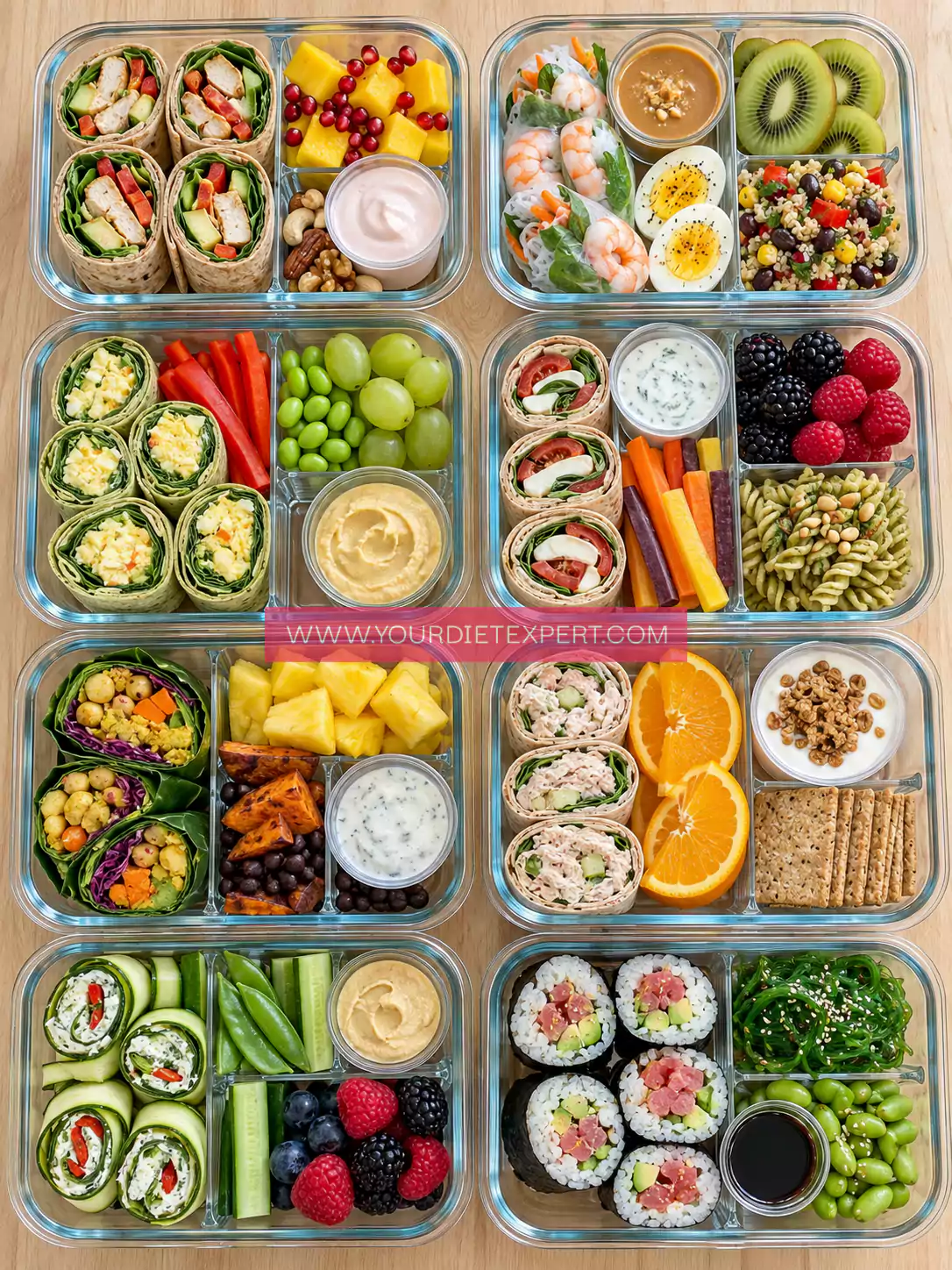
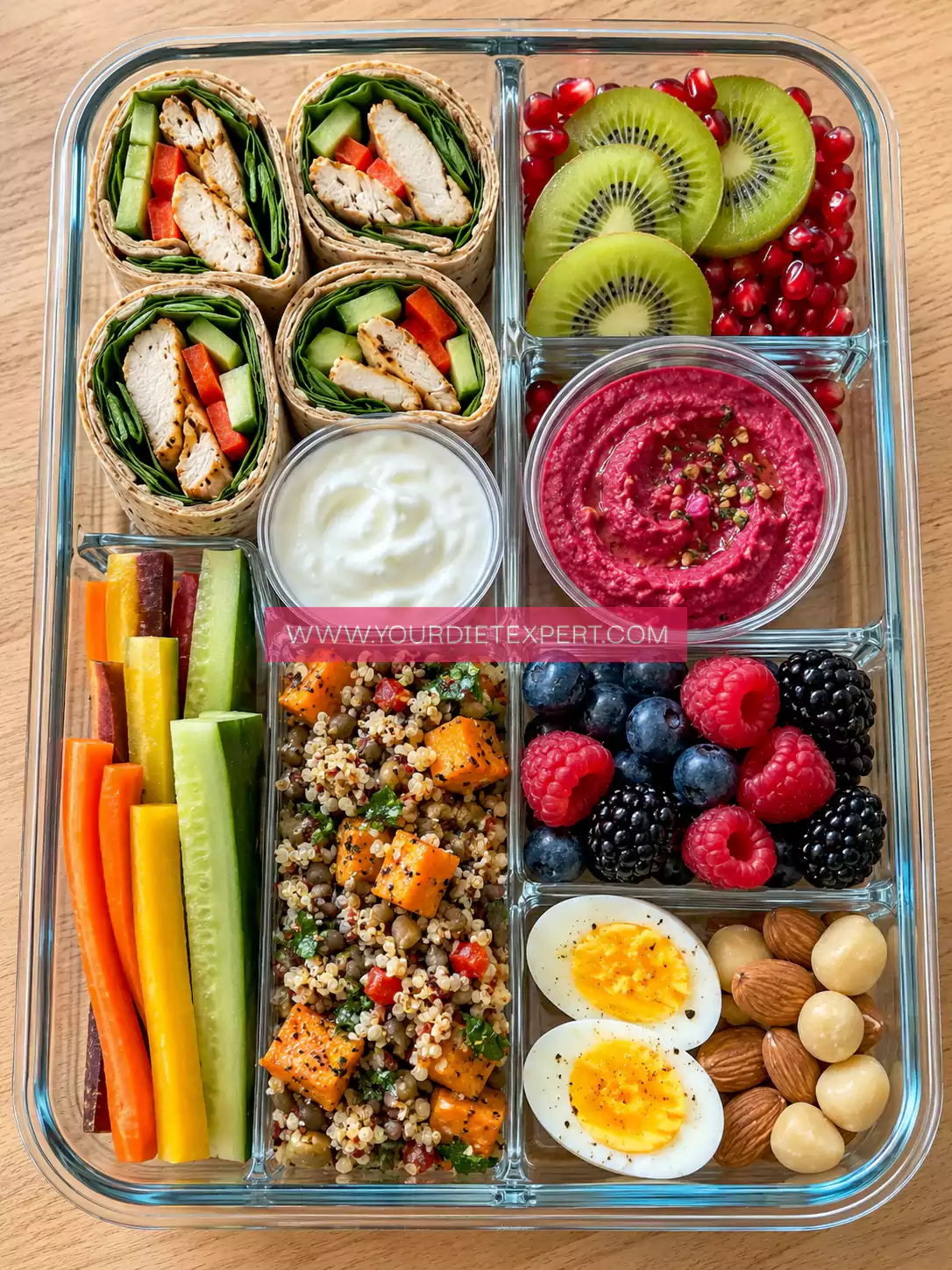
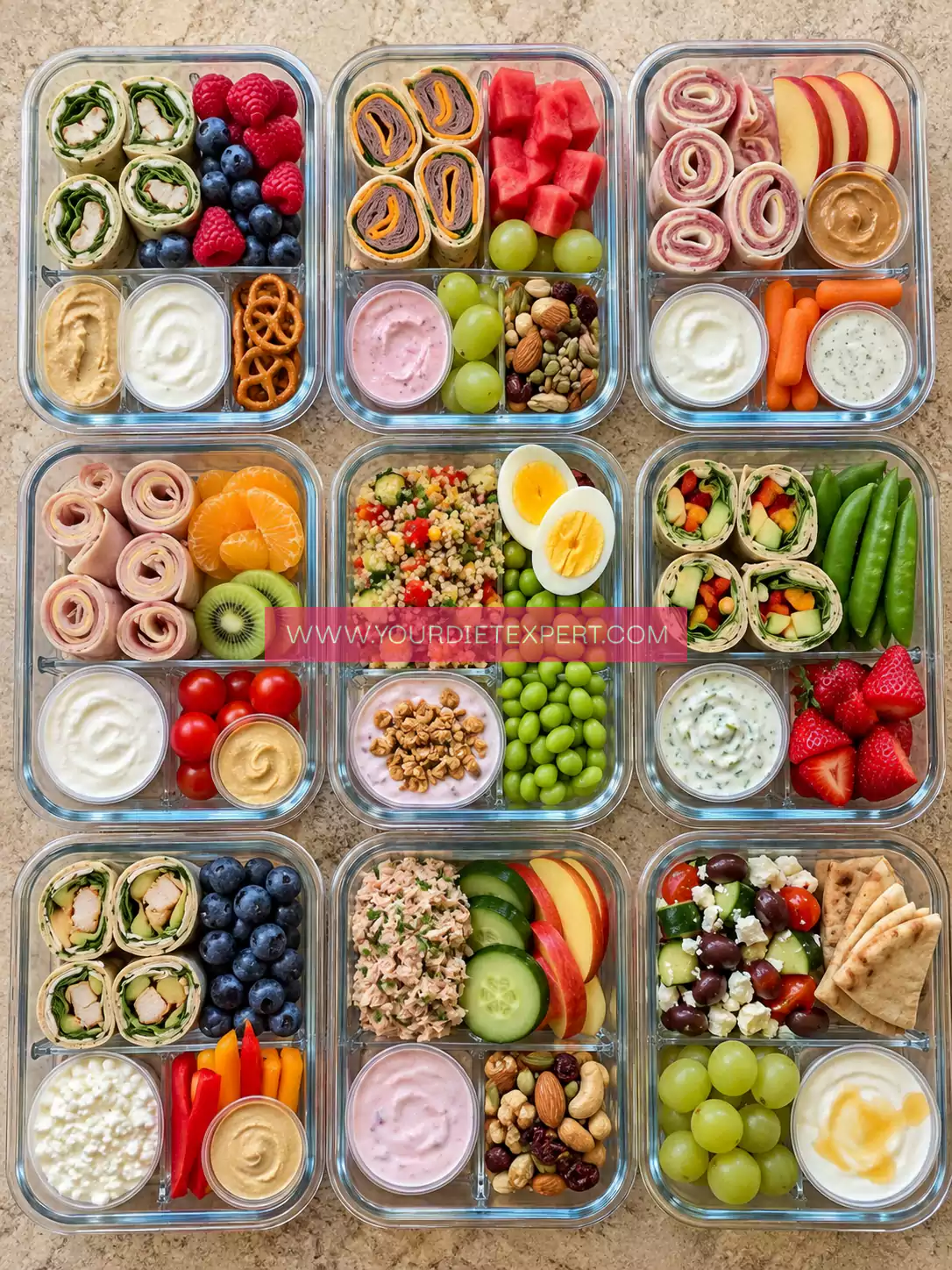
Leave a Reply