
There’s something incredibly comforting about a homemade meatloaf dinner, especially when the edges get slightly caramelized, the center stays tender, and the roasted vegetables come out of the oven with those golden, lightly crisp edges. That’s exactly what I wanted to capture in these High-Protein Mini Meatloaf Trays with Roasted Vegetables—the cozy feeling of a classic meatloaf dinner, but in a portioned, protein-focused meal that works beautifully for busy weeks, fitness goals, and healthy family dinners.
I love meals that can do more than one job. This one can be a satisfying weeknight dinner, a Sunday fitness meal prep, or an easy post-workout meal when you want something substantial instead of another shake. Each little meatloaf is tender and savory, with a lightly sweet tomato glaze on top, while the roasted vegetables bring color, fiber, and a little caramelized sweetness to the plate.
Making individual meatloaves also solves one of my biggest problems with traditional meatloaf: portioning. Instead of cutting into one large loaf and guessing how much you’re serving, you have neatly defined portions ready to go. That makes these trays especially useful if you’re tracking calories and protein or simply trying to make balanced eating more automatic.
What Makes This Recipe Stand Out
This isn’t simply a smaller version of traditional meatloaf.
The ingredients and preparation are designed to make the meal especially useful for anyone following a higher-protein eating pattern without losing the comfort-food quality that makes meatloaf so popular.
High Protein in Every Serving
The foundation of the recipe is lean ground beef, supplemented with protein-rich ingredients that improve the texture while keeping the meal satisfying.
Depending on the exact meat and serving size, each tray provides approximately 40–45 grams of protein.
That makes it substantial enough to serve as a complete high-protein dinner rather than a small side dish.
Individual Portions Make Meal Prep Easier
Mini meatloaves cool quickly, portion easily, and reheat well.
That makes them ideal for:
- Work lunches
- Weeknight dinners
- Post-workout meals
- Sunday meal prep
- Family dinners
- High-protein leftovers
You don’t have to slice and weigh a large loaf every day.
Roasted Vegetables Cook on the Same Tray
One of my favorite features is that the vegetables roast right alongside the meatloaves.
As they cook, the vegetables develop browned edges while the meatloaf juices and seasonings create a savory aroma throughout the kitchen.
That means fewer dishes and less active cooking time.
Balanced Macros
The meal brings together:
- Lean protein
- Fiber-rich vegetables
- Moderate carbohydrates
- Healthy fats
It can be adjusted easily depending on whether you’re cutting, maintaining weight, or eating in a calorie surplus.
Comfort Food Without Excessive Heaviness
Traditional meatloaf can become quite rich when it contains lots of breadcrumbs, full-fat cheese, and fatty ground meat.
This version keeps the same comforting qualities while using leaner protein sources and a vegetable-heavy tray.
The result feels satisfying without leaving you overly heavy after dinner.
Great for Family Meal Prep
Mini meatloaves are naturally portion-friendly, which makes them easy to serve to everyone at the table.
You can keep the seasonings mild for the family and add extra sauce or chili flakes to your own serving.
My Personal Blogger Note
I first started making mini meatloaves because traditional meatloaf always felt like more of a weekend project than an everyday meal. I loved the flavor, but waiting for one large loaf to bake and then dealing with leftovers wasn’t always convenient.
The smaller version changed everything.
The mini loaves cook faster, develop more browned edges, and make portioning almost effortless. Once I started roasting the vegetables on the same tray, the meal became even easier.
I especially like making this recipe after a busy training day.
There’s something deeply satisfying about sitting down to a warm meal with tender beef, roasted vegetables, and a little glaze on top after spending hours at a desk or finishing a workout.
It feels like real comfort food, but it’s also the type of meal that fits naturally into a structured nutrition plan.
Another thing I love is how well the leftovers hold up.
A tray prepared on Sunday can turn into several lunches during the week, and the flavor stays just as good after reheating.
Equipment Needed
You won’t need specialized equipment for these mini meatloaves.
A few basic kitchen tools are enough.
Large Mixing Bowl
Use a roomy bowl so you can combine the ground beef, egg, seasonings, and binding ingredients without compacting the meat too much.
A large bowl also makes mixing easier and less messy.
Small Mixing Bowl
This is useful for preparing the meatloaf glaze.
Keeping the glaze separate allows you to adjust its sweetness and acidity before adding it to the meat.
Sheet Pan
A large rimmed sheet pan provides enough room for the mini meatloaves and vegetables.
The raised edges help contain juices and oil.
Parchment Paper
Lining the tray makes cleanup much easier and helps prevent the meatloaves from sticking.
Mixing Spoon or Rubber Spatula
A sturdy spoon or spatula works well for combining the ingredients gently.
Avoid overmixing the meat because excessive mixing can produce dense meatloaf.
Small Cookie Scoop (Optional)
Useful if you want the mini meatloaves to be nearly identical in size.
Consistent portions also make nutrition tracking easier.
Meat Thermometer
This is one kitchen tool I strongly recommend for ground meat recipes.
It helps you confirm that the center of each meatloaf has reached a safe internal temperature without relying solely on appearance.
Sharp Knife
Useful for cutting larger vegetables into similar-sized pieces so they roast evenly.
Meal Prep Containers
Individual airtight containers make the finished meal easy to portion and transport.
Ingredients with Substitutions
Every ingredient in this recipe has a purpose, from keeping the meatloaf tender to increasing protein or adding flavor.
Lean Ground Beef – 1½ pounds
Lean ground beef provides the primary protein source.
I recommend using approximately 90% lean or leaner ground beef for a good balance between flavor and lower fat.
Very lean beef can become dry if overcooked, so careful cooking is important.
Substitutions
You can use:
- 93% lean ground beef
- Lean ground turkey
- Ground chicken
- A combination of lean beef and turkey
Ground turkey usually produces a lighter meatloaf, while beef creates a richer, more traditional flavor.
Large Egg – 1
The egg helps bind the mixture and contributes additional protein.
Substitute
For a dairy-free and egg-free version, you can use a flax egg, although the texture will be softer and slightly more delicate.
Plain Greek Yogurt – ½ cup
Greek yogurt helps keep the lean meat tender while adding protein.
This is one of my favorite tricks for avoiding dry high-protein meatloaf.
Substitutions
Use:
- Skyr
- Low-fat plain yogurt
- Cottage cheese blended smooth
Cottage cheese can increase protein slightly but may create a softer texture.
Finely Grated Parmesan – ¼ cup
Parmesan contributes savory flavor and umami without requiring a large amount.
Substitutions
You can use:
- Reduced-fat Parmesan
- Nutritional yeast for a dairy-free option
- Finely grated part-skim mozzarella
The flavor will change slightly.
Whole-Wheat Breadcrumbs – ½ cup
Breadcrumbs help absorb moisture and give the mini meatloaves structure.
Using a moderate amount prevents them from becoming dense.
Lower-Carb Option
Replace with:
- Almond flour
- Crushed high-protein crackers
- Finely ground oats
Almond flour lowers the carbohydrate content while making the texture slightly softer.
Yellow Onion – ½ medium, finely diced
Onion provides sweetness and moisture as it cooks.
Finely dicing it helps the onion soften completely inside the meatloaf.
Garlic – 3 cloves, minced
Fresh garlic adds savory flavor and works beautifully with the Italian-style herbs.
Worcestershire Sauce – 1 tablespoon
A small amount gives the beef deeper savory flavor.
Substitute
Use low-sodium soy sauce or coconut aminos.
Dijon Mustard – 1 tablespoon
Dijon adds acidity and helps balance the richness of the beef.
Italian Seasoning – 2 teaspoons
A simple blend of dried herbs adds familiar comfort-food flavor.
Smoked Paprika – 1 teaspoon
Smoked paprika adds warmth and depth without making the meatloaf spicy.
Salt – ¾ teaspoon
Adjust based on the saltiness of your Worcestershire sauce and Parmesan.
Black Pepper – ½ teaspoon
Freshly ground black pepper works best.
Meatloaf Glaze
Tomato Paste – 2 tablespoons
Tomato paste gives the glaze concentrated tomato flavor without requiring a large amount of ketchup.
No-Sugar-Added Ketchup – ¼ cup
This provides the familiar sweet-tangy meatloaf finish.
Substitution
Use regular ketchup if preferred, keeping in mind that the carbohydrate and sugar content will increase.
Apple Cider Vinegar – 1 tablespoon
A little acidity balances the sweetness.
Monk Fruit or Allulose – 1 teaspoon
This is optional and simply enhances the glaze if you prefer a slightly sweeter finish.
Roasted Vegetables
Broccoli Florets – 2 cups
Broccoli adds fiber, vitamin C, and plenty of texture.
Bell Peppers – 2 medium
Use a combination of red, yellow, or orange peppers for natural sweetness and color.
Zucchini – 2 medium
Zucchini becomes tender and lightly caramelized in the oven.
Red Onion – 1 medium
Roasted red onion becomes sweeter and softer, making it a wonderful complement to the savory beef.
Olive Oil – 1½ tablespoons
A moderate amount of olive oil helps the vegetables brown without making the entire tray greasy.
Garlic Powder – ½ teaspoon
Adds extra savory flavor to the vegetables.
Italian Seasoning – 1 teaspoon
Keeps the vegetable side aligned with the flavor profile of the meatloaf.
Salt and Pepper
Season the vegetables lightly before roasting.
You can always add more at the table.
Step-by-Step Cooking Process
The key to making these mini meatloaves tender rather than dense is to treat the ground beef gently.
You want the ingredients evenly distributed, but you don’t want to knead the mixture like dough.
The vegetables also benefit from being cut into similar-sized pieces so they finish roasting at approximately the same time.
Step 1: Preheat the Oven
Preheat your oven to 400°F (200°C).
Line a large rimmed sheet pan with parchment paper.
Give the oven plenty of time to reach temperature before putting the tray inside. Consistent heat helps the vegetables caramelize while allowing the mini meatloaves to cook evenly.
Step 2: Prepare the Vegetables
Wash and dry the vegetables thoroughly.
Cut the broccoli into small florets.
Slice the zucchini into thick half-moons.
Cut the bell peppers into bite-sized chunks.
Slice the red onion into medium pieces.
Try to keep the vegetables relatively similar in size.
Very small pieces may become overly soft before the meatloaves are finished.
Step 3: Season the Vegetables
Add the prepared vegetables to one side of the sheet pan.
Drizzle with the olive oil.
Sprinkle over:
- Garlic powder
- Italian seasoning
- Salt
- Black pepper
Toss everything together until the vegetables are lightly coated.
Spread them into a single layer.
Avoid crowding the tray because overcrowded vegetables tend to steam instead of roast.
Step 4: Prepare the Meatloaf Mixture
Place the lean ground beef in a large mixing bowl.
Add:
- Egg
- Greek yogurt
- Parmesan
- Whole-wheat breadcrumbs
- Diced onion
- Garlic
- Worcestershire sauce
- Dijon mustard
- Italian seasoning
- Smoked paprika
- Salt
- Black pepper
Use your hands or a sturdy spatula to gently combine everything.
Mix only until the ingredients are evenly distributed.
Important Tip
Don’t squeeze or knead the meat excessively.
Overmixing develops the proteins in the beef too much and can create a dense, rubbery texture.
Step 5: Test the Seasoning
Before shaping the entire mixture, you can cook a tiny teaspoon-sized portion in a skillet.
Taste it once cooked.
Adjust the seasoning if necessary.
This is especially useful if you’re unsure about how salty your Parmesan or Worcestershire sauce is.
Step 6: Divide Into Mini Meatloaves
Divide the meat mixture into 6 equal portions.
Shape each portion into a compact oval or small loaf.
You want them thick enough to remain juicy but small enough to cook relatively quickly.
Aim for approximately 1½–2 inches of thickness.
Step 7: Arrange the Meatloaves
Place the six mini meatloaves on the empty side of the sheet pan.
Leave a little space between each one.
Don’t press them directly against the vegetables.
Keeping some separation allows hot air to circulate around the meat and encourages better browning.
Step 8: Make the Glaze
In a small bowl combine:
- No-sugar-added ketchup
- Tomato paste
- Apple cider vinegar
- Optional monk fruit or allulose
Stir until smooth.
Taste it.
You should get a balanced combination of:
- Sweet
- Tangy
- Tomato-rich
- Slightly savory
Step 9: Add the Glaze
Brush a thin layer of the glaze over the tops of the mini meatloaves.
Don’t use all of it yet.
Reserve a few spoonfuls for the final glazing stage.
That helps create a more flavorful, glossy finish without flooding the meatloaf with sauce.
Step 10: Roast
Place the sheet pan in the preheated oven.
Roast for approximately 18–22 minutes.
The exact cooking time will depend on the thickness of your mini meatloaves and the size of the vegetable pieces.
About halfway through cooking, check the vegetables.
Step 11: Toss the Vegetables
After approximately 10–12 minutes, carefully remove the tray.
Use a spatula to turn the vegetables.
This helps them brown evenly.
Return the tray to the oven.
Step 12: Add the Final Glaze
During the last 3–5 minutes of cooking, brush the remaining glaze over the meatloaves.
This second application creates a more pronounced tomato finish and slightly caramelized surface.
Avoid adding the glaze too early or the sugars can become excessively dark before the meat finishes cooking.
Step 13: Check the Meatloaves
Use an instant-read meat thermometer to check the center of the thickest meatloaf.
Ground beef should reach 160°F (71°C).
Don’t rely only on color because the center can look cooked before reaching the recommended internal temperature.
Step 14: Rest the Meat
Remove the tray from the oven.
Let the mini meatloaves rest for approximately 5 minutes before serving.
Resting allows the juices to redistribute through the meat.
This small step helps prevent dry slices.
Step 15: Finish the Vegetables
Taste one of the roasted vegetables.
If needed, add:
- A pinch of salt
- Fresh black pepper
- Fresh parsley
- A squeeze of lemon
A small splash of lemon juice can brighten the entire tray.
Step 16: Serve
Place one mini meatloaf on each plate with a generous portion of roasted vegetables.
For meal prep, divide one meatloaf and approximately one-sixth of the vegetables into each container.
Add extra glaze on the side if desired.
7. Health & Nutrition Insights 💪
This meal is built around a simple principle: make the protein the centerpiece, then surround it with plenty of colorful vegetables.
That approach provides a satisfying combination of protein, fiber, micronutrients, and carbohydrates without relying on a huge portion of meat.
Supports Muscle Recovery
Lean ground beef is an excellent source of complete protein.
It provides all of the essential amino acids needed for normal tissue repair and muscle protein synthesis.
For anyone following a resistance-training program, adequate daily protein intake is important for supporting recovery and maintaining lean tissue.
Each serving of this recipe provides a substantial protein contribution, which makes it useful after training or as part of a balanced dinner.
Protein Helps With Satiety
Protein is generally more filling than carbohydrates or fat.
Combining a protein-rich mini meatloaf with a large serving of vegetables can help create a meal that feels substantial without requiring an enormous amount of food.
That’s particularly useful when you’re trying to control overall calorie intake.
Vegetables Add Fiber and Micronutrients
The roasted broccoli, zucchini, peppers, and onion provide a wide variety of nutrients.
They also contribute dietary fiber, which supports digestive health and can help meals feel more filling.
Rather than serving the meatloaf with a very large portion of refined starch, the vegetable-heavy tray provides plenty of volume and color.
Beef Provides Important Micronutrients
Lean beef naturally provides nutrients including:
- Iron
- Zinc
- Vitamin B12
- Selenium
These nutrients are involved in normal energy metabolism, oxygen transport, immune function, and other physiological processes.
Using lean beef allows you to obtain these nutrients while keeping overall fat more moderate than with fattier ground beef.
Greek Yogurt Helps Keep Lean Meat Tender
This is one of my favorite tricks.
Lean meat can easily become dry, especially when cooked in small portions.
Greek yogurt adds moisture and helps create a tender texture.
It also contributes additional protein without requiring a heavy sauce.
Supports a Balanced Eating Pattern
No individual recipe causes fat loss or builds muscle on its own.
What matters is your broader dietary pattern.
This meal can support that pattern because it combines:
- High-quality protein
- Vegetables
- Moderate carbohydrates
- Controlled fat
- Satisfying flavor
That’s a much more useful approach than labeling individual foods as “good” or “bad.”
8. High Protein Plan & Macro Insights 📊
These High-Protein Mini Meatloaf Trays with Roasted Vegetables work particularly well for people who like to prepare meals in advance.
Each tray gives you a defined portion of protein and vegetables, which makes macro tracking straightforward.
Estimated Nutrition Per Serving
Assuming the recipe makes 6 servings, one serving provides approximately:
- Calories: 390–410
- Protein: 42–45 g
- Carbohydrates: 22–25 g
- Fat: 15–17 g
- Fiber: 5–6 g
These are estimates and can vary depending on the exact leanness of the beef, the Greek yogurt, breadcrumbs, mozzarella or Parmesan used, and the dressing/glaze ingredients.
Great for Muscle Building
If you’re in a calorie surplus and trying to gain muscle, you can increase the energy content without dramatically changing the structure of the meal.
Try adding:
- Brown rice
- Roasted potatoes
- Quinoa
- Whole-grain bread
- Avocado
- Extra olive oil
The protein content is already strong, so additional calories can come primarily from carbohydrates and healthy fats depending on your needs.
Useful During Fat Loss
This meal is also easy to fit into a calorie deficit.
Focus on:
- Very lean ground beef
- Fat-free Greek yogurt
- A modest amount of Parmesan
- Plenty of roasted vegetables
- Controlled glaze portions
The vegetables add volume without contributing a large amount of calories.
Weight Maintenance
For maintenance, the recipe works beautifully as a complete lunch or dinner.
Add a moderate carbohydrate side based on your activity level.
On more active days, serve with potatoes or rice.
On less active days, let the roasted vegetables make up more of the plate.
Post-Workout Meal
The protein content makes this an excellent post-workout dinner.
The vegetables provide fiber and micronutrients, while a serving of rice, potatoes, or another carbohydrate can be added if your training session was particularly demanding.
Meal Prep Portioning
One of the easiest ways to keep portions consistent is to prepare all six trays at once.
Place:
- 1 mini meatloaf
- 1/6 of the roasted vegetables
into each container.
If you’re tracking macros closely, weigh the cooked portions before dividing them.
That gives you more consistent serving sizes from batch to batch.
High-Protein Dinner Strategy
A high-protein dinner doesn’t have to be enormous.
A meal with roughly 40–45 grams of protein can make a substantial contribution to your daily total.
Pair this recipe with a protein-rich breakfast and lunch, and you can reach a high daily intake without constantly relying on shakes.
Why This Recipe Works for Fitness Meal Prep
Meal prep is most effective when the food actually tastes good after reheating.
Dry chicken and bland vegetables tend to get abandoned by the middle of the week.
These mini meatloaves are different.
The Greek yogurt keeps the meat tender.
The glaze adds moisture and flavor.
The vegetables roast rather than boil, giving them better texture.
Together, those qualities make this a macro-friendly recipe that you can realistically eat several times in one week.
It’s equally useful as a high-protein dinner, a muscle-building meal, or a Sunday fitness meal prep project.
9. Serving + Pairing Ideas 🍽️
These High-Protein Mini Meatloaf Trays with Roasted Vegetables are filling enough to stand alone as a complete meal, but there are plenty of ways to customize the plate depending on your goals, appetite, and the rest of your day.
Keep It Simple
For an easy weeknight dinner, serve one mini meatloaf with a generous portion of roasted broccoli, zucchini, peppers, and onions.
Finish with a little extra glaze and freshly chopped parsley.
That’s honestly all you need.
Add a Carbohydrate for Training Days
If you’re more active or need additional carbohydrates to support your training, pair the tray with:
- Roasted potatoes
- Brown rice
- Quinoa
- Sweet potato
- Whole-grain bread
The added carbohydrate can make the meal more appropriate after demanding strength or endurance sessions.
Make a Higher-Calorie Muscle-Building Meal
For a calorie surplus, add:
- ½–1 cup cooked rice
- Avocado
- Additional olive oil
- Extra Parmesan
- A larger serving of potatoes
This increases energy intake while keeping the meatloaf itself protein-focused.
Keep It Lighter for Fat Loss
For a lower-calorie version, let the roasted vegetables occupy most of the plate.
You can also use:
- 93–96% lean ground beef
- Fat-free Greek yogurt
- Reduced-sugar glaze
- Less Parmesan
The portion remains satisfying because of the protein and vegetable volume.
Pair with a Fresh Salad
A simple green salad works beautifully alongside the warm tray.
Try:
- Mixed greens
- Cucumber
- Tomatoes
- Arugula
- Lemon
- Light vinaigrette
The fresh vegetables provide a nice contrast to the warm, savory meatloaf.
Add a Yogurt-Based Sauce
For extra creaminess, stir together:
- ½ cup plain Greek yogurt
- 1 teaspoon Dijon mustard
- 1 teaspoon lemon juice
- Garlic powder
- Black pepper
Spoon a little over the meatloaf just before serving.
It’s a fresh alternative to heavier sauces.
10. Storage & Meal Prep Tips 🧊
These mini meatloaves are particularly useful for meal prep because they reheat well and already come in convenient portions.
Refrigerating
Allow the cooked meatloaves and vegetables to cool before transferring them to airtight containers.
Refrigerate within a reasonable timeframe rather than leaving cooked food at room temperature for extended periods.
For best quality, use refrigerated leftovers within 3–4 days.
Meal Prep Containers
Divide each container into:
- 1 mini meatloaf
- 1 serving roasted vegetables
- Optional carbohydrate side
Keep additional glaze in a small separate container if possible.
That prevents the vegetables from becoming overly wet.
Reheating
For the microwave, cover loosely and heat until thoroughly hot.
A moderate-power setting often works better than blasting the food at full power because it reduces the chance of drying the meat.
For the oven:
- Place the meatloaf and vegetables in an oven-safe dish.
- Cover loosely with foil.
- Heat at approximately 325°F (165°C) until warmed through.
- Add a small spoonful of glaze before serving.
The oven takes longer but generally preserves the texture better.
Freezing
The mini meatloaves themselves freeze well.
For best quality:
- Allow them to cool completely.
- Wrap individually or place in freezer-safe containers.
- Label with the date.
- Freeze for up to 2–3 months for best quality.
The roasted vegetables can also be frozen, although their texture will soften after thawing.
If texture matters most, prepare fresh vegetables when possible and freeze only the meatloaves.
Thawing
For the best results, thaw frozen meatloaves overnight in the refrigerator.
Then reheat until thoroughly hot.
Avoid repeatedly freezing and thawing the same portion.
Sunday Meal Prep Strategy
For a simple weekly routine, prepare the entire tray on Sunday.
Once cooled:
- Portion six meatloaves.
- Divide the vegetables.
- Add your carbohydrate of choice to selected containers.
- Store additional glaze separately.
Now several lunches or dinners are already prepared.
That is one of the easiest ways to make a high-protein dinner part of a sustainable weekly routine.
11. Frequently Asked Questions ❓
Can I Make These Mini Meatloaves Dairy-Free?
Yes.
Replace the Greek yogurt with an unsweetened dairy-free yogurt, ideally one with reasonable protein content.
You can omit Parmesan or replace it with nutritional yeast.
The meatloaves will still be flavorful, although the texture may change slightly.
How Much Protein Is in Each Serving?
Each serving provides approximately 42–45 grams of protein, based on six servings.
The exact number depends on the leanness of the ground beef, the yogurt, Parmesan, and other ingredient brands.
For precise macro tracking, use your own product labels and weigh the finished portions.
Can I Use Ground Turkey or Chicken?
Absolutely.
Both work very well.
Ground turkey creates a lighter, leaner meatloaf, while ground chicken has a mild flavor that takes on the herbs beautifully.
Because poultry is typically leaner than beef, pay extra attention to cooking time to prevent dryness.
The Greek yogurt in the mixture helps significantly.
Can I Prepare These Ahead for the Week?
Definitely.
That’s one of the biggest advantages of the recipe.
Cooked mini meatloaves can be refrigerated for 3–4 days and reheated as needed.
You can also freeze them for longer storage.
Can I Use Oats Instead of Breadcrumbs?
Yes.
Finely ground quick oats or oat flour can replace the whole-wheat breadcrumbs.
The texture may be slightly softer, but the substitution works well.
If you’re trying to keep carbohydrates lower, almond flour is another option.
Can I Make Smaller Meatloaves?
Yes.
Smaller portions will cook faster, so begin checking them earlier with a meat thermometer.
This can also be useful if you’re meal prepping smaller snacks rather than full meals.
12. Kitchen Tips & Troubleshooting Notes
How to Keep Lean Meatloaf Juicy
This is probably the most important technique in the entire recipe.
Lean meat contains less fat, so it can dry out more quickly.
The Greek yogurt contributes moisture without requiring a lot of added fat.
Also:
- Don’t overmix.
- Don’t overcook.
- Let the meat rest after baking.
- Use a thermometer to check doneness.
Those four habits make a noticeable difference.
Don’t Pack the Meat Too Tightly
When shaping the mini loaves, use enough pressure to make them hold their shape but don’t compress them aggressively.
A loosely shaped meatloaf remains more tender.
Make the Vegetables Brown Instead of Soft
Roasting requires enough space.
Spread the vegetables in one layer and avoid piling them into a mound.
If the tray is overcrowded, the vegetables release moisture and steam rather than developing browned edges.
Cut Vegetables Based on Cooking Time
Broccoli florets can cook more quickly than large chunks of onion or zucchini.
Keep pieces relatively consistent in size.
If you’re using very large vegetables, cut them smaller before roasting.
If the Meatloaf Mixture Feels Too Wet
Add:
- 1 tablespoon breadcrumbs
- Or 1 tablespoon almond flour
Mix gently and reassess.
Don’t add a large amount at once.
If the Meatloaf Mixture Feels Too Dry
Add:
- 1 tablespoon Greek yogurt
- Or another small amount of egg
Mix lightly and check again.
If the Glaze Is Too Sweet
Add another splash of apple cider vinegar or a little Dijon mustard.
That acidity helps balance the sweetness.
If the Glaze Is Too Tangy
Add a tiny amount of monk fruit, allulose, or regular sweetener depending on your preferences.
Want a Spicier Meatloaf?
Add:
- Crushed red pepper flakes
- Smoked paprika
- A pinch of cayenne
- Hot sauce
Start conservatively and adjust after cooking a small test piece.
13. Nutrition Breakdown
Approximate nutrition per serving, assuming 6 servings:
| Nutrient | Amount |
|---|---|
| Calories | 400 |
| Protein | 44 g |
| Fat | 16 g |
| Carbohydrates | 23 g |
| Fiber | 6 g |
| Net Carbs | 17 g |
| Sugar | 7 g |
| Sodium | 620 mg |
These are estimates and will vary according to the exact ground beef, Greek yogurt, breadcrumbs, Parmesan, glaze, and vegetables used.
For precise tracking, enter your exact ingredients into a nutrition calculator and divide the total by the number of portions you prepare.
14. Recipe Details
Prep Time: 20 minutes
Cook Time: 22 minutes
Total Time: 42 minutes
Course: Dinner, Lunch, Meal Prep
Cuisine: American
Servings: 6
Calories: Approximately 400 per serving
Protein: Approximately 44 g per serving
15. Closing Note ❤️
These High-Protein Mini Meatloaf Trays with Roasted Vegetables have become one of my favorite ways to turn classic comfort food into a meal that fits a protein-focused lifestyle.
The mini meatloaves are tender and savory with a tangy tomato glaze, while the roasted vegetables bring sweetness, color, and plenty of texture. More importantly, the individual portions make the whole recipe incredibly practical.
You don’t have to guess at serving sizes.
You don’t need to prepare a separate protein source.
You don’t have to figure out what you’re going to eat for lunch tomorrow.
It’s already there.
Whether you’re trying to support muscle recovery, improve your protein intake, simplify weekly meal prep, or simply put a healthier spin on a classic family dinner, this recipe checks all the right boxes.
And that is what I love most about it.
Healthy food should make your life easier, not more complicated.
Prepare the tray on Sunday, portion it out, and enjoy a comforting, high-protein dinner whenever you need one during the week.
Happy cooking and happy meal prepping! ❤️
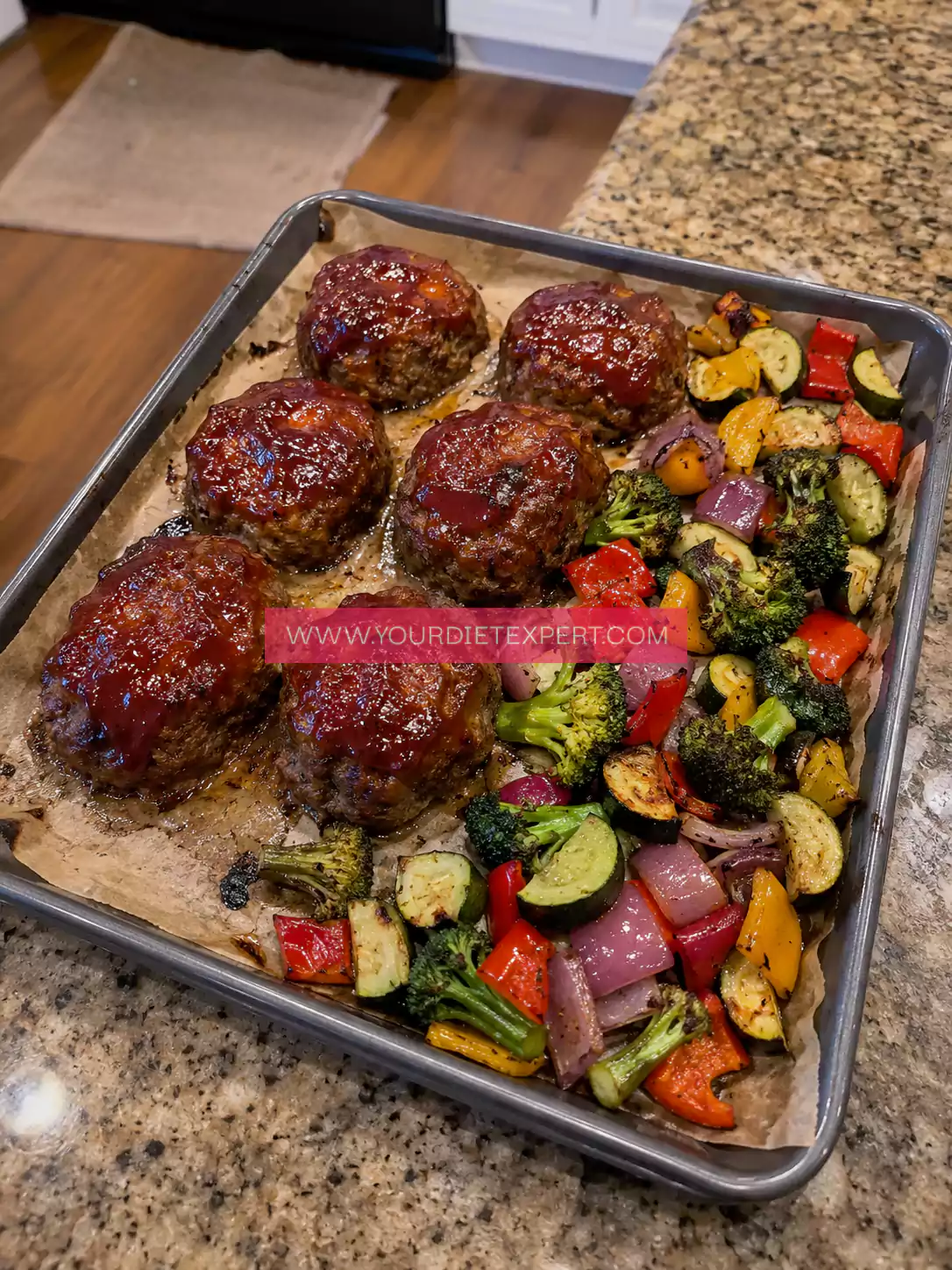

High-Protein Mini Meatloaf Trays with Roasted Vegetables Recipe
Ingredients
Method
- Preheat the oven to 400°F (200°C) and line a large rimmed sheet pan with parchment paper.
- Wash and prepare the broccoli, zucchini, bell peppers, and red onion, cutting the vegetables into relatively similar-sized pieces.
- Place the vegetables on one side of the prepared sheet pan and drizzle with olive oil.
- Sprinkle the vegetables with garlic powder, Italian seasoning, salt, and black pepper, then toss until evenly coated.
- Add the lean ground beef to a large mixing bowl.
- Add the egg, Greek yogurt, Parmesan, breadcrumbs, diced onion, minced garlic, Worcestershire sauce, Dijon mustard, Italian seasoning, smoked paprika, salt, and black pepper.
- Gently mix the ingredients with your hands or a spatula until evenly combined, taking care not to overwork the meat.
- Divide the mixture into six equal portions and shape each portion into a small oval meatloaf approximately 1½–2 inches thick.
- Arrange the mini meatloaves on the empty side of the sheet pan, leaving space between each one.
- Combine the tomato paste, no-sugar-added ketchup, apple cider vinegar, and optional monk fruit sweetener in a small bowl.
- Stir the glaze until smooth and brush a thin layer over the tops of the mini meatloaves.
- Place the tray in the preheated oven and roast for approximately 18–22 minutes.
- After 10–12 minutes, carefully remove the tray and toss the vegetables so they brown evenly.
- Return the tray to the oven and continue cooking.
- During the final 3–5 minutes, brush the remaining glaze over the meatloaves.
- Check the thickest meatloaf with an instant-read thermometer and confirm that the center reaches 160°F (71°C).
- Remove the tray from the oven and allow the mini meatloaves to rest for approximately 5 minutes.
- Taste the roasted vegetables and add additional salt, black pepper, fresh parsley, or a squeeze of lemon if desired.
- Serve one mini meatloaf with a generous portion of roasted vegetables and additional glaze if desired.
- For meal prep, divide the meatloaves and vegetables evenly among six airtight containers and refrigerate for up to 3–4 days.



Leave a Reply