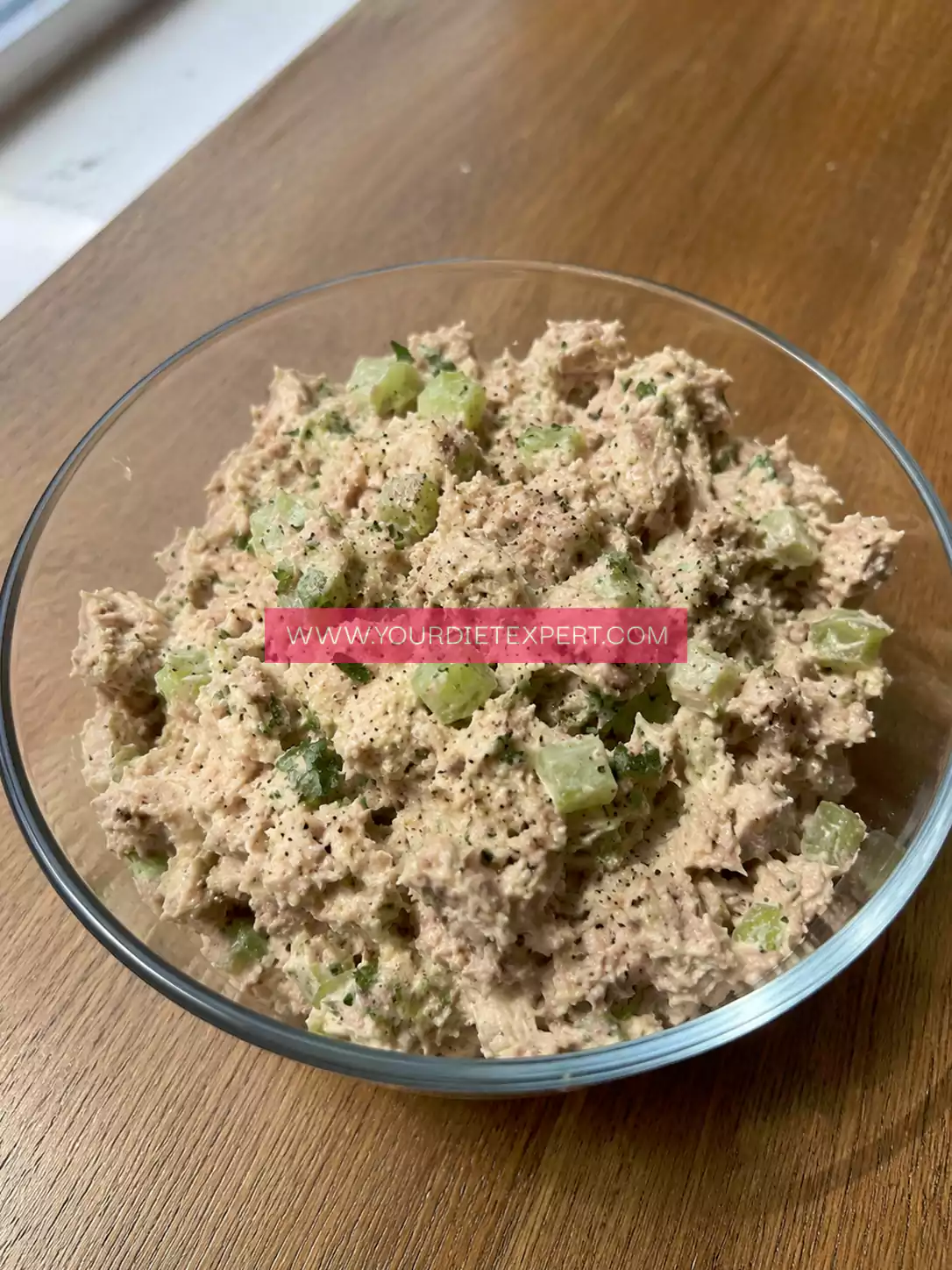
Open the tuna cans and drain them thoroughly. Press the tuna gently against the can lid or place it in a fine-mesh strainer to remove as much excess liquid as possible. Transfer the drained tuna to a medium mixing bowl.
Use a fork to gently break the tuna into small flakes. Leave some pieces slightly larger so the finished tuna salad has a pleasant texture instead of becoming completely smooth.
Finely dice the celery and chop the fresh parsley. Keeping the celery pieces small allows the crunch to distribute evenly throughout the tuna salad.
In a separate small bowl, combine the avocado-oil mayonnaise, Dijon mustard, fresh lemon juice, black pepper, garlic powder, and paprika. Stir until the dressing is smooth and evenly combined.
Pour the dressing over the flaked tuna. Add the finely diced celery and chopped parsley to the bowl.
Gently fold the ingredients together using a fork or spatula until the tuna is evenly coated with the creamy dressing. Avoid aggressively mixing the tuna because overmixing can create a paste-like texture.
Taste the tuna salad and adjust the seasoning as needed. Add additional black pepper, Dijon mustard, lemon juice, or a small amount of salt according to your preference. Make adjustments gradually because the tuna and mayonnaise may already contain sodium.
Cover the bowl and refrigerate the tuna salad for approximately 15–20 minutes before serving. This short chilling period allows the lemon, mustard, herbs, and seasonings to blend into the tuna.
Divide the finished tuna salad evenly into two portions if you're meal prepping. Place each portion in an airtight container and refrigerate.
Serve the tuna salad immediately in crisp lettuce leaves, over mixed greens, with cucumber slices, or straight from the bowl. For a higher-calorie meal, pair it with avocado or another appropriate side.
If using lettuce or cucumber for meal prep, store those ingredients separately from the tuna salad and assemble immediately before eating to preserve their crunch.
Keep refrigerated and consume within approximately 3–4 days for the best quality, following safe food-storage practices.