
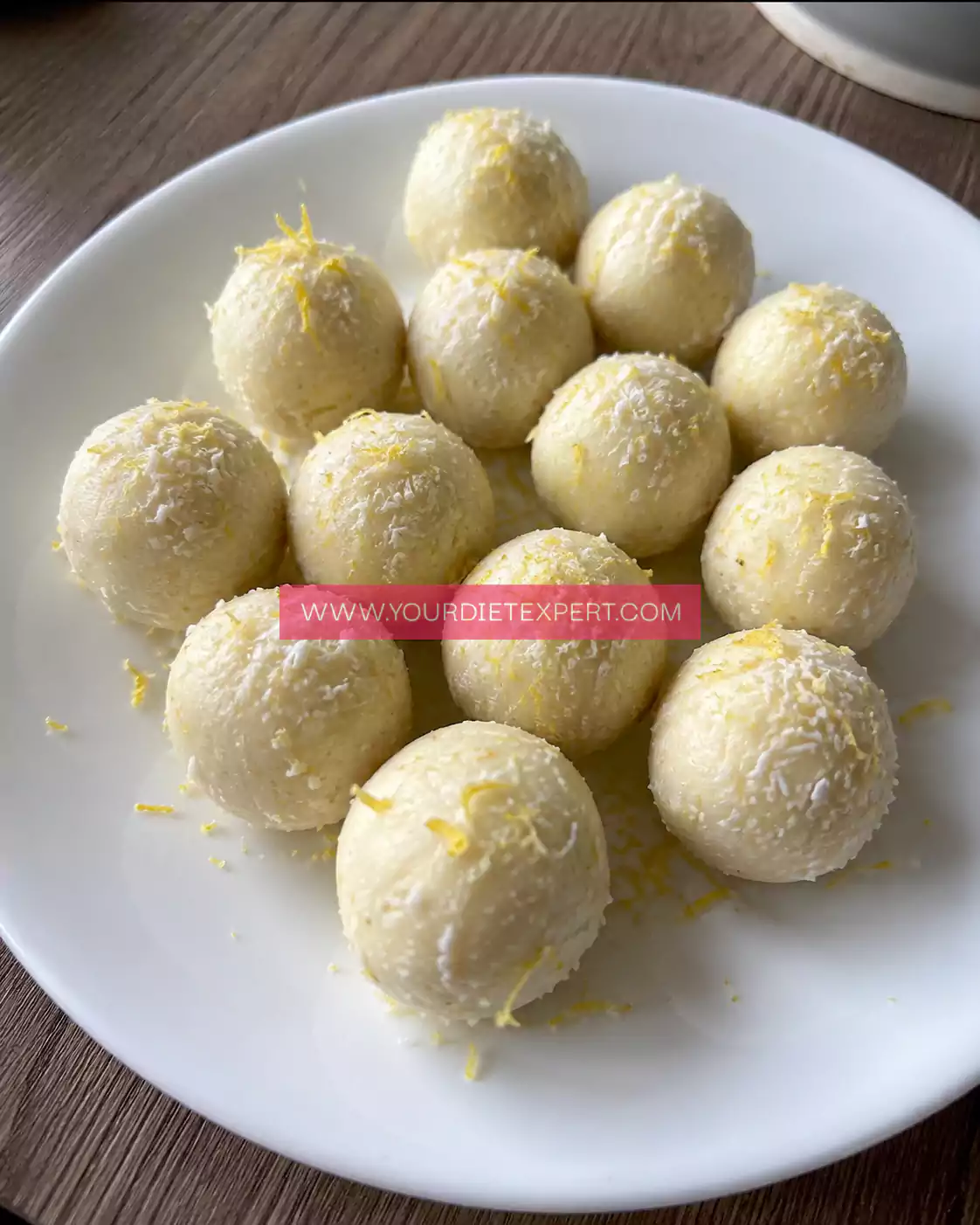
There are certain desserts that make you stop after the first bite and think, there is no way this is actually a high-protein recipe. These 1g Carb High-Protein Lemon Truffles are exactly that kind of treat. They are soft, creamy, bright with fresh lemon flavor, and lightly sweet, yet they are designed to deliver a meaningful amount of protein while keeping carbohydrates extremely low.
I love having a small dessert option like this around when I’m trying to stay consistent with a high-protein eating plan. Sometimes you don’t want another savory meal or another shake. You want something sweet. You want that little lemony bite after dinner or something easy to grab with your afternoon coffee. These truffles give you that dessert experience without turning the snack into a sugar-heavy treat.
The lemon flavor is what really makes them special. Fresh lemon zest gives the truffles an aromatic citrus fragrance, while a little lemon juice adds brightness. The creamy base has a cheesecake-like quality, and the finished texture is soft enough to melt in your mouth while still being firm enough to pick up with your fingers. Best of all, you can prepare an entire batch in just a few minutes and keep them chilled for whenever a sweet craving appears.
What Makes These 1g Carb High-Protein Lemon Truffles Stand Out
I’ve made plenty of protein desserts that technically check the nutrition box but don’t really feel like dessert.
These are different.
The goal here is not simply to put protein powder into a ball and call it a truffle. The goal is to create something that actually has the creamy, rich, bite-sized quality you expect from a truffle while keeping the recipe simple and carbohydrate-conscious.
High in protein
The main protein comes from whey protein isolate, supported by the protein naturally found in light cream cheese.
Using a high-quality whey isolate is particularly helpful because it allows you to add a significant amount of protein without introducing a lot of carbohydrates.
Depending on the protein powder and cream cheese you use, each serving provides approximately 18–20g of protein when the batch is divided into four servings.
That’s a useful amount for a small dessert or snack.
Approximately 1g of carbohydrates per serving
The recipe deliberately avoids traditional truffle ingredients such as powdered sugar, sweetened condensed milk, cookie crumbs, and regular chocolate.
Instead, sweetness comes from a zero-calorie sweetener, while lemon zest and lemon juice create most of the flavor.
When made with low-carbohydrate ingredients and divided into four servings, the recipe provides approximately 1g of total carbohydrate per serving.
Because protein powders and dairy products vary by brand, treat this as an approximate nutrition target rather than a laboratory measurement.
Lemon makes the flavor feel fresh
Rich protein desserts can sometimes become monotonous.
Lemon solves that problem.
The citrus flavor cuts through the richness of the cream cheese and gives the truffles a clean, refreshing finish.
Fresh lemon zest is especially important because it contains concentrated citrus oils that give you much more aroma than lemon juice alone.
No baking required
Another reason I love these is that you don’t need to turn on the oven.
Mix the ingredients.
Shape the truffles.
Chill them.
That’s it.
For anyone who likes quick recipes, this is about as easy as a homemade protein dessert gets.
Perfect for portion control
Because the truffles are naturally portioned into small bites, they make portion control much easier.
Instead of sitting down with an entire bowl of dessert, you can take one or two truffles from the refrigerator and know exactly what you’re eating.
That makes them particularly useful for people who track calories or macros.
Great for fitness meal prep
Meal prep doesn’t have to mean chicken, rice, and vegetables lined up in containers.
A few prepared snacks can make your week easier too.
I like making these at the beginning of the week and keeping them in a covered container in the refrigerator.
That gives me a ready-to-eat protein-focused dessert without needing to mix something together every evening.
My Personal Blogger Note
I first started experimenting with protein truffles because I wanted something that felt more like a treat than a traditional protein snack. Protein bars and shakes are convenient, but sometimes you want something homemade and a little more special.
Lemon was an easy choice.
There’s something about the combination of creamy dairy and fresh lemon that immediately reminds me of cheesecake, lemon cream, and those little citrus desserts that always disappear first at a party.
The first time I made these, I was surprised by how quickly the mixture came together. I remember adding the lemon zest last and thinking the whole bowl suddenly smelled completely different. The citrus aroma was bright and fresh, and the creamy protein mixture tasted much more like dessert than I expected.
I also learned that chilling matters.
Straight from the mixing bowl, the mixture is softer and stickier. After some time in the refrigerator, it becomes much easier to roll and has a firmer, truffle-like texture.
Now I prefer making them ahead of time. They are one of those little recipes that make opening the refrigerator feel like a reward.
Equipment Needed
You don’t need specialized equipment for these lemon truffles.
Medium mixing bowl
A medium bowl gives you enough room to combine the protein powder and creamy ingredients without making a mess.
Electric hand mixer
An electric hand mixer makes the cream cheese mixture especially smooth.
You can mix everything by hand with a sturdy spatula, but an electric mixer saves time and helps eliminate small lumps.
Microplane or fine grater
This is useful for creating very fine lemon zest.
Fine zest distributes the citrus flavor throughout the mixture instead of leaving large pieces in individual truffles.
Measuring spoons
Accurate measurements matter when you’re tracking carbohydrates and protein.
A tablespoon of an ingredient can sometimes contain more carbohydrates than expected, particularly with dairy products and alternative flours.
Small cookie scoop
A small cookie scoop makes portioning the truffles much easier.
It also helps create relatively uniform pieces, which is useful for consistent nutrition estimates.
Parchment-lined plate or tray
Place the finished truffles on parchment paper before chilling.
This prevents sticking and makes cleanup easier.
Airtight storage container
An airtight container keeps the truffles fresh and prevents them from absorbing refrigerator odors.
Ingredients & Smart Substitutions
Whey protein isolate — 2 scoops
Whey protein isolate is the main protein ingredient.
I recommend using an unflavored or vanilla whey isolate.
Vanilla works particularly well because it complements the lemon without overpowering it.
Whey isolate is useful for this recipe because it generally provides a high amount of protein relative to its carbohydrate content.
Substitution: A whey concentrate can work, although it may contain slightly more carbohydrates and fat.
A plant-based protein powder can also be used, but the texture will likely be thicker and the protein content may differ.
Light cream cheese — 2 ounces
Cream cheese gives these truffles their creamy, cheesecake-like texture.
Using light cream cheese keeps the calorie and fat content lower than traditional full-fat cream cheese.
Make sure it is softened before mixing.
Substitution: Neufchâtel cheese can work similarly.
Full-fat cream cheese produces a richer, softer truffle but increases calories and fat.
Coconut flour — 2 tablespoons
Only a small amount is needed.
Coconut flour absorbs moisture and helps turn the creamy mixture into something that can be shaped into balls.
It also helps create a slightly more substantial texture.
Substitution: Finely ground almond flour can be used, but the carbohydrate and calorie content will change. Almond flour also absorbs moisture differently, so you may need to adjust the quantity.
Fresh lemon zest — 1 tablespoon
This is the flavor powerhouse.
Use a fine grater and zest only the yellow outer layer of the lemon.
Avoid grating too deeply into the white pith because it can taste bitter.
Fresh lemon juice — 1 tablespoon
Lemon juice adds acidity and reinforces the citrus flavor.
Fresh juice works best.
Because we’re keeping carbohydrates extremely low, don’t add large amounts without recalculating the nutrition.
Zero-calorie powdered sweetener — 2 tablespoons, or to taste
The sweetener provides the sweetness normally supplied by powdered sugar.
A powdered form blends more smoothly into the mixture.
Different sweeteners have different sweetness levels, so adjust according to the product you’re using.
Vanilla extract — ½ teaspoon
Vanilla rounds out the lemon flavor.
You won’t necessarily identify it as a separate flavor, but it helps create a more dessert-like profile.
Pinch of salt
A very small amount of salt balances sweetness and makes the lemon flavor pop.
Don’t overdo it.
The goal is balance, not a salty dessert.
Optional: unsweetened coconut for coating
If you’d like a decorative coating, roll the finished truffles in a very small amount of unsweetened shredded coconut.
This will increase calories and carbohydrates slightly.
For the strictest 1g-carb version, leave the coating off.
Optional: additional lemon zest for garnish
A tiny sprinkle of lemon zest makes the truffles look fresh and gives you another hit of citrus aroma.
How to Make 1g Carb High-Protein Lemon Truffles
1. Soften the cream cheese
Take the cream cheese out of the refrigerator ahead of time and let it soften.
This is important.
Cold cream cheese is much harder to blend smoothly, and you may end up with small lumps throughout the truffle mixture.
If you forgot to soften it, cut it into small cubes so it warms more quickly.
2. Prepare the lemon
Wash and dry the lemon.
Using a fine grater, zest approximately one tablespoon.
Try to collect only the yellow outer layer.
Then cut the lemon and squeeze out one tablespoon of fresh juice.
Set both aside.
The combination of zest and juice gives you a much more pronounced lemon flavor than relying on juice alone.
3. Mix the creamy base
Add the softened light cream cheese to a medium mixing bowl.
Beat it until smooth.
Add the vanilla extract and zero-calorie sweetener.
Mix again until creamy.
You don’t want visible chunks of cream cheese remaining.
4. Add the lemon
Add the lemon zest and lemon juice to the cream cheese mixture.
Mix thoroughly.
At this point, the kitchen should smell bright and citrusy.
Taste a tiny amount.
If you prefer a stronger lemon flavor, add a little more zest rather than a lot more lemon juice.
Zest gives you intense lemon aroma without adding much liquid.
5. Add the protein powder
Add the whey protein isolate gradually.
Don’t dump both scoops into the bowl at once.
Add about half, mix, then add the remaining protein powder.
This helps prevent dry pockets of protein powder from hiding at the bottom of the bowl.
6. Add the coconut flour
Sprinkle in the coconut flour.
Mix thoroughly.
The mixture should become noticeably thicker.
Give it a minute or two to absorb moisture before deciding whether it needs adjustment.
Coconut flour continues absorbing liquid as it sits.
7. Check the texture
The finished mixture should be thick enough to hold its shape when pressed together.
If it feels too wet or sticky, add another teaspoon of coconut flour.
If it feels too dry and crumbly, add a tiny amount of softened cream cheese.
Don’t add lots of liquid.
A little adjustment goes a long way with coconut flour.
8. Chill the mixture
Cover the bowl and refrigerate for approximately 20–30 minutes.
This makes the mixture easier to handle and gives the protein powder and coconut flour more time to absorb moisture.
If you’re making these ahead of time, you can chill the mixture for several hours.
9. Portion the truffles
Line a plate or small tray with parchment paper.
Use a small cookie scoop or tablespoon to portion the mixture.
For four servings, divide the finished mixture into four equal portions, then shape each portion into several small truffles.
Depending on the size you choose, the batch should yield approximately 12–16 small truffles.
10. Roll into smooth balls
Roll each portion between your palms gently.
You don’t need to compress them aggressively.
If the mixture sticks to your hands, refrigerate it for another 10 minutes.
You can also lightly dampen your fingertips.
11. Add an optional coating
If desired, roll each truffle in a very small amount of unsweetened coconut.
For the lowest-carb version, leave them plain.
A little extra lemon zest on top is another beautiful option.
12. Chill again
Return the finished truffles to the refrigerator.
Chill for at least 30 minutes before serving.
This second chilling period helps the truffles firm up and gives them a much more pleasant bite.
Health & Nutrition Insights 💪
A convenient source of protein
Protein is the nutritional focus of this recipe.
Whey protein isolate provides a concentrated source of complete protein, while cream cheese contributes a smaller amount.
For people who struggle to reach their daily protein intake through meals alone, convenient protein-focused snacks can be useful.
The important thing is to look at your entire day’s nutrition rather than expecting one dessert to do all the work.
Protein and muscle recovery
Resistance training creates a need for adequate recovery nutrition.
Dietary protein provides amino acids used for tissue maintenance and muscle protein synthesis.
Consuming enough total protein across the day can support muscle maintenance and growth when combined with appropriate resistance training and sufficient overall nutrition.
These lemon truffles aren’t a substitute for a balanced diet, but they can be a convenient way to add protein to one part of your day.
Satiety and appetite management
Protein is generally more satiating than carbohydrates or fat alone.
A protein-rich snack can therefore be more satisfying than a small sugary treat that contains little protein.
That’s particularly useful in the afternoon or evening when you want something sweet but still want your snack to contribute to your nutrition goals.
Low carbohydrate doesn’t automatically mean low calorie
This is an important distinction.
A food can be very low in carbohydrates and still contain substantial calories from fat or protein.
These truffles are designed to be low in carbohydrate, but portion size still matters.
If you’re managing your calorie intake, pay attention to the complete nutrition profile rather than focusing only on the carbohydrate number.
Lemon adds flavor without needing sugar
Lemon is one of my favorite ingredients for healthier desserts because it creates a strong sensory impression without requiring much sweetness.
The aroma from the zest makes the truffles taste brighter and more complex.
That means you can use less sweetener while still getting a dessert that tastes exciting.
Metabolism and hormonal health
Adequate nutrition supports normal metabolic and hormonal function, but it isn’t accurate to claim that lemon truffles directly “boost metabolism” or balance hormones.
Those processes depend on many factors, including overall calorie intake, macronutrient balance, physical activity, sleep, stress, and individual health.
Think of these truffles as one convenient component of a protein-focused eating pattern.
High-Protein Plan & Macro Insights 📊
These truffles work particularly well as a planned snack.
Instead of eating them mindlessly, portion them ahead of time.
That makes it easier to understand exactly how they fit into your day.
For cutting
If you’re in a calorie deficit, one or two small truffles can provide a sweet option without adding a large amount of carbohydrate.
The protein content also makes them more substantial than many conventional candies or cookies.
Keep the serving size consistent and avoid calorie-dense coatings or toppings if you’re trying to keep calories lower.
For muscle building
If you’re intentionally eating more calories to support muscle growth, these truffles can be paired with other foods.
For example, you could enjoy them with:
- Greek yogurt
- Berries
- A protein shake
- Nuts
- A balanced breakfast
That creates a larger snack or dessert while keeping protein high.
For maintenance
At maintenance calories, the truffles can simply function as a convenient dessert.
There is no need to reserve them exclusively for workout days.
A high-protein dessert can fit into a normal eating pattern as long as the overall diet is balanced.
When should you eat them?
There isn’t one perfect time.
You can have them:
- After a workout
- With afternoon coffee
- As an evening dessert
- Between meals
- With breakfast
- Before bed if they fit your overall nutrition
If you eat them after training, consider whether you also need carbohydrates based on the demands of your workout and your overall diet.
Portion control
The easiest way to keep the nutrition predictable is to make evenly sized truffles.
A small cookie scoop makes this much easier.
If you’re tracking macros precisely, weigh the complete finished mixture and divide it according to your preferred serving size.
Protein powder matters
The nutrition values depend heavily on your protein powder.
Some whey isolates contain 20–25g protein per scoop, while others contain more or less.
Some also contain small amounts of carbohydrates.
For the most accurate results, use the nutrition label from the protein powder you actually purchase.
Serving + Pairing Ideas 🍽️
These lemon truffles are delicious by themselves, but there are several ways to make them feel more special.
Serve with coffee
The bright lemon flavor works beautifully with coffee.
A small plate with two lemon truffles and a cup of coffee makes a simple afternoon snack feel surprisingly luxurious.
Add berries
Fresh raspberries or strawberries pair naturally with lemon.
However, berries contain carbohydrates, so include them separately when tracking a strict 1g-carb serving.
Create a dessert plate
For a special occasion, arrange a few truffles on a small plate with lemon zest scattered around them.
Add a few thin lemon slices for presentation.
No elaborate decorating is required.
Pair with Greek yogurt
For a larger high-protein snack, serve one or two truffles alongside plain Greek yogurt.
The creamy yogurt and lemon truffle combination tastes almost like a lemon cheesecake bowl.
This will increase the carbohydrate and calorie content, so account for the yogurt separately.
Serve chilled
I strongly prefer these cold.
The refrigerator gives the truffles a firmer bite and makes the lemon flavor taste especially refreshing.
Storage & Meal Prep Tips 🧊
Refrigerate the truffles
Store the finished truffles in an airtight container in the refrigerator.
Because they contain cream cheese, refrigeration is essential.
Use parchment between layers
If you’re stacking the truffles, place parchment paper between the layers.
This helps prevent them from sticking together.
Best storage window
For the best quality, consume the truffles within approximately 3–4 days.
The texture may become slightly firmer over time, which can actually be enjoyable.
Can you freeze them?
Yes, you can freeze them.
Place the truffles on a parchment-lined tray and freeze them individually first.
Once firm, transfer them to a freezer-safe container.
This prevents them from sticking together.
Thaw them in the refrigerator rather than leaving them at room temperature for an extended period.
Keep in mind that freezing can slightly change the texture of the cream cheese.
Meal prep in advance
If you want an easy weekly snack, make a batch at the beginning of the week.
Divide the truffles into individual portions.
Store each portion separately so you don’t have to measure them every time you want one.
Keep coatings separate
If you’re using coconut or another coating, apply it shortly before serving if you want the best texture.
Moisture can soften coatings over time.
FAQ ❓
How many carbs are in each serving?
When the recipe is divided into four servings and made with low-carbohydrate protein powder and the specified ingredients, each serving contains approximately 1g of total carbohydrate.
However, exact values depend on your specific protein powder and cream cheese.
If you’re following a strict low-carb plan, check the nutrition labels of your ingredients and calculate the final recipe accordingly.
How much protein is in each serving?
Each serving provides approximately 18–20g of protein, depending on the protein powder and cream cheese used.
Whey isolate is particularly useful here because it allows the recipe to deliver substantial protein without adding many carbohydrates.
Can I use plant-based protein powder?
Yes, but expect some texture differences.
Plant-based powders often absorb liquid differently from whey isolate.
Some can create a slightly grainier or denser truffle.
If using plant protein, start with slightly less powder and adjust the mixture gradually until you reach a rollable consistency.
Also check the protein and carbohydrate content of the specific powder because the nutrition values may change considerably.
Can I make these dairy-free?
Yes, with substitutions.
Use dairy-free cream cheese and a plant-based protein powder.
A thick dairy-free cream cheese will usually give you the closest texture.
Because these substitutions vary significantly in protein and carbohydrate content, recalculate the nutrition rather than assuming the original macros still apply.
Can I make these ahead of time?
Absolutely.
That’s one of the best things about them.
Make the truffles, place them in an airtight container, and refrigerate.
They can be prepared several days in advance, making them excellent for fitness meal prep.
Can I use regular whey protein instead of isolate?
Yes.
Whey concentrate can work, although the mixture may contain slightly more carbohydrates and fat.
The texture can also vary depending on the brand.
If you’re specifically trying to stay around 1g carbohydrate per serving, whey isolate is generally easier to work with because it tends to provide a higher protein concentration.
Why are my truffles too sticky?
The mixture probably needs more chilling time or slightly more coconut flour.
Start by refrigerating it for another 10–15 minutes.
If it remains too sticky, add one teaspoon of coconut flour, mix, and wait a couple of minutes before adding more.
Why are my truffles crumbly?
You may have added too much protein powder or coconut flour.
Add a small amount of softened cream cheese and mix again.
Avoid adding liquid because it can make the mixture difficult to shape.
Kitchen Tips & Troubleshooting Notes
Don’t overdo the coconut flour
Coconut flour is extremely absorbent.
Two tablespoons may not look like much, but it can dramatically change the consistency.
Always let the mixture sit for a minute before deciding it needs more.
Use room-temperature cream cheese
Softened cream cheese blends much more smoothly.
Cold cream cheese can leave little lumps that are difficult to eliminate once the protein powder has been added.
Zest before juicing
This is a small kitchen trick I always recommend.
It’s much easier to zest a whole lemon while it is firm.
Once you’ve squeezed it, the lemon becomes softer and more difficult to hold securely.
Use fresh lemon zest
Bottled lemon juice can work in a pinch, but fresh zest is what gives these truffles their strongest lemon character.
The aromatic oils in the zest are what make the dessert smell genuinely lemony.
Don’t add too much lemon juice
It’s tempting to keep adding lemon juice when you want a stronger citrus flavor.
However, additional liquid can make the truffle mixture difficult to shape.
For stronger lemon flavor, add more zest instead.
Chill before shaping
If the mixture is sticking to your hands, don’t immediately start adding more flour.
Put it in the refrigerator.
Chilling often solves the problem without changing the recipe.
Make evenly sized truffles
Use a small cookie scoop.
Uniform pieces make portion tracking easier and give you a more polished presentation.
Avoid overheating
There is no cooking involved, which is one of the advantages of this recipe.
You don’t need to worry about protein drying out as you would with baked protein desserts.
The biggest texture challenge is simply getting the moisture balance right.
Make them firmer
If you prefer a firmer truffle, refrigerate them longer.
You can also reduce the cream cheese slightly, although this will change the texture and nutrition.
Make them softer
If the chilled truffles feel too firm, let them sit at room temperature for a few minutes before eating.
That allows the cream cheese to soften slightly.
Want a crunchy finish?
Roll the truffles in a very small amount of finely chopped nuts.
Remember that nuts add calories, fat, and carbohydrates, so they should be counted separately.
Want the strongest lemon flavor?
Use fresh zest from one large lemon and keep the lemon juice close to the recipe amount.
Lemon zest is the key.
Nutrition Breakdown
The following nutrition estimate assumes four servings and a relatively high-protein, low-carbohydrate whey isolate.
| Nutrient | Approx. Per Serving |
|---|---|
| Calories | 180–210 |
| Protein | 18–20g |
| Fat | 7–9g |
| Carbohydrates | ~1g |
| Fiber | 0.5–1g |
| Net Carbs | ~0–1g |
| Sugar | <1g |
| Sodium | 150–220mg |
These values are estimates.
Protein powder and cream cheese brands can differ substantially, particularly in protein, fat, and carbohydrate content.
If the exact carbohydrate amount is important to your diet, calculate the recipe using the nutrition labels of the specific ingredients you use.
Recipe Details
Prep Time: 10 minutes
Cook Time: 0 minutes
Chill Time: 50 minutes
Total Time: 1 hour
Course: Dessert, Snack
Cuisine: American
Servings: 4
Yield: Approximately 12–16 small truffles
Serving Size: ¼ of the batch
Calories: Approximately 180–210 per serving
Protein: Approximately 18–20g per serving
Carbohydrates: Approximately 1g per serving
Closing Note ❤️
These 1g Carb High-Protein Lemon Truffles are a perfect example of why I don’t think healthy eating should mean giving up the foods and flavors you love.
You can still have something creamy.
You can still have something sweet.
You can still have dessert after dinner.
The difference is that you’re choosing ingredients that help the food fit into your overall nutrition goals.
I especially love these when I’m craving something bright rather than chocolate-heavy. The lemon makes every bite feel fresh, while the creamy texture gives you that little bit of indulgence you expect from a truffle.
They’re also the kind of recipe that rewards preparation. Make them once, refrigerate them, and suddenly you have a protein-rich treat waiting whenever you need it.
If you’re working toward a higher protein intake, following a lower-carb eating pattern, or simply looking for healthier homemade desserts, keep this recipe nearby.
A few minutes in the kitchen can give you several days of little lemony treats.
And honestly, that’s my favorite kind of meal prep — the kind that makes healthy eating something to look forward to. ❤️

Ingredients
Method
- Remove the light cream cheese from the refrigerator and allow it to soften so it can be mixed smoothly. If needed, cut it into several small pieces to help it soften more quickly.
- Wash and dry the lemon thoroughly. Use a fine grater or microplane to collect approximately 1 tablespoon of finely grated lemon zest, taking care to grate only the yellow outer peel and avoid the bitter white pith.
- Cut the lemon and squeeze 1 tablespoon of fresh lemon juice. Set the zest and juice aside while you prepare the creamy base.
- Place the softened cream cheese in a medium mixing bowl and beat it with an electric hand mixer or sturdy spatula until completely smooth.
- Add the powdered zero-calorie sweetener, vanilla extract, and pinch of salt to the cream cheese. Mix thoroughly until the sweetener is evenly incorporated and the mixture looks smooth and creamy.
- Add the fresh lemon zest and lemon juice. Mix again until the lemon is evenly distributed throughout the cream cheese mixture. Taste a small amount and add a little additional lemon zest if you want a stronger citrus flavor.
- Add approximately half of the whey protein isolate and mix until incorporated. Add the remaining protein powder and continue mixing until no dry powder remains.
- Sprinkle the coconut flour over the mixture and mix thoroughly. Allow the mixture to sit for one to two minutes so the coconut flour can absorb moisture and help thicken the mixture.
- Check the consistency. The mixture should be thick enough to press together and shape. If it remains too soft or sticky, add another teaspoon of coconut flour, mix, and allow it to sit briefly before deciding whether another small amount is needed.
- If the mixture becomes too dry or crumbly, add a small amount of softened cream cheese and mix again until the texture becomes pliable. Avoid adding a large amount at once because the mixture can become too soft.
- Cover the bowl and refrigerate the mixture for approximately 20–30 minutes. Chilling allows the protein powder and coconut flour to absorb moisture and makes the mixture much easier to shape.
- Line a small plate or tray with parchment paper. Use a small cookie scoop or tablespoon to portion the mixture into approximately 12–16 small pieces, keeping the pieces as evenly sized as possible.
- Gently roll each portion between your palms to form a smooth ball. If the mixture begins sticking to your hands, return it to the refrigerator for another 10 minutes before continuing.
- If desired, roll each truffle lightly in unsweetened shredded coconut. For the lowest-carbohydrate version, leave the truffles plain and finish them with a tiny amount of fresh lemon zest instead.
- Place the finished truffles on the parchment-lined tray and refrigerate for at least another 30 minutes. This second chilling period helps the truffles firm up and gives them a more satisfying bite.
- Serve the lemon truffles chilled. Store any leftovers in an airtight container in the refrigerator and enjoy within approximately 3–4 days for the best quality.



Leave a Reply