
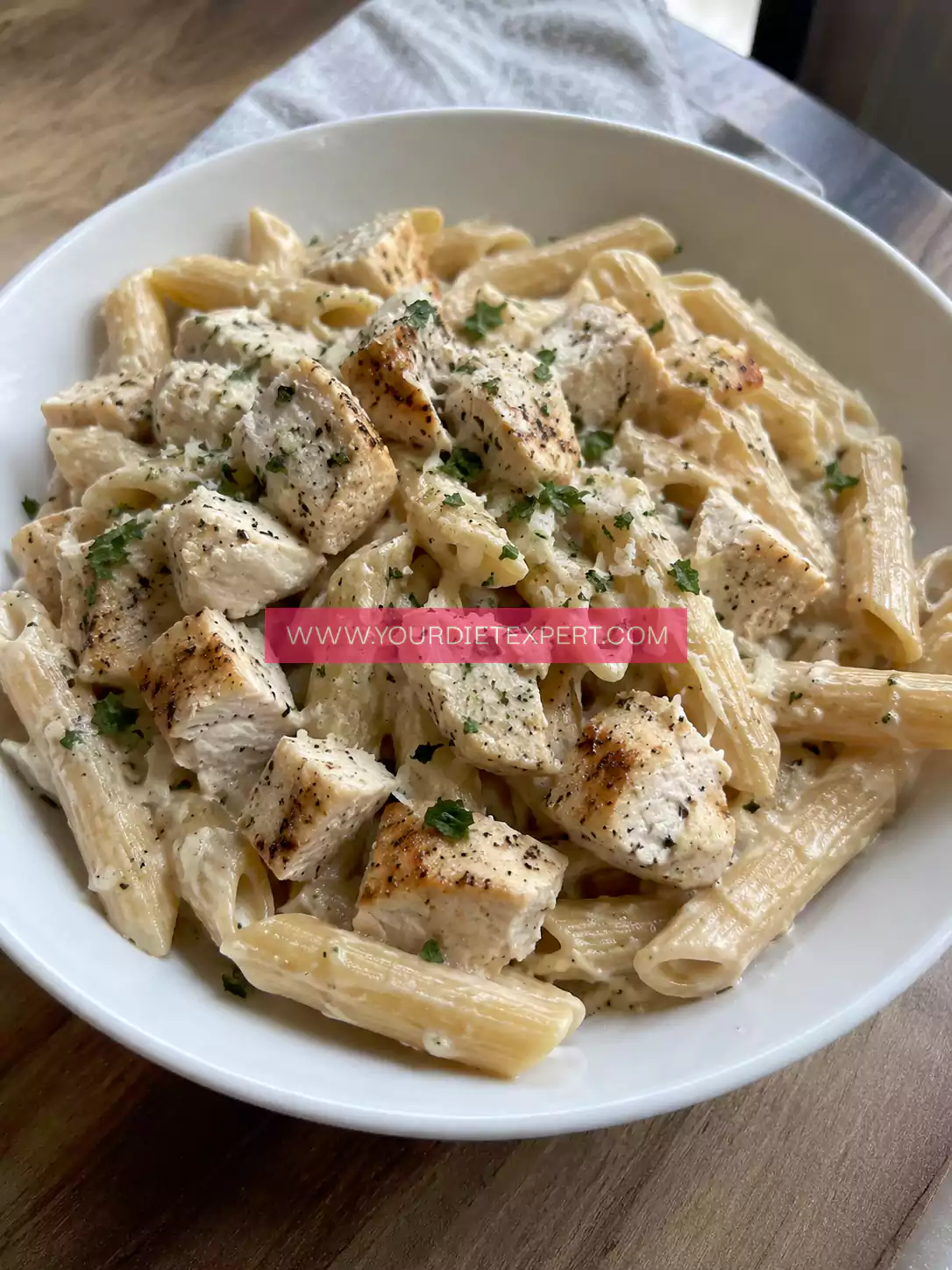
There are nights when I want a dinner that feels comforting and indulgent but still fits the way I want to eat, and this High-Protein Creamy Chicken Pasta Bowl has become one of my favorite answers. Tender bites of seasoned chicken are tossed with hearty pasta and a silky, garlicky Greek-yogurt cream sauce that clings to every piece. It tastes like the kind of pasta you’d order when you want comfort food, but the ingredients are much more practical for a high-protein lifestyle.
I originally wanted a recipe that could solve a very specific problem: what do you make when you’re hungry after a workout and don’t want another boring plate of chicken and rice? Pasta was an easy answer, but I wanted to make it more balanced. Adding plenty of chicken, Greek yogurt, and Parmesan turned a familiar creamy pasta into a genuinely satisfying muscle-building meal that still feels like dinner rather than “fitness food.”
The best part is that this isn’t complicated. You cook the pasta, quickly brown the chicken, whisk together the creamy sauce, and bring everything together in one skillet. The kitchen smells like garlic, Parmesan, and freshly cooked chicken, and within a short time you have four generous portions ready for dinner or fitness meal prep.
What Makes This High-Protein Creamy Chicken Pasta Bowl Stand Out
There are plenty of chicken pasta recipes, but I wanted this one to check more boxes than simply being high in protein.
It needed to be filling.
It needed to taste creamy.
It needed to hold up well as leftovers.
And most importantly, it needed to be something I would actually want to eat repeatedly.
It delivers a serious protein boost
The combination of lean chicken breast, Greek yogurt, and Parmesan gives this pasta bowl a substantial amount of protein.
Chicken does most of the heavy lifting, providing a lean, concentrated protein source. Greek yogurt adds additional protein while helping create the creamy sauce, and Parmesan brings both protein and savory flavor.
Depending on the exact brands you use, one serving provides approximately 53–54 grams of protein.
That’s enough to make this more than just a side of pasta. It can function as a substantial high-protein dinner on its own.
The sauce is creamy without heavy cream
Traditional creamy pasta sauces often rely on heavy cream, large quantities of butter, or a combination of both.
This recipe takes a different approach.
Plain Greek yogurt creates the creamy foundation, while a small amount of Parmesan adds richness and umami. Chicken broth loosens the sauce and gives it enough moisture to coat the pasta.
The result is creamy without feeling excessively heavy.
Whole-wheat pasta adds staying power
I like using whole-wheat pasta here because it provides more fiber than conventional refined pasta.
You can absolutely use regular pasta if that’s what you have in the pantry. However, whole-wheat pasta works particularly well for a meal-prep recipe because it provides a hearty texture and complements the chicken beautifully.
It is meal-prep friendly
This recipe makes four portions, so it’s ideal for cooking once and having several meals ready.
The sauce also reheats better than many cream-based sauces because it doesn’t depend entirely on heavy cream.
A small splash of broth or milk while reheating brings the sauce back to life.
It tastes like comfort food
This might be my favorite part.
The goal isn’t to make a bowl of pasta taste “healthy.”
The goal is to make a bowl of pasta taste delicious while using ingredients that support your nutrition goals.
Garlic, Parmesan, black pepper, Italian seasoning, tender chicken, and creamy sauce give this recipe enough flavor that you won’t feel like you’re sacrificing anything.
My Personal Blogger Note
I first started playing around with Greek-yogurt pasta sauces because I wanted to make creamy pasta without turning the sauce into the heaviest part of the meal. My first attempts were honestly a little disappointing. The sauce was either too thick, too tangy, or it separated when the heat was too high.
After a little experimenting, I learned that the trick is simple: don’t boil the Greek yogurt sauce.
Once I started treating the yogurt as a finishing ingredient rather than something to aggressively cook, everything changed. The sauce became smooth and creamy, and the Parmesan melted into it beautifully.
Now this is one of those meals I make when I want something that feels comforting after a long day. The chicken gets golden around the edges, the pasta picks up all the garlicky sauce, and that little sprinkle of Parmesan at the end makes the whole kitchen smell incredible.
I also love that I can make four portions at once. One goes on the dinner table, and the remaining servings can go straight into meal-prep containers.
That’s the kind of recipe that makes healthy eating easier: delicious enough to look forward to and practical enough to repeat.
Equipment Needed
You don’t need anything fancy for this recipe.
Large pot
Use a large pot to cook the pasta.
A spacious pot gives the pasta enough room to cook evenly and helps prevent pieces from sticking together.
Large skillet
A wide skillet is ideal for cooking the chicken and eventually bringing the pasta and sauce together.
The larger surface area gives the chicken room to brown instead of steam.
Colander
You’ll need a colander to drain the pasta.
Remember to reserve some pasta water before draining because that starchy liquid can help loosen the sauce.
Mixing bowl
A medium bowl is useful for whisking together the Greek yogurt, broth, seasonings, and Parmesan before adding the mixture to the skillet.
Whisk
A whisk helps create a smooth sauce without lumps.
This is especially useful when combining Greek yogurt with liquid ingredients.
Measuring cups and spoons
Accurate measurements are useful when you’re tracking calories and macros.
Small changes in pasta, oil, cheese, or sauce can noticeably affect the final nutrition numbers.
Tongs or large spoon
Tongs make it easier to toss the pasta with the chicken and sauce without breaking the noodles.
Ingredients & Smart Substitutions
Chicken breast — 1¼ pounds
Boneless, skinless chicken breast provides the majority of the protein in this recipe.
Cutting the chicken into bite-sized pieces before cooking helps it brown quickly and ensures that every bowl gets plenty of chicken.
Substitution: Boneless, skinless chicken thighs can be used, although they contain more fat and calories. If you prefer leaner meat, chicken breast is the better choice.
Cooked leftover chicken can also be used, although you won’t get quite the same browned flavor.
Whole-wheat pasta — 8 ounces dry
Whole-wheat pasta provides the carbohydrate foundation of the meal.
It gives you energy while contributing some fiber and a pleasantly hearty texture.
Penne, rotini, fusilli, or bow-tie pasta all work well.
Substitution: Regular pasta is completely fine. It will usually have slightly less fiber but can make the sauce feel especially smooth.
For a higher-fiber option, chickpea or lentil pasta can also be used. However, check the package cooking instructions because alternative pastas can behave differently.
Plain nonfat Greek yogurt — 1 cup
Greek yogurt is the key to the creamy sauce.
Choose plain, unsweetened Greek yogurt with a high protein content.
Its thick consistency gives the sauce body without requiring heavy cream.
Substitution: Low-fat Greek yogurt can be used if you want a slightly richer sauce. The calorie and fat content will increase.
Avoid flavored yogurt because the sweetness will not work with the savory ingredients.
Reduced-sodium chicken broth — 1 cup
Chicken broth loosens the sauce while adding savory flavor.
Reduced-sodium broth gives you more control over the salt level, especially because Parmesan already contains a considerable amount of sodium.
Substitution: Vegetable broth works if that’s what you have available.
Parmesan cheese — ½ cup finely grated
Parmesan adds a concentrated savory flavor and helps make the sauce taste richer.
Freshly grated Parmesan tends to melt more smoothly than very coarse pre-shredded cheese.
Substitution: Pecorino Romano can work, although it is saltier and has a stronger flavor.
Olive oil — 1 tablespoon
A small amount of olive oil is enough to brown the chicken without making the recipe greasy.
You don’t need a large quantity because the chicken itself doesn’t require much oil.
Garlic — 3 cloves
Fresh garlic gives the sauce its aromatic foundation.
Three cloves create a noticeable garlic flavor without overwhelming the chicken and Parmesan.
If you love garlic, feel free to use four cloves.
Italian seasoning — 1 teaspoon
Italian seasoning brings together dried herbs such as oregano and basil.
It makes the dish taste more complete without requiring a long list of individual spices.
Garlic powder — ½ teaspoon
A small amount of garlic powder reinforces the garlic flavor throughout the chicken.
Using both fresh garlic and garlic powder creates more depth than relying on either one alone.
Paprika — ½ teaspoon
Paprika gives the chicken a warm, savory flavor and helps it develop an appetizing golden color as it cooks.
Black pepper — ½ teaspoon, plus more to taste
Freshly ground black pepper cuts through the creaminess of the sauce.
I recommend adding a little more at the end if you enjoy a peppery pasta.
Salt — to taste
Use salt carefully because Parmesan and chicken broth can already contribute sodium.
Start conservatively and adjust after the sauce and pasta have been combined.
Reserved pasta water — ½ to 1 cup as needed
This ingredient costs nothing but can make a huge difference.
The starch in pasta water helps loosen the sauce while helping it cling to the pasta.
You probably won’t need the entire amount.
Optional fresh parsley — 2 tablespoons chopped
Fresh parsley adds color and a clean, fresh finish.
It isn’t essential, but I highly recommend it when serving the pasta for dinner.
How to Make High-Protein Creamy Chicken Pasta Bowl
1. Start with the pasta
Bring a large pot of water to a boil.
Season the water with a modest amount of salt, then add the whole-wheat pasta.
Cook according to the package directions until al dente.
Don’t overcook it.
The pasta will spend another minute or two in the skillet with the sauce, so keeping it slightly firm at this stage helps prevent mushiness later.
Before draining, scoop out approximately 1 cup of pasta water and set it aside.
Drain the pasta and leave it nearby.
Little tip: Don’t rinse the pasta. You want some of its natural starch to remain so it can help the creamy sauce cling to the noodles.
2. Season the chicken
While the pasta cooks, cut the chicken breast into bite-sized pieces.
Pat the chicken dry with a paper towel.
This small step matters because excess surface moisture can prevent browning.
Season the chicken with paprika, garlic powder, Italian seasoning, black pepper, and a small amount of salt.
Toss everything together so the seasoning coats the chicken evenly.
3. Brown the chicken
Heat a large skillet over medium-high heat.
Add the olive oil.
Once the oil is hot, add the chicken pieces in a single layer.
Don’t overcrowd the skillet.
If all of the chicken is packed tightly together, it will release moisture and steam instead of developing those delicious golden edges.
Cook for approximately 5–7 minutes, turning occasionally, until the chicken is cooked through and reaches an internal temperature of 165°F (74°C).
Transfer the cooked chicken to a plate.
4. Build the garlic base
Reduce the skillet heat to medium.
Add the minced garlic to the same skillet.
Cook for about 30 seconds, stirring frequently.
You want the garlic fragrant but not browned.
If garlic gets too dark, it can become bitter.
5. Prepare the creamy yogurt mixture
While the garlic cooks, whisk together the Greek yogurt, chicken broth, Parmesan, and a little black pepper in a bowl.
Whisk until smooth.
The mixture may look thinner than you expect at first. That’s okay.
It will become creamy once it meets the warm pasta and combines with the Parmesan and pasta starch.
6. Lower the heat before adding the yogurt
This is the most important technique in the recipe.
Turn the skillet heat to low.
Let the pan cool slightly for a minute.
Then slowly add the Greek-yogurt mixture while stirring constantly.
Do not bring the sauce to a hard boil.
High heat can cause Greek yogurt to separate and become grainy.
Gentle heat is your friend here.
7. Add the pasta
Add the drained pasta to the skillet.
Toss continuously so the sauce coats every piece.
If the sauce looks too thick, add reserved pasta water one tablespoon at a time.
Keep tossing until you reach a creamy consistency.
You want the sauce to cling to the pasta rather than pool heavily at the bottom of the pan.
8. Return the chicken
Add the cooked chicken back to the skillet.
Toss everything together for another 1–2 minutes over low heat.
This gives the chicken time to absorb some of the sauce and allows the flavors to come together.
Taste the pasta.
Add additional black pepper, Italian seasoning, or a small amount of salt if needed.
9. Finish with fresh herbs
Turn off the heat.
Add chopped fresh parsley if using.
Give everything one final toss.
If you like extra Parmesan, grate a small amount over the top when serving.
10. Portion immediately for meal prep
If you’re making this specifically for meal prep, divide the finished pasta into four containers while it’s still warm.
Allow the containers to cool slightly before sealing them completely.
Store them in the refrigerator.
For reheating, add a splash of broth or water to restore the sauce’s creamy consistency.
Health & Nutrition Insights 💪
Protein for muscle recovery
This recipe provides approximately 53–54 grams of protein per serving, making it a particularly substantial protein-focused meal.
Protein provides amino acids required for muscle protein synthesis and normal tissue maintenance.
For people who perform resistance training, getting enough total protein throughout the day is an important part of supporting training adaptations.
That doesn’t mean you need to obsess over one meal.
Your overall daily protein intake matters much more than whether one individual recipe contains a particular number.
Still, having meals like this makes reaching a higher daily protein target considerably easier.
Carbohydrates provide training fuel
Pasta isn’t something you need to eliminate simply because you’re trying to eat for fitness.
Carbohydrates are an important source of energy, particularly for people who train regularly.
The pasta in this recipe provides carbohydrates that can complement the protein-rich chicken and dairy ingredients.
That combination makes the meal useful around active days when you want both protein and carbohydrates.
Protein can improve meal satisfaction
Protein is generally quite satiating, and a meal containing protein, carbohydrates, and some fat can be more satisfying than a carbohydrate-heavy meal by itself.
The chicken and Greek yogurt provide the protein foundation, while pasta gives the meal enough substance to feel like a complete dinner.
That’s useful when you’re trying to manage your intake without feeling like you’re constantly hungry.
Calcium from dairy ingredients
Greek yogurt and Parmesan contribute calcium as well as protein.
Calcium is important for normal bone function, muscle contraction, and several other physiological processes.
Again, no single recipe should be treated as a cure-all, but incorporating nutrient-dense foods into your regular diet is a practical way to support overall nutrition.
What about metabolism and hormones?
A balanced diet that provides sufficient protein, energy, micronutrients, and essential fats supports normal metabolic and hormonal function.
However, it’s important not to make exaggerated claims about individual foods.
This pasta bowl isn’t a “metabolism booster” or a hormone-balancing treatment.
Instead, it is simply a nutrient-dense meal that can contribute to an overall balanced eating pattern.
High-Protein Plan & Macro Insights 📊
This recipe is especially useful for people who prefer substantial protein at lunch or dinner.
For muscle building
If you’re intentionally eating in a calorie surplus, you can increase the energy density of the bowl without changing its protein foundation.
Try adding:
- Extra Parmesan
- Avocado on the side
- A drizzle of olive oil
- More pasta
- Roasted vegetables
- Whole-grain garlic bread
These additions increase calories, making the meal easier to fit into a bulking plan.
For fat loss
If you’re trying to reduce calories, you don’t necessarily need to eliminate the pasta.
Instead, control the portion and increase the volume with vegetables.
Broccoli, spinach, zucchini, mushrooms, bell peppers, and asparagus are excellent additions.
You can also use nonfat Greek yogurt and a lean chicken breast to keep the protein-to-calorie ratio favorable.
For maintenance
The recipe as written provides a substantial meal that can work well for maintenance calories.
Pair it with a large serving of vegetables or salad if you want more volume without dramatically increasing calories.
Post-workout option
This is particularly convenient after strength training because it combines a substantial amount of protein with carbohydrates.
You don’t have to eat it immediately after your workout. Your overall daily nutrition matters more than hitting a tiny post-workout window.
Still, if you’re hungry after training, this makes an excellent recovery meal.
Lunch or dinner
It works equally well as a lunch or dinner.
For a work lunch, portion it into microwave-safe containers and add a splash of broth before reheating.
Tracking your macros
The approximate nutrition values below are based on standard ingredients.
For the most accurate tracking, enter your exact chicken, pasta, yogurt, broth, cheese, and protein amounts into your food-tracking application.
Brands can vary substantially.
Serving + Pairing Ideas 🍽️
This pasta bowl is filling enough to serve by itself, but vegetables can make it even better.
Add roasted broccoli
Roasted broccoli is one of my favorite pairings.
Its slightly crisp edges contrast with the creamy pasta beautifully.
You can either mix it directly into the bowl or serve it on the side.
Add sautéed spinach
A handful or two of fresh spinach can be stirred into the skillet near the end.
The heat from the pasta will wilt it quickly.
This is an easy way to add more vegetables without changing the recipe dramatically.
Serve with a crisp salad
A simple green salad with cucumber, tomatoes, and a light vinaigrette provides a refreshing contrast to the creamy pasta.
The acidity of the dressing also helps balance the richness of the Parmesan sauce.
Add mushrooms
Sautéed mushrooms pair extremely well with chicken and garlic.
Cook them separately until browned, then stir them into the finished pasta.
Add bell peppers
For a sweeter vegetable component, sauté sliced red or yellow bell peppers with the chicken or cook them separately.
Meal-prep bowl format
For meal prep, place one serving of pasta in each container.
Add roasted vegetables to one side.
Once everything has cooled appropriately, refrigerate.
When you’re ready to eat, add a tablespoon or two of broth before reheating.
Storage & Meal Prep Tips 🧊
Refrigerator storage
Transfer leftovers to airtight containers and refrigerate promptly.
For best quality, consume within 3–4 days.
The pasta may absorb some of the sauce as it sits, so don’t be surprised if the refrigerated portion looks thicker the next day.
Best reheating method
Microwave reheating works well.
Add a splash of chicken broth, water, or milk to the pasta before reheating.
Heat in short intervals, stirring between each one.
This helps distribute the heat and prevents the sauce from becoming excessively hot.
You can also reheat the pasta gently in a skillet over low heat.
Add a tablespoon or two of broth and stir until creamy again.
Avoid high heat
Because the sauce contains Greek yogurt, aggressive reheating can cause it to separate.
Low and slow is better.
Can you freeze it?
You can freeze the pasta, but I don’t recommend it if your priority is the original creamy texture.
Dairy-based sauces can change consistency after freezing and thawing, while pasta can become softer.
If you need a freezer-friendly meal, consider freezing the cooked chicken separately and making the creamy sauce fresh.
Batch cooking
For a larger meal-prep batch, simply double the ingredients.
Use a very large skillet or prepare the chicken in batches so it browns properly.
Don’t overcrowd the pan.
Divide the finished recipe evenly between containers so your macro tracking stays consistent.
FAQ ❓
Can I make this chicken pasta dairy-free?
Yes, but you’ll need to replace both the Greek yogurt and Parmesan.
For the yogurt, choose an unsweetened, thick dairy-free yogurt.
For the Parmesan, use a dairy-free alternative or nutritional yeast.
Keep in mind that the protein content may decrease considerably, particularly if your dairy-free yogurt contains little protein.
If protein is the primary goal, a fortified soy-based yogurt is generally more useful than a low-protein coconut-based yogurt.
How much protein is in each serving?
The recipe provides approximately 53–54 grams of protein per serving when divided into four portions using high-protein Greek yogurt and standard lean chicken breast.
The exact number depends on your ingredient labels.
For accurate tracking, calculate the recipe using the specific products you use.
Can I use regular pasta?
Absolutely.
Whole-wheat pasta is recommended because it contributes more fiber and has a hearty texture, but ordinary pasta works perfectly well.
You can also experiment with chickpea, lentil, or other higher-protein pastas.
Just remember that those alternatives may change the calories, protein, fiber, and texture.
Can I use chicken thighs?
Yes.
Boneless, skinless chicken thighs will make the recipe richer and juicier.
However, they generally contain more fat and calories than chicken breast.
If you’re prioritizing a high protein-to-calorie ratio, chicken breast remains the better option.
Can I prepare this for the whole week?
You can prepare it for several days, but I recommend keeping the refrigerated storage window to approximately 3–4 days.
For the best texture, make the recipe on Sunday and plan to eat the portions earlier in the week.
Keep the sauce and pasta together for convenience, then add a little broth when reheating.
Kitchen Tips & Troubleshooting Notes
Prevent dry chicken
Chicken breast is lean, so overcooking is its biggest enemy.
Cut the chicken into evenly sized pieces so they cook at the same rate.
Also, don’t leave it sitting in a hot skillet long after it’s cooked through.
An internal temperature of 165°F (74°C) is the safe target.
Don’t boil the yogurt sauce
This is the most important sauce tip.
Greek yogurt can separate when subjected to high heat.
Once you add the yogurt mixture, keep the skillet on low and stir gently.
Use pasta water
If the sauce is too thick, don’t immediately add a large amount of broth.
Start with a tablespoon of reserved pasta water.
The starch helps loosen the sauce while keeping it attached to the pasta.
Sauce too thin?
Let the pasta and sauce sit over low heat for another minute while stirring.
The pasta will absorb some of the liquid.
You can also add a little more finely grated Parmesan.
Sauce too thick?
Add pasta water or broth gradually.
A tablespoon at a time is enough to start.
Pasta feels dry the next day?
That’s completely normal.
Pasta continues absorbing sauce as it sits.
Add a splash of broth before reheating and stir thoroughly.
Want more vegetables?
Add broccoli, spinach, zucchini, mushrooms, peas, or bell peppers.
If you’re using watery vegetables such as zucchini, cook them separately first so they don’t dilute the sauce.
Want more protein?
Increase the chicken slightly or serve the pasta with a side of Greek yogurt-based dip.
Another easy option is to use a higher-protein pasta.
However, remember that increasing protein also changes the calorie and macro totals.
Want a lighter bowl?
Use nonfat Greek yogurt, reduced-fat Parmesan if available, and slightly increase the vegetable portion.
You can also reduce the pasta portion while keeping the chicken amount the same.
Nutrition Breakdown
The following values are approximate and assume four servings.
| Nutrient | Approx. Per Serving |
|---|---|
| Calories | 600–640 |
| Protein | 53–54g |
| Fat | 12–15g |
| Carbohydrates | 60–65g |
| Fiber | 7–9g |
| Sugar | 5–7g |
| Sodium | 600–800mg |
Actual nutrition will depend on the exact brands of pasta, Greek yogurt, chicken broth, and Parmesan used.
If you need precise macros for a specific diet or fitness program, calculate the recipe using your individual ingredient labels.
Recipe Details
Prep Time: 15 minutes
Cook Time: 20 minutes
Total Time: 35 minutes
Course: Lunch, Dinner
Cuisine: American, Italian-Inspired
Servings: 4
Serving Size: 1 pasta bowl
Calories: Approximately 600–640 per serving
Protein: Approximately 53–54g per serving
Closing Note ❤️
This High-Protein Creamy Chicken Pasta Bowl is exactly the kind of recipe I want in my regular rotation.
It doesn’t ask you to choose between eating for your fitness goals and enjoying dinner. You get tender, seasoned chicken, comforting pasta, garlicky creamy sauce, and Parmesan in every bowl, while still getting a substantial amount of protein.
I especially love recipes like this for busy weeks because they remove some of the friction from healthy eating. Instead of wondering what to cook after work or after training, you can open the refrigerator and already have a satisfying meal waiting.
If you’re building muscle, working toward a higher daily protein target, or simply trying to make your everyday meals more nutritious, this is an easy one to keep around.
Make it once for dinner, portion the leftovers, and see how much easier the next few meals feel.
Here’s to making healthy food something you genuinely look forward to eating. ❤️

Ingredients
Method
- Bring a large pot of water to a boil, season lightly with salt, and cook the whole-wheat pasta according to the package directions until al dente. Before draining, reserve approximately 1 cup of the pasta cooking water, then drain the pasta without rinsing it.
- While the pasta cooks, pat the chicken breast dry and cut it into evenly sized bite-sized pieces. Place the chicken in a bowl and season it with the Italian seasoning, garlic powder, paprika, black pepper, and a small amount of salt. Toss thoroughly so the seasonings coat the chicken evenly.
- Heat a large skillet over medium-high heat and add the olive oil. Once the oil is hot, arrange the chicken pieces in a single layer, working in batches if necessary to avoid overcrowding the pan.
- Cook the chicken for approximately 5–7 minutes, turning the pieces occasionally, until they are golden on the outside and completely cooked through. The chicken should reach an internal temperature of 165°F (74°C). Transfer the cooked chicken to a clean plate and set aside.
- Reduce the skillet heat to medium and add the minced garlic to the same skillet. Cook for approximately 30 seconds, stirring constantly, just until the garlic becomes fragrant. Avoid browning the garlic because it can become bitter.
- While the garlic cooks, whisk together the Greek yogurt, chicken broth, Parmesan cheese, and a little black pepper in a medium bowl. Continue whisking until the mixture is smooth and evenly combined.
- Turn the skillet heat to low and allow it to cool slightly for about a minute. Slowly pour the Greek-yogurt mixture into the skillet while stirring continuously. Keep the heat low and do not allow the sauce to come to a hard boil, as excessive heat can cause the yogurt to separate.
- Add the cooked pasta to the skillet and gently toss it through the creamy sauce until every piece is coated. If the sauce is too thick, add reserved pasta water one tablespoon at a time, tossing after each addition until the sauce reaches a smooth, creamy consistency.
- Return the cooked chicken to the skillet and toss everything together over low heat for 1–2 minutes. Allow the chicken to warm through and absorb some of the sauce.
- Taste the pasta and adjust the seasoning with additional black pepper, Italian seasoning, or a small amount of salt if needed. Remember that Parmesan and chicken broth already contribute salt, so add additional salt gradually.
- Turn off the heat and sprinkle the chopped fresh parsley over the pasta if using. Give everything one final gentle toss.
- Divide the finished pasta evenly into four portions for serving or meal prep. If serving immediately, spoon the pasta into bowls and finish with a little additional Parmesan or fresh parsley if desired.
- For meal prep, transfer each portion to an airtight container and allow the food to cool appropriately before sealing and refrigerating. Store for up to 3–4 days.
- When reheating, add a small splash of chicken broth, water, or milk to each portion. Reheat gently in short intervals, stirring between intervals, until hot and creamy. Avoid overheating the yogurt-based sauce.

Leave a Reply